The Amalfi Lemon Growers Are Quietly Winning A War Against Modern Food
High on the cliffs of the Amalfi Coast, a stubborn group of families is fighting to keep real food alive, one impossibly fragrant lemon at a time.
By Rafael Cortez ·
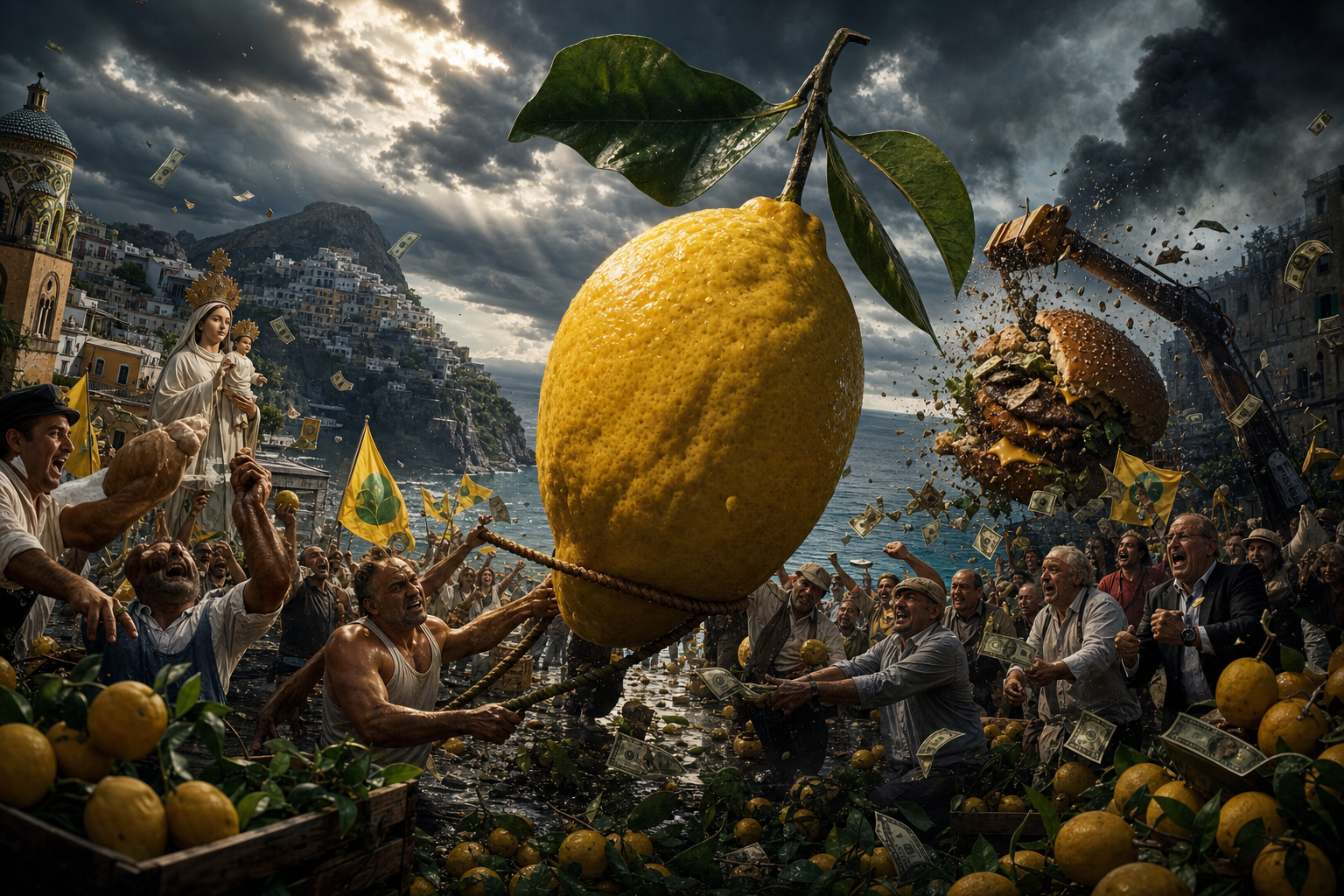
Nobody grows a lemon like the maniacs clinging to the cliffs above the Amalfi Coast. And that is exactly the point.
These are not the sad, waxed spheres rolling around in a supermarket bin under fluorescent lights. These are the Sfusato Amalfitano, elongated, thick-skinned, almost obscenely fragrant fruits that have been coaxed out of near-vertical rock for centuries.
The people who grow them are doing something the rest of the modern world forgot how to do. They are refusing to cheat.
Farming On A Cliff Is A Diagnosis Of Insanity
Walk the terraces and you understand the madness immediately. The land drops straight into the Tyrrhenian Sea. There is no room for tractors, no room for shortcuts, no room for the industrial nonsense that turns real food into cardboard.
Everything gets carried by hand. Or by back. Or by the sheer stubbornness of families who have been doing this since long before anyone slapped the word organic on a marketing label.
The terraces are held up by stone walls the locals call macere. Built without cement. Held together by knowledge passed down like a family secret nobody wrote down.
The lemon trees grow under pergolas made of chestnut wood, shaded by netting that protects them from wind and cold. It is a slow, brutal, beautiful system. And it produces a fruit with almost no bitterness and a rind you can eat like candy.
Why This Matters More Than It Should
Here is the ugly truth about most of what people eat. It is optimized for shelf life, not for the human body. It is engineered to survive a shipping container, not to nourish a cell.
The Amalfi growers are running the opposite experiment. They are growing something alive.
A lemon grown in mineral-rich volcanic soil, kissed by sea air, ripened slowly under real sun, is not the same object as its industrial cousin. It carries more oils, more aromatic compounds, more of the raw material your biology actually recognizes.
This is not romance. This is chemistry. When you eat food grown the hard way, you are giving your body inputs it evolved to use. When you eat food grown the cheap way, you are feeding your mitochondria garbage and wondering why you feel like garbage.
The Growers Are Dying Out, And That Should Terrify People
The problem is depressingly predictable. The work is hard. The young people leave. The tourists arrive by the thousands, buy a lemon granita, take a photo, and never think about the seventy-year-old man who hauled that fruit up a cliff on his shoulders.
Consider what is actually at stake here:
- Generational knowledge that cannot be downloaded
- A protected designation that fights off cheap imitations
- An entire ecosystem that keeps the mountainside from sliding into the sea
Abandon the terraces and the walls collapse. The land erodes. The whole thing goes back to rubble. It is a slow-motion medical emergency for an entire landscape.
The Lemon As A Middle Finger To Convenience
What these families are really defending is a philosophy. The idea that some things should not be fast. That flavor is not an accident. That your health starts in the soil long before it ever reaches your plate.
The Limoncello made from these lemons tastes like liquid sunlight because the raw material was never compromised. The rind is thick because the plant was allowed to be a plant. Nobody rushed it. Nobody forced it. Nobody genetically flattened it into a uniform little product.
Real food is inconvenient. That inconvenience is the whole point. It means somebody cared.
Sit on one of those terraces at dusk. Smell the citrus oil hanging in the warm air. Watch an old man prune a tree his grandfather planted. You are not looking at agriculture. You are looking at defiance.
The Amalfi lemon growers will probably never get rich. Their backs will keep aching. Their children will keep getting tempting offers to move to the city and sit in an air-conditioned office.
And yet, for now, they keep climbing those cliffs. They keep rebuilding those walls. They keep growing a fruit that reminds anyone paying attention what food is supposed to be. Something grown with hands, with patience, and with a stubborn refusal to let the world make it worse. That is worth protecting long after the last tourist bus rolls away.