Apple Hikes MacBook And iPad Prices; Sanders Labels Move 'Corporate Greed'
Apple raised prices on MacBook and iPad models amid rising memory costs tied to the AI boom. Senator Bernie Sanders blasted the increases as corporate greed while shares plunged.
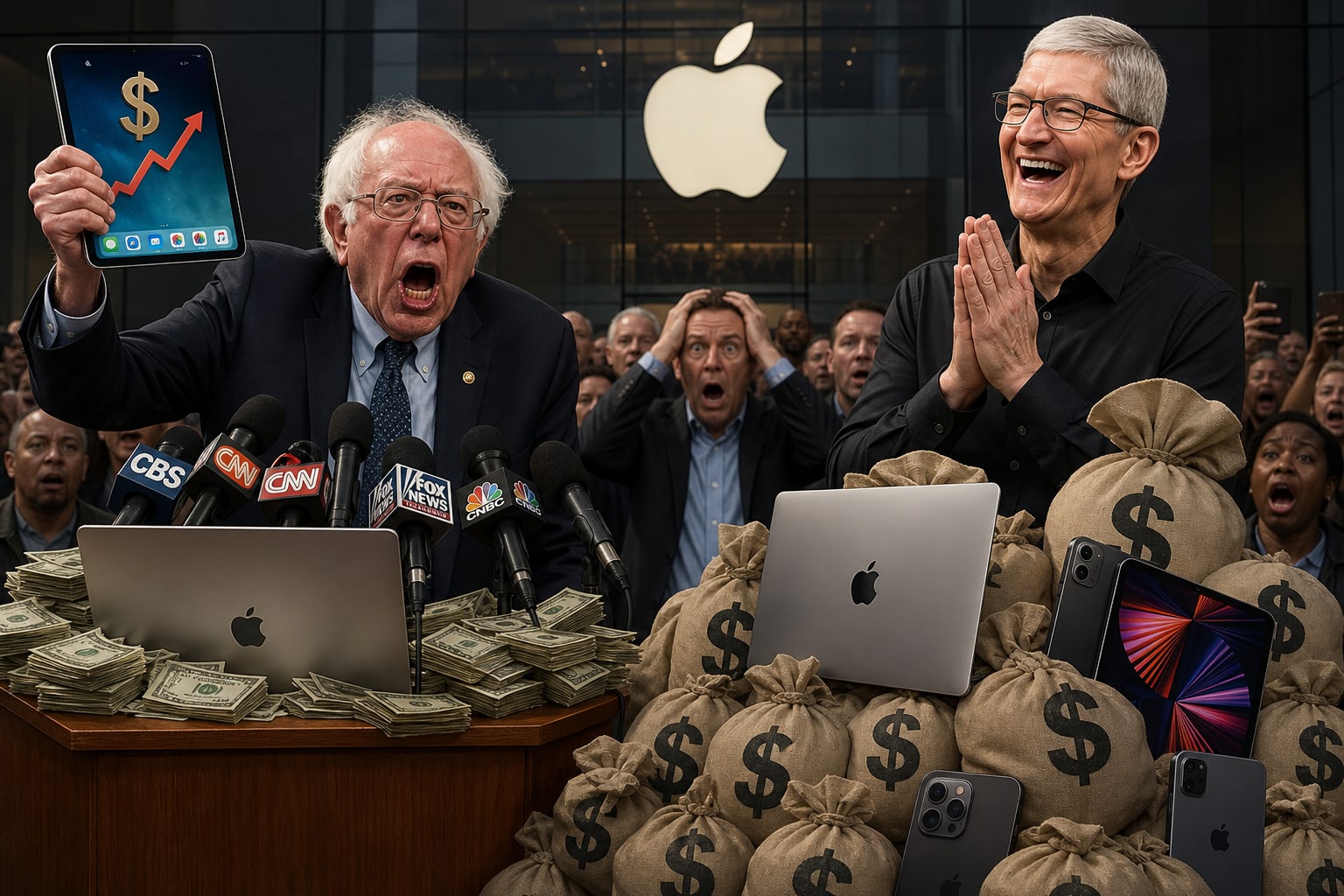
Apple Inc. raised prices for several MacBook and iPad models on Thursday, saying higher memory and storage costs tied to the artificial intelligence infrastructure boom made increases unavoidable. The move sent shares down 6.15 percent in a single trading day.
Price Shock Hits Everyday Buyers
The increases are significant across the lineup. The MacBook Air rose $200 to $1,299, the MacBook Pro jumped $300 to $1,999 and the iPad Pro Wi Fi climbed $200 to $1,199. Entry level models also moved up, with the MacBook Neo up $100 to $699 and the iPad Air up $150 to $749.
That adds up to a real bite for ordinary buyers who were already coping with rising costs. Analysts estimated the average hike across Mac products was roughly 17 percent, a level that could test demand even among loyal customers.
Some market watchers said the sell off was an over reaction. One analyst argued that price increases were a necessary step in the current memory cost cycle and that Apple’s ecosystem keeps demand relatively inelastic. Others said the company chose to move quickly rather than erode margins over time.
Politics, Profits And A Side Of Irony
Senator Bernie Sanders sharply criticized the hikes, calling them an act of corporate greed and pointing to the company’s recent profits and share buybacks. He said a firm that made tens of billions in profit and spent hundreds of billions on buybacks should not be passing costs straight to consumers.
"Corporate greed is Tim Cook, the billionaire Apple CEO, claiming that hiking prices on Apple products by over $200 is unavoidable after it made $112 billion in profits last year and spent $310 billion on stock buybacks."
The debate quickly drew broader attention. Technology leaders and commentators noted that AI driven infrastructure spending is pushing component prices across the industry. One high profile tech entrepreneur posted a quip noting the size of the price jumps and echoing Apple’s own warning that the current cost wave was unlike anything seen in decades.
For everyday people the math is simple. In my barrio a neighbor joked that the new price for a MacBook Air was the cost of a small refrigerator or many months of arepas. That kind of comparison makes the choice feel less about luxury and more about trade offs in the household budget.
Higher costs for memory and storage are real. So are the optics of a tech giant raising prices while returning vast sums to shareholders. The political critique is clear: when profits are large and buybacks are huge, shifting the burden to consumers is easy to frame as a choice rather than an inevitability.
Apple said the adjustments reflect an industry wide memory cost cycle driven by rapid growth in AI infrastructure. Investors and customers will be watching whether demand holds and whether rivals see similar pressure to pass costs on.
In the meantime, the conversation has moved from ledgers to politics. For critics who oppose concentrated corporate power and worry about affordability, the price hikes are neither a surprise nor an accident. They are a reminder that in an unequal system, the cost of new technology too often lands on people who can least afford it.