Argentina’s Asado And Street Food: A Nation Cooked By Crisis, Pleasure And Survival
Buenos Aires is a nation cooked on the grill. From asado cuts and achuras to fugazza, empanadas and mate, Argentina’s food tells stories of crisis, thrift and delight.
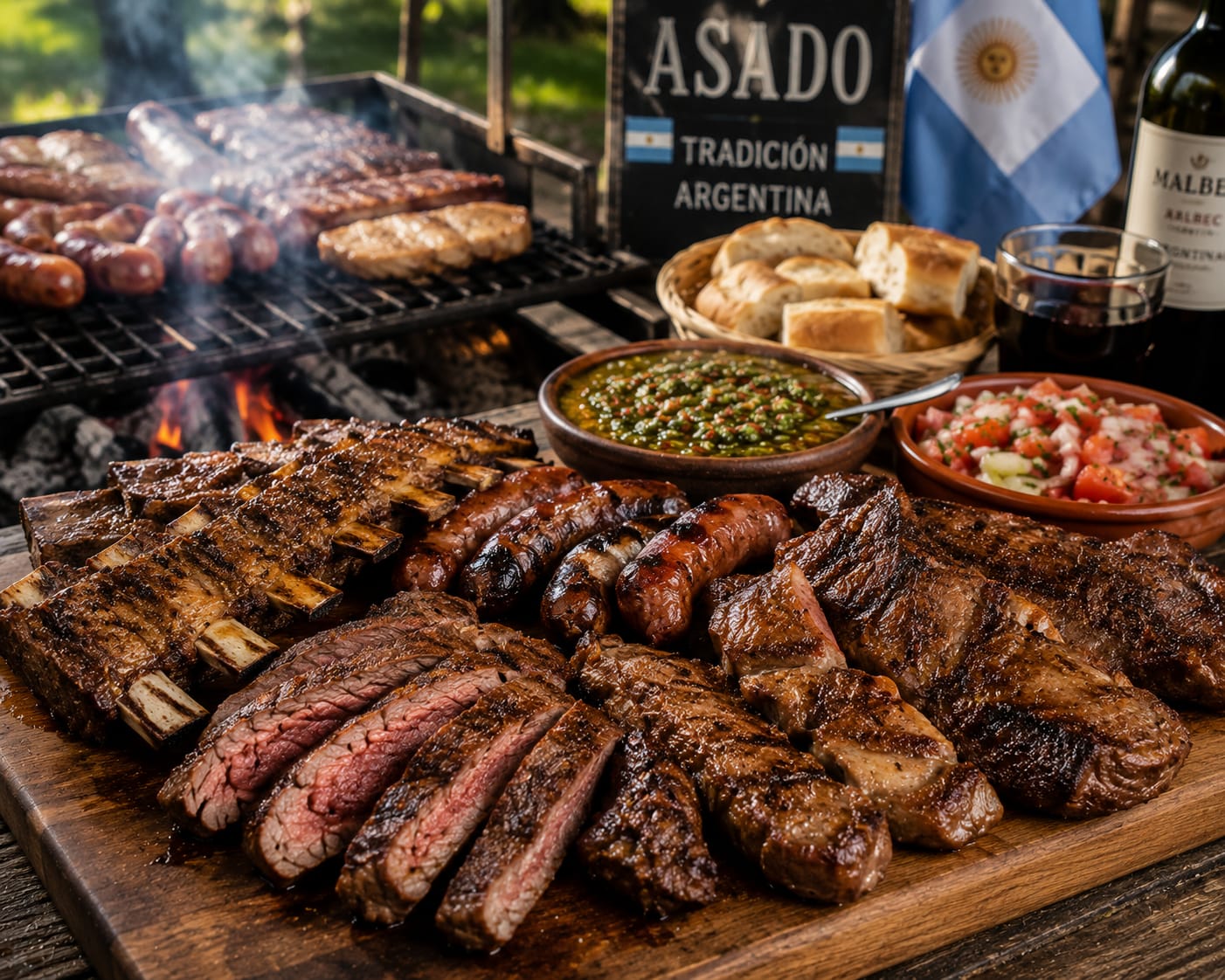
A Country Carved On The Grill
Buenos Aires smells like a story you can eat. The city and the country around it have built their history on a parrilla, the slow metal heart of the asado. Argentines eat more than 120 pounds of beef per person each year. That number is not only appetite. It is habit and memory.
Asado is more than steak. It is a ritual. The guide lists essential cuts every visitor should try: bife de chorizo, lomo, ojo de bife, vacío, entraña and asado de tira. Offal, called achuras, is also central. Brave eaters order chinchulines, mollejas and riñón as starters. The sauces are plain and fierce: chimichurri of parsley and oil, and salsa de criolla of onion and red pepper.
On the grill you will also find provoleta, a wedge of provolone seared until it forms a golden crust and finished with herbs. It is easy to eat too much. It is easy to be happy and poor at the same time.

Slices, Stews And The Politics Of Filling A Belly
Not all of what Argentines eat on the street is noble steak. Choripán is the country’s ultimate sandwich. Grilled chorizo sits in a baguette and is dressed with chimichurri. Morcilla, blood sausage, appears at many asados and sometimes on bread.

Pizza in Argentina will surprise. The city loves deep, cheesy pies. Try a fugazza, an onion-slicked, cheese-less flat that is drizzled with olive oil. Try a fugazzeta, the same onion loaded with cheese. Try a napolitana, the classic tomato and garlic pie. And do not miss fainá, an unleavened chickpea pancake often placed on top of a pizza slice. Taxi drivers used fainá for a quick, filling meal between fares. That small fact holds an entire economy.
There is history stitched into these choices. One story says achuras became widely eaten during the 2001 financial crisis when families could not afford prime cuts. Another story credits the gauchos of the plains, who respected the whole animal. Both stories are true in different ways. One is a claim of hardship. The other is a claim of thrift.
Empanadas, Bodegones And The Sweet Tooth
Empanadas are the country’s pocket history. The classic fillings are carne with egg and olive, pollo, verdura with spinach or chard, and jamon y queso. Regional versions travel with their own languages. Salteñas are small and stuffed with potato and a sharp red pepper sauce. Riojana empanadas hide raisins and cumin. Some are fried. Some are baked. All are cheap, fast and loud.

Pair empanadas with a cold Quilmes beer and you will understand the public mood.
Inside bodegones, old-style eateries, you will find milanesa, a breaded cutpan fried like a schnitzel. Varieties include milanesa napolitana topped with tomato sauce, and suprema, a chicken version. Matambre a la pizza and revuelto gramajo are other comforts that fill hands and pockets.

For dessert, Argentines take ice cream like a serious religion. Places named Lucciano’s, Antiche Tentazioni and Cadore serve gelato style helados that are dense and creamy. Dulce de leche is a national obsession. Alfajores sandwich that caramel into cookies. Brands to try are Cachafaz and Havanna.

Locro, Mate And Why This Still Matters
Locro is a thick stew of corn, beans, meat and vegetables. It keeps warm hands and crowds at fairs. You can taste it at the Feria de Mataderos or at outdoor festivals in the countryside. The guide notes these dishes are as much about community as flavor.

Mate is the drink that will teach you how Argentines pass time. Shared from a gourd through a metal straw, it is social glue. You will be offered it by strangers and neighbors. It is polite to accept.
The guide was published on July 2, 2026 and runs across 12 pages. It names places in Buenos Aires like Guerrin and El Cuartito for pizza, and El Sanjuanino in Recoleta for regional empanadas. These are not endorsements. They are landmarks of taste.
There is a human cost in these foods. The 2001 crisis changed what people could buy. Taxi drivers who stacked fainá on pizza were not inventing a fad. They were inventing speed for a tired, hungry life. Families turned scraps into celebration. That survival became tradition.
The Strange Comfort Of A Shared Plate
Someone who once fought in the hills might read this menu like a map of necessity. A revolutionary eye would notice how the grill honors the whole animal and how a simple slice of bread can feed many. In that sense, Argentina’s table looks like a field kitchen where nothing is wasted and everything is explained by hunger and humor.
Why it matters now is simple. Food holds memory. It keeps stories of crisis, pride and stubborn joy inside the mouth. Tourists come to taste that memory. Locals keep eating it. The recipes travel from family to family, from parrilla to bodegón, from fair to street corner. They feed the body, and they teach the history of a nation that learned to celebrate what it still had.
If you go, order provoleta. Order chinchulines. Try a slice of pizza topped with fainá. Drink mate from a shared gourd. Eat like the city tells you to eat. And remember that every bite carries a date, a crisis and a small, loud laugh.