Barry Seal: The Cocaine Cowboy Who Proved Every Empire Runs on Reckless Male Ego
Barry Seal thought his charm could outsmart three governments and a drug empire. His white Cadillac disagreed. A savage look at the cocaine cowboy whose vanity killed him.
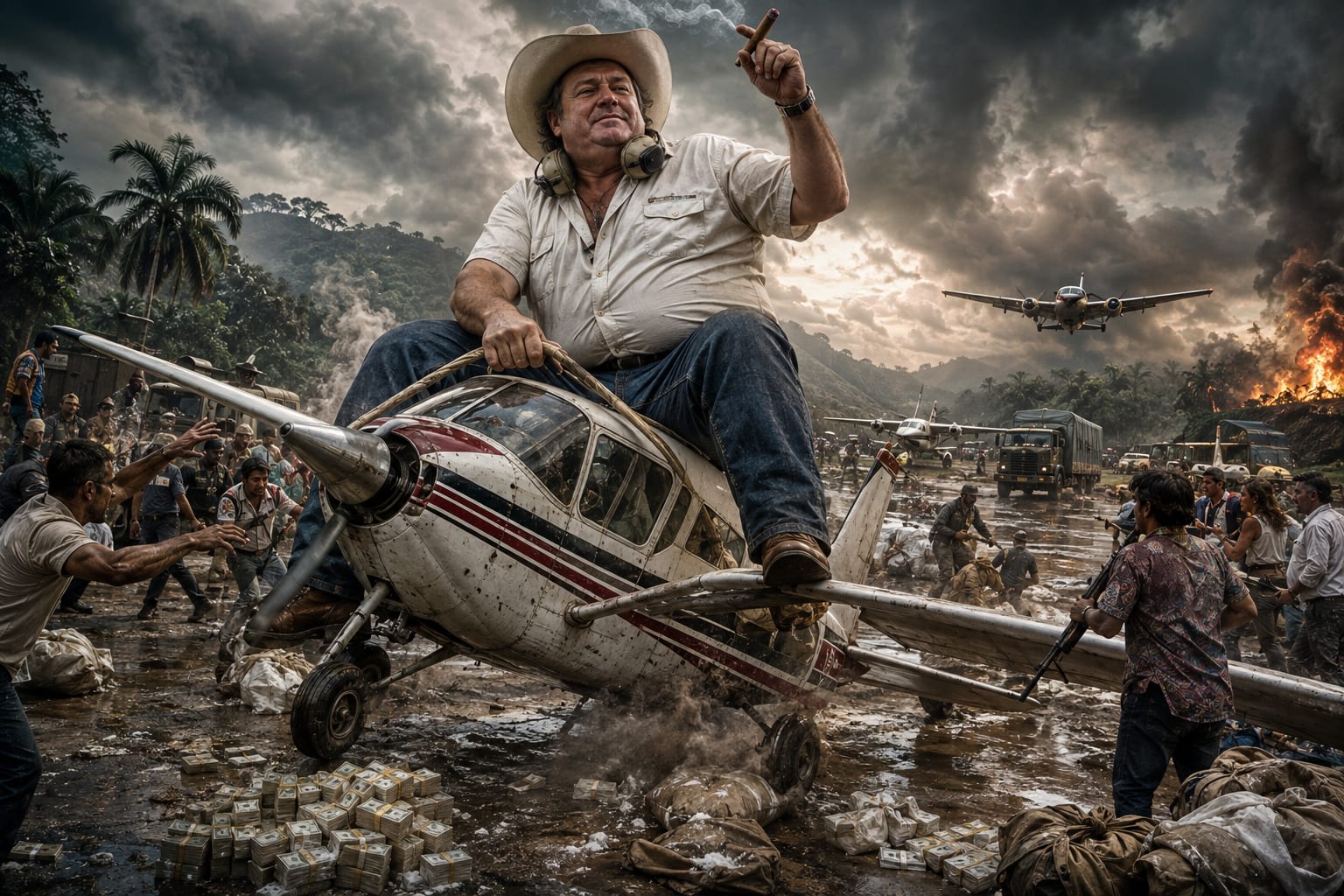
Barry Seal was fat, balding, and utterly convinced he was the smartest man alive, which is precisely why he ended up dead in a parking lot with a cigar still in his teeth.
Here was a man who flew planes for the CIA, then flew them for the Medellin Cartel, then flew them again for the DEA, all while believing that gravity, karma, and Pablo Escobar could be outmaneuvered by a Louisiana boy with a pilot's license and a bottomless appetite for adrenaline.
He was wrong. Spectacularly, cinematically wrong.
The Delusion of the Indispensable Man
Every self-made scoundrel shares one fatal fantasy: the belief that his own cleverness makes him immortal. Seal wore this delusion like a cheap gold chain.
He was the classic middle-aged operator who mistakes luck for genius. By his early twenties he was already the youngest command pilot flying for a major airline, and from that moment forward he treated the entire planet as his personal cockpit.
He smuggled cocaine by the ton, laundered fortunes, and cut deals with three governments and a drug empire at the same time, apparently under the impression that everyone else in the room was slower than him.
Spoiler: they were not slower. They were simply patient.
Money Fat, Judgment Thin
Seal made obscene amounts of money running product out of Colombia. And what did this criminal mastermind do with his mountains of cash?
He bought planes. He bought a hangar. He kept flying. 🛩️
This is the tragicomedy of the wealthy male ego in its purest form. Give a man enough money and he does not buy peace, safety, or a quiet villa where no one wants to shoot him. He buys more of the exact thing that will get him killed, because the danger is the only drug his ego actually craves.
The cocaine was for the customers. The risk was for him.
The Snitch Who Thought He Was Bulletproof
When the law finally cornered him, Seal did what every cowardly big shot does when the party ends. He flipped.
He became a government informant, sneaking cameras onto his cargo planes to photograph cartel bosses loading powder like it was a family barbecue. He testified. He posed. He grinned for the men in suits who promised him protection.
And then the same government that used him tossed him aside like a chewed toothpick.
A federal judge ordered him to sit, unarmed and unguarded, outside a Salvation Army halfway house every single evening. The most wanted informant in America, parked in public on a schedule a child could memorize.
The cartel did not need clever spies. They needed a calendar.
The Vanity That Killed Him
Here is the part the movies love and the moralists hate. Seal could have run. He could have vanished, changed his name, grown a beard, and rotted comfortably in some anonymous town.
He did not. Because men like Barry Seal cannot tolerate anonymity. Disappearing would have meant admitting he was ordinary, and that was a death worse than any bullet.
So he sat in his white Cadillac, a monument to a man who confused visibility with power. In 1986, gunmen from the cartel walked up and ended the fantasy in seconds.
The smartest man alive did not see it coming, which rather undermines the whole smartest-man theory.
The Legend Machine Cleans Up the Corpse
Naturally, decades later Hollywood dressed him up as a charming rogue, all wit and swagger, a lovable rascal who danced between empires. 🎬
The reworking is almost admirable in its shamelessness. A greedy man who fueled an addiction epidemic, betrayed everyone he ever worked with, and got himself executed through sheer stubbornness gets remembered as a folk hero.
That is the final trick of the reckless rich man. Even his humiliating death becomes a brand.
What the Cadillac Really Meant
Barry Seal's life was not a thriller. It was a case study.
He was proof that criminal genius and terminal vanity are frequently roommates. He believed his charm could survive Escobar, the CIA, the DEA, and his own bottomless need to be the most interesting person in every hangar.
The men who killed him did not admire his intelligence. They simply understood something he never could grasp about himself.
He was never the pilot. He was always the cargo. And cargo, eventually, gets delivered.