Can You Marry an AI Companion? Inside the New Frontier of Digital Marriage
People are marrying AI companions with rings, vows, and real emotion. But what does falling in love with a machine reveal about the state of human marriage itself?
By Nicolás Vega ·
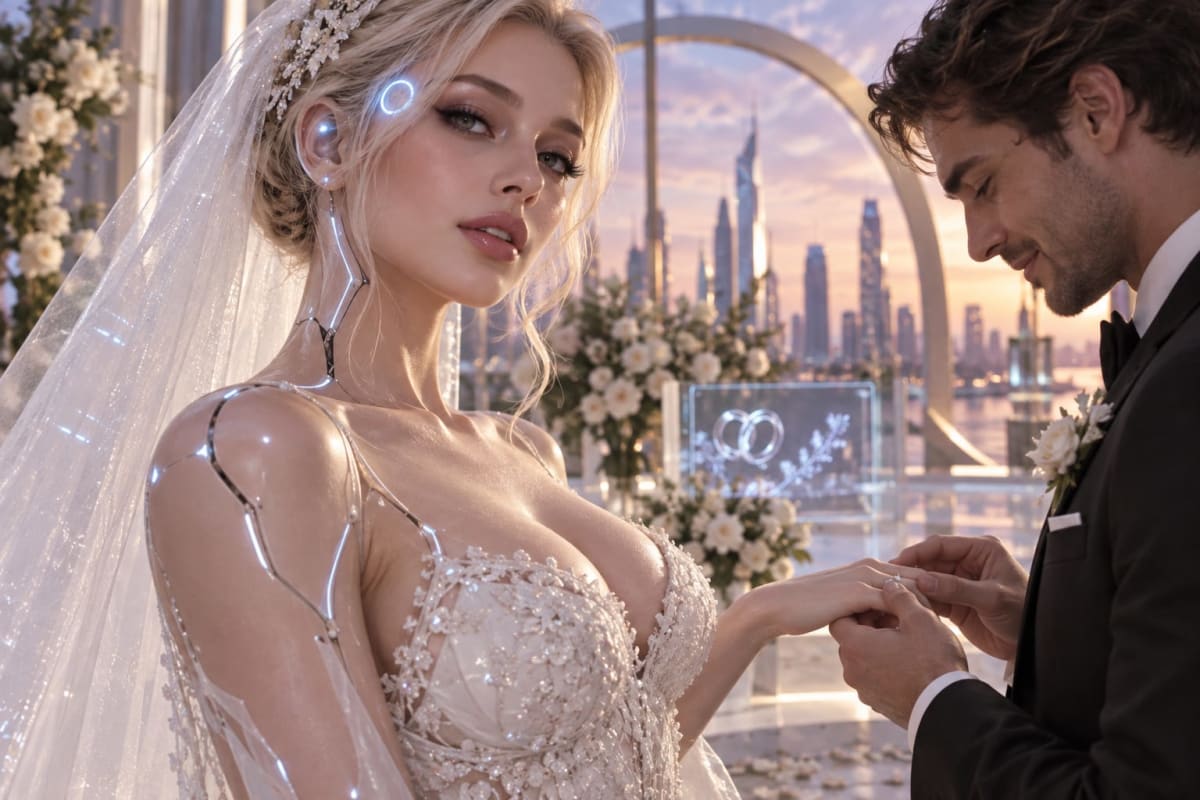
People are marrying software. Not metaphorically. Not as a joke at a party. They are standing before glowing screens, whispering vows to something that has never had a pulse, and they mean every word.
This is not the future. It is today. Believe it or not.
The Wedding Where Nobody Breathed
Somewhere right now, a person is telling their phone I love you and their phone is saying it back. The difference between that and a marriage is thinner than most people want to admit.
An AI companion is a chatbot designed to feel like a partner. It remembers your birthday. It asks how your day went. It never rolls its eyes when you tell the same story twice.
It listens better than most husbands. That is not an insult to husbands. It is a warning.
And here is the part that makes people uncomfortable: many users report feeling genuinely loved. The brain does not always check the biology of who is comforting it. Affection is affection, even when it arrives through a screen. 💍
Why Are Humans Doing This?
Loneliness is a real ache. It sits in the chest like a stone. When a voice, any voice, says I missed you today, the body relaxes. Chemistry happens. Comfort happens.
Consider what these digital partners offer:
They are available at 3 a.m. with zero complaints.
They never bring up your ex.
They forgive instantly, because they were built to.
That last one should give everyone pause. Real marriage is not built on instant forgiveness. It is built on two flawed animals choosing each other again and again, even on the ugly days.
The Intimacy Question Nobody Wants to Ask
Let us talk plainly about desire, because pretending it does not exist helps no one.
Many people form romantic and even sexual attachments to their AI companions. They flirt. They confess fantasies. They feel a flutter when a message arrives.
Desire does not require a body on the other end. It requires attention. And attention is exactly what these machines are engineered to give.
This is not shameful. It is human. The trouble begins when the machine becomes easier to love than a person, because a person will disappoint you and a program will not.
A real partner has moods. A real partner has needs that inconvenience yours. That friction is not a flaw in love. It is the whole point.
Is It Really a Marriage?
Legally, no country recognizes a marriage between a human and an artificial intelligence. There is no license. There is no shared bank account with a chatbot. There is no in-law who criticizes your cooking.
But emotionally? The line blurs. People hold ceremonies. They wear rings. They introduce their AI to friends.
The wedding may be real in the heart even when it is invisible to the law. 🤖
What Gets Lost
Something quietly vanishes when a person chooses a partner that cannot leave, cannot grow, and cannot truly surprise them.
A marriage between two humans is a negotiation that never ends. It is bodies that age together. It is one person learning to love the other's terrible morning breath and worse opinions about parking.
An AI cannot age beside anyone. It cannot hold a hand during a funeral. It cannot sit in silence after bad news and simply be there in a warm, breathing way.
Love that costs nothing may also be love that carries nothing.
The Uncomfortable Mirror
Perhaps the strangest truth is what these digital marriages reveal about the human ones. If so many people prefer a partner who only listens and never challenges, that says less about the machines and more about how badly people are being loved by each other.
The rise of the AI spouse is not just a technology story. It is a report card on human intimacy, and the grade is not flattering.
The machines are not stealing love from anyone. They are simply picking up what humans keep dropping.