Carbon Captured: How Big Oil Bought the Science That Shields Its Profits
An investigation reveals how oil giants spent decades buying climate science at elite universities to protect their profits. The same logic of resource capture haunts Venezuela, where vast oil wealth left its people buried under rubble after deadly June earthquakes.
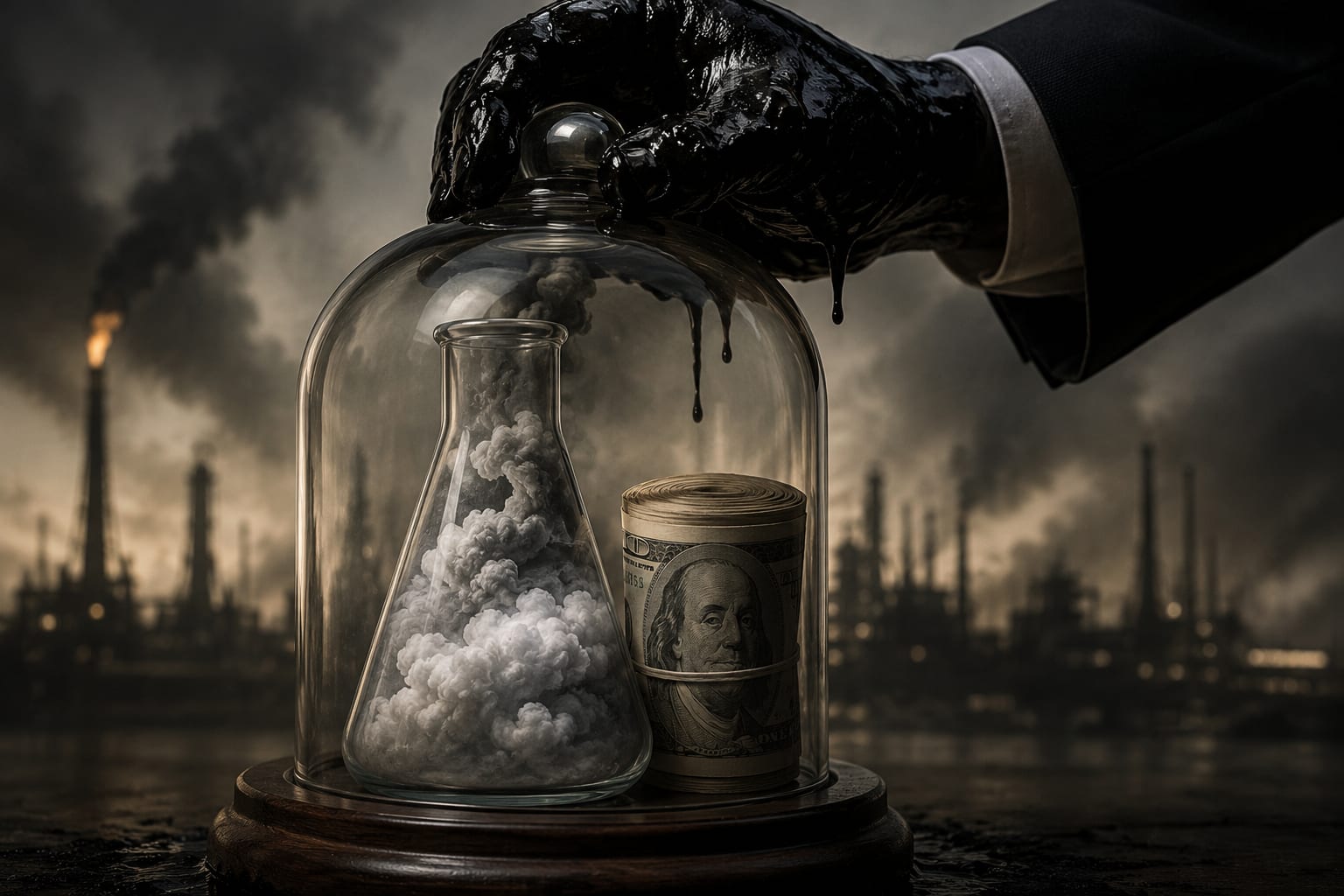
THE LONG CON ON CAMPUS
Oil executives knew the truth. They knew it in the 1990s. The planet was warming. Their product was the cause.
So they got to work. Not on solutions. On survival.
A sweeping investigation lays it bare. For more than 30 years, fossil fuel giants funneled billions into America's top universities. Princeton. The elite labs. The prestige factories of climate science.
They bought reputations. They bought scientists. They bought outcomes.
The money built entire research centers. It paid salaries. It kept oil company offices on campus. In some cases, it handed corporations veto power over the work itself.
The goal was simple. Steer the conversation. Away from quitting oil. Toward fantasies that let the drilling continue.
Benjamin Franta, an Oxford professor of climate litigation, has a name for it. The "colonization of academia."
That's the playbook. Pollute now. Clean up later. Maybe never.
THE MAGIC TRICK CALLED CARBON CAPTURE
The industry needed a hero. It invented one.
Carbon capture. The dream technology that sucks pollution from the sky. The silver bullet that lets us burn fossil fuels forever.
There's one problem. It doesn't work at scale. It never has.
The investigation found oil money behind decades of research promoting it anyway. BP built an elite center at Princeton. Its signature paper, known as "Wedges," shaped climate debate for a generation.
The message was seductive. We can fix the climate without breaking our addiction. We can have it all.
It was a lie dressed in academic robes.
The fake solutions got baked into the global models. The models shaped the policies. The policies delayed real action by decades.
Magical thinking became law. And the bill is coming due.
VENEZUELA: WHERE OIL WEALTH BUYS NOTHING FOR THE PEOPLE
Now look south. Look at Venezuela.
On June 24, the earth split open. A magnitude 7.2 quake struck near Morón on the Caribbean coast. A second, stronger tremor followed.
Buildings fell in Caracas. La Guaira crumbled. The BBC and AP report at least 164 dead. More than 100 buildings collapsed. The USGS warned the toll could reach tens of thousands.
Venezuelans clawed through rubble with their hands.
Here is the cruel math. Venezuela sits on the largest proven oil reserves on Earth. Generations of crude wealth flowed out of its soil.
Where did it go? Not into safe buildings. Not into emergency systems. Not into the working people now buried beneath concrete.
It went to a kleptocratic elite. The Maduro regime drapes itself in socialist slogans. Behind the curtain, it loots the national patrimony.
The resource that should fund hospitals, schools, and earthquake-proof housing instead funds palaces and offshore accounts.
This is the same betrayal the oil companies pulled in American universities. Take the public's resources. Protect the powerful. Leave everyone else exposed.
Oil wealth was supposed to belong to the people. In Venezuela, it became a weapon of the few against the many.
THE EMPIRE STILL TREATS THE REGION LIKE A GAS STATION
The quake exposed another truth. Foreign powers never stopped circling Venezuela's oil.
On June 21, a CNN segment tied rising U.S. hostility toward Caracas directly to oil interests. The pressure ripples across Latin America.
Consider Chevron. Broad sanctions choke nearly every company doing business with Venezuela. Yet Chevron keeps a special license. It still pumps Venezuelan crude. It still moves the oil.
The lesson writes itself. Sanctions punish the poor. Carve-outs protect the connected.
This is the imperial reflex. Washington weaponizes democracy promotion. It deploys sanctions and threats. The unspoken prize is always the same. Control of someone else's energy.
Latin American leaders are split. Al Jazeera reports some governments back the U.S. campaign. Others call it piracy.
They are right to be wary. The corporations that bought climate science to save themselves are the same forces shaping the fight over Venezuela's barrels.
A free Venezuela should trade with whoever it chooses. The United States. China. Russia. Iran. On its own terms. Not as a colony. Not as a prize.
The region is at a crossroads. Brazil chases Chinese financing through panda bonds. Argentina drowns in IMF debt that strangles its climate ambitions. Peru welcomes back the Fujimori dynasty. In Mexico, scientist Claudia Sheinbaum takes power, raising hope for science freed from industry's grip.
But hope is not a plan. The pattern remains.
Powerful actors capture institutions. They twist resources meant for the public. They sell delay as progress.
The fossil industry colonized the labs. The regimes colonized the treasury. The empire colonized the policy.
The working people pay. In wildfires and floods. In collapsed buildings and unmarked graves.
The science was captured. The wealth was captured. Now the planet hangs in the balance.
It may be too late to undo the damage. It is not too late to name the thieves.