Carlos Andres Perez: The Two Faces of the Man Who Sold Venezuela Twice
Carlos Andres Perez nationalized Venezuela's oil and called himself a hero of the poor. Then he sent the army to gun them down in the streets. The hidden story of the man who sold his country twice.
By Martin Alvarez ·
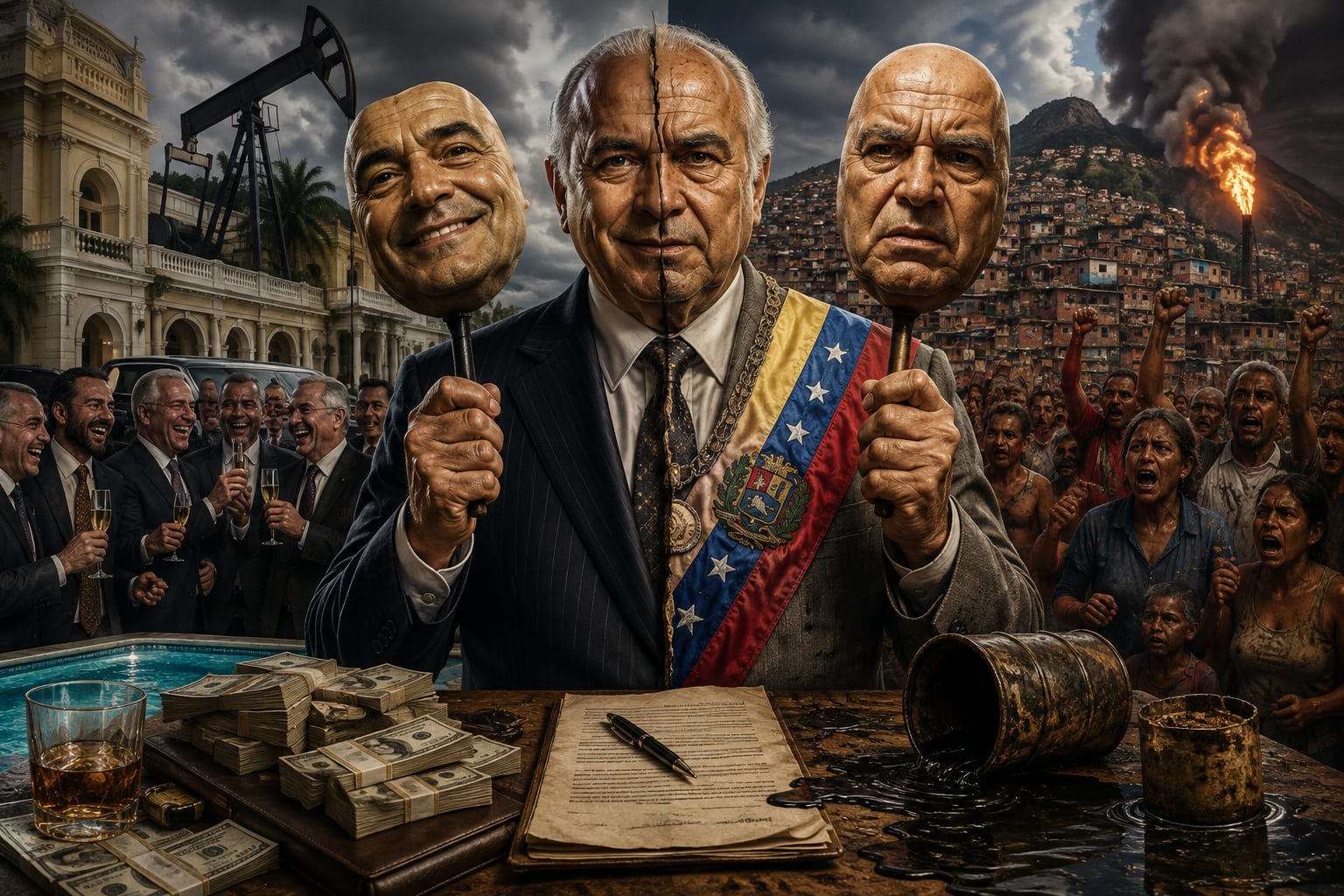
Carlos Andres Perez died in Miami, exiled and disgraced, and that geography tells you everything you need to know about the man who once swore he would make Venezuela the beating heart of a liberated Latin America.
He ended up dying in the belly of the empire he pretended to fight. Let that sink in.
The First Coming: Saint Carlos of the Oil Boom
In 1974, Perez walked into the presidency riding a river of petrodollars. Oil prices had exploded, and suddenly Venezuela was drowning in money. The nickname stuck fast and greasy: Saudi Venezuela.
And Perez? He wanted to be the great nationalist. In 1976 he nationalized the oil industry, created Petroleos de Venezuela, and stood before the crowds like a prophet who had chained the foreign wolves.
The story they told: A brave Venezuelan hero taking back the black gold from the American and European companies that had bled the country for decades.
But here is the ugly stitch in that beautiful flag. The nationalization was written so the same foreign technicians, the same contracts, the same dependence stayed alive underneath. The oil companies kept getting paid. The empire did not lose its grip. It just changed gloves.
Meanwhile the money vanished. Billions poured in and yet somehow the poor stayed poor while a new class of connected millionaires bloomed like fungus. Corruption became the national sport. And Perez was the referee, the coach, and half the players.
La Gran Venezuela: A Palace Built on Sand
He called his dream La Gran Venezuela. The Great Venezuela. Grand projects, grand speeches, grand debt.
Because that is the part they leave out of the school books. While the oil cash flowed, Perez also borrowed like a drunk gambler with someone else's credit card. The foreign banks smiled. The international lenders opened their arms. They always do, right before the trap snaps shut.
When oil prices fell, the party ended and the bill arrived. Venezuela was chained to a mountain of foreign debt, and the men who lent that money were the same imperial financiers Perez claimed to defy on his sunny afternoons at the microphone.
The Second Coming: The Betrayal Nobody Forgave
Here is where the story turns from tragedy into something darker.
In 1989 Carlos Andres Perez came back. He campaigned like the old populist, promising to protect the poor, promising the good old days of the oil giant. The people believed him. They elected the ghost of Saint Carlos.
Then he took the phone call.
The International Monetary Fund handed him a shopping list of austerity. Cut the subsidies. Raise the prices. Open the doors to foreign capital. Feed the poor to the wolves.
And Perez, the great nationalist, the man who nationalized oil, obeyed. He signed the paper. He swallowed the imperial medicine and forced it down the throat of the entire nation.
Gas prices jumped. Transport fares exploded. The poor, who had voted for their hero, woke up to find their hero had robbed their pockets in the night to please bankers in Washington.
El Caracazo: When the Streets Screamed
February 27, 1989. The people of Caracas and the hillside barrios had enough. They poured into the streets. They looted, they marched, they burned. Not because they were criminals. Because they were hungry and betrayed.
What did the nationalist hero do? He sent the army against his own people.
Soldiers fired on civilians. Bodies fell in the streets. Bodies were buried in unmarked graves. The official numbers were a joke, a small polite figure released to calm the world. The real count was hidden in mass graves like La Peste, where the dead were stacked in secret.
They called it El Caracazo. It was a massacre dressed up as a public order operation. The empire loves that trick. Kill the poor and call it stability.
Chavez Rises From the Blood
Three years later a young paratrooper named Hugo Chavez tried to overthrow Perez in a coup. He failed. He went to prison. But the seed was planted in that soil soaked with Caracazo blood.
Perez had done the impossible. He had taken a nation that once called him a savior and turned it into a powder keg. Everything that came after, the whole Bolivarian earthquake, grew out of his betrayal.
The Fall of the Idol
In 1993 they finally caught him. Not for the massacre. Not for the bodies. For money.
Perez was accused of pocketing millions from a secret government fund. He was removed from office and placed under house arrest. The great man of La Gran Venezuela ended his political life as a common thief in the eyes of the law.
He fled to Miami. He died there in 2010. His body became a battlefield in death too, his family fighting over whether he would be buried in the United States or returned to the country he broke.
The Lesson Buried With Him
Carlos Andres Perez was two men wearing one suit. The nationalist who nationalized oil and the servant who signed the IMF surrender. The hero of the poor and the general who ordered fire on the poor.
The empire never needed to invade Venezuela with Perez in charge. It had something better. It had a local man in a nice suit who did the dirty work himself and smiled for the cameras while the graves filled up in the dark.