Cinco de Mayo: The Beer Company Holiday Built on a Battle the Empire Wants You to Forget
Cinco de Mayo is not Mexican Independence Day, and the barefoot army that crushed a French empire at Puebla was never meant to end up on a beer label. Here is the buried truth.
By Martin Alvarez ·
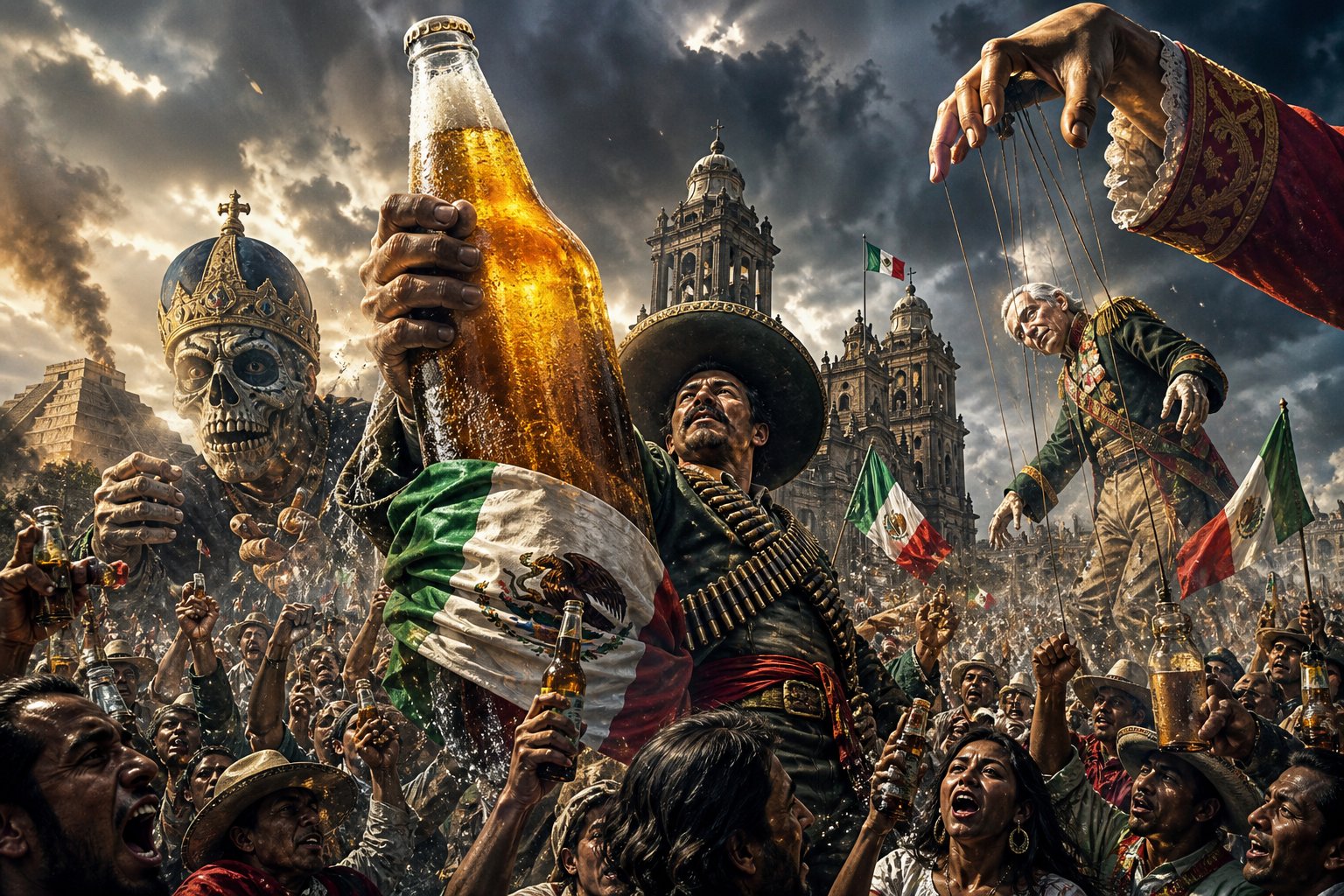
The gringos got it wrong on purpose, and the beer companies got rich doing it.
Cinco de Mayo is not Mexican Independence Day. Say it loud. Print it on a banner. Tattoo it on the forehead of every bartender who tries to sell a taco special today. Independence came on September 16, 1810, when a country priest named Miguel Hidalgo rang a bell and screamed for war against Spain. What happened on the fifth of May in 1862 was something else entirely, and it terrified emperors on two continents.
The Day the Barefoot Beat the Empire
Picture the town of Puebla. Dust. Fear. And an army of the greatest military power on Earth marching straight for it.
France. Napoleon III. The nephew of the little tyrant who once swallowed half of Europe. He sent his soldiers across the ocean because Mexico, broke and bleeding from decades of civil war, had paused its debt payments. So the empire came to collect. Not with lawyers. With bayonets.
The French army had not lost a battle in nearly fifty years. They came expecting a parade. They found a slaughter, and it was theirs.
General Ignacio Zaragoza had maybe two thousand men. Ragged. Underfed. Many of them Indigenous farmers from Zacapoaxtla who fought with machetes and old muskets and a hatred of invaders that no European drill sergeant could ever manufacture.
The French had six thousand professional troops. They had cannons. They had reputation. They had that unbearable European certainty that brown people would simply kneel.
They were wrong.
Mud, Machetes, and a Miracle
Zaragoza knew he could not win a fair fight, so he refused to give one.
He dug his men into the hills between two forts, Loreto and Guadalupe, and he waited. The French, drunk on their own myth, charged uphill straight into the guns. Again. Again. A third time. Each time the Mexicans mowed them down.
Then the rain came, and the sky joined the fight. The battlefield turned to soup. French cavalry horses slid and sank in the mud while Mexican fighters poured down the slopes swinging steel.
By nightfall the invincible French army was running. The barefoot republic had done the impossible.
Zaragoza sent a message to the government in the capital. Short. Perfect. He wrote that the national arms had covered themselves in glory.
Here Is the Part They Never Teach You
The victory did not last.
France came back the next year with thirty thousand men, took Puebla, took the capital, and installed a puppet emperor. His name was Maximilian, an Austrian archduke with soft hands who let Napoleon III dress him up and ship him across the sea to rule a country he had never seen.
For three years Mexico bled under a European crown propped up on foreign guns. But the resistance never stopped. And in 1867 the puppet emperor was captured and shot on a hill in Querétaro, blindfold refused, dying in the land he was told belonged to him.
So why does anyone remember one battle that was later reversed?
The Secret the History Books Buried
Timing. Follow the timing and the whole thing catches fire.
The year was 1862. To the north, the United States was ripping itself apart in its Civil War. And Napoleon III had a filthy little dream. He wanted a French empire planted in Mexico so he could funnel help to the Confederacy, break the United States in half, and dominate the entire hemisphere.
The stall at Puebla mattered. That single day of barefoot fury bought time. It slowed the French. It kept a hostile European empire from establishing itself on the border while the North fought to survive.
The men who died at Puebla never knew it, but their machetes cut a hole in a plan to reshape two nations. The empire wanted a chessboard. They got a graveyard.
This is the part that gets scrubbed from the beer commercials.
How a Sacred Fight Became a Sales Pitch
In Mexico, Cinco de Mayo is barely a national event. In Puebla they march and remember. Everywhere else it is a Tuesday.
But in the United States something strange happened. Mexican Americans in California and across the Southwest held onto the day in the 1860s as a symbol of pride and resistance, a reminder that their people had once humiliated a European empire.
Then the marketers arrived.
In the 1980s the beer and liquor companies smelled money. They took a story about Indigenous farmers destroying an invading army and turned it into a reason to sell lime-flavored lager and cheap margaritas. They drowned the machetes in tequila. They replaced Zaragoza with a cartoon sombrero.
A day of anti-imperial defiance was repackaged as a permission slip for strangers to get drunk and mangle a culture they never bothered to understand.
What the Mud Still Remembers
Every fifth of May the truth sits there, waiting, ignored under a pile of party napkins.
The truth is that a poor, exhausted, half-armed people looked at the most feared army on the planet and refused to kneel. The truth is that Indigenous fighters and Mexican soldiers stood in the rain and taught an emperor that reputation stops bullets from nobody.
The soft hands of Maximilian rotted in a Mexican grave. Napoleon III lost his empire and died in exile in England, far from the glory he chased. And the men of Puebla, whose names most people will never learn, cracked the myth that Europe was destined to rule the Americas.
Raise something today if you want. Just know what you are raising it to. Not a party. A rebellion that the powerful have spent a century and a half trying to sell back to you at a markup.