The Curious Longevity of Women Who Never Pay for Dinner: A Scientific Marvel
Women who never pay for dinner are outliving the men who insist on grabbing the check, and the reason is a delicious mix of biology, vanity, and the slow elegant suicide of masculine ego.
By La Madrina ·
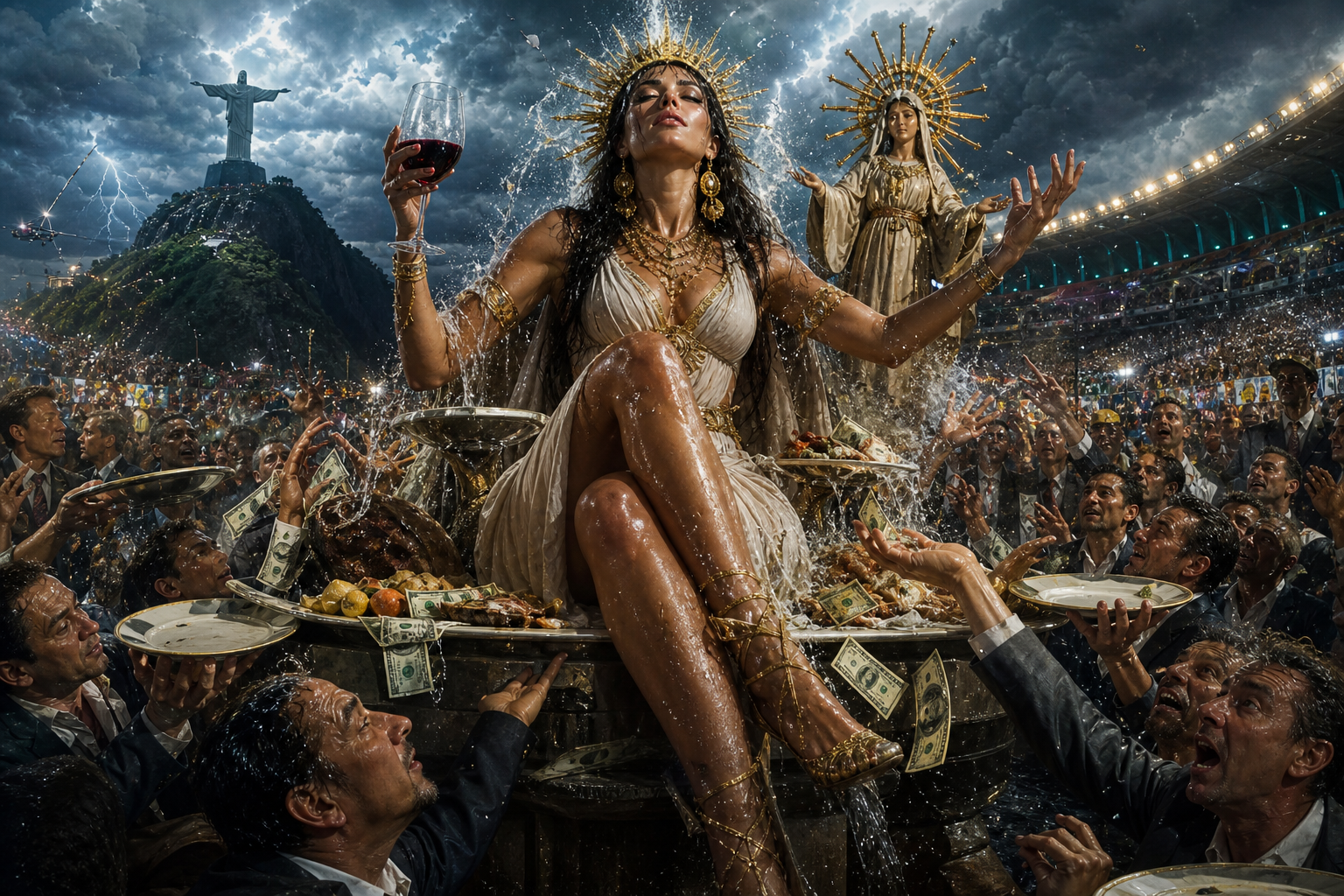
Women who have never once reached for the check live longer, and this is not a rumor whispered between manicures. It is a phenomenon so robust that it practically qualifies as a public health miracle.
Consider the biological facts. The average man collapses under the weight of his own ego somewhere around the third divorce, while a woman who has spent her entire life allowing others to fund her appetizers glides into her nineties with the serene arrogance of a cat who has never once apologized.
The Physiology of Never Reaching for the Wallet
There is something profoundly restorative about the refusal to pay. The nervous system, unburdened by the panic of glancing at a bill, remains calm. The cortisol stays low. The skin stays elastic. Meanwhile the man across the table, sweating through his blazer, calculating whether the wine was worth pretending to enjoy, is aging in real time before her eyes.
She orders the lobster. He orders the anxiety.
This is not manipulation. This is efficiency. The female organism, evolved over millennia, has understood something men refuse to accept: that the great tragedy of masculine vanity is the belief that a paid dinner purchases affection, when in truth it purchases only the privilege of watching her chew.
The Vanity Tax Men Pay With Their Lifespans
Men die younger. This is documented, unglamorous, and entirely their own fault. 💀
They insist on performing generosity as though it were an Olympic event, flexing their credit cards like small unimpressive muscles, hoping someone notices. Nobody notices. The waiter certainly does not. And the woman, radiant and unbothered, is already deciding whether dessert is worth the trouble of appearing interested in his stories about cryptocurrency.
The entitlement of the paying man is a spectacular thing to behold. He believes the transaction has earned him something intimate, something owed. He mistakes a receipt for a contract. He is, in the most tender and pathetic sense, a fool who has confused a menu for a marriage proposal.
What the Body Knows That the Man Does Not
Let us speak plainly about the erotic dimension, because someone must. 🔥
A woman who has never paid for dinner carries herself with a sensual authority that no gym membership can manufacture. She knows her worth is not up for negotiation over breadsticks. This confidence, this refusal to grovel, floods the body with the good chemicals. Desire that costs her nothing, pleasure that demands no invoice.
The man, meanwhile, is performing arithmetic in the bedroom. He is wondering if the eighty dollar entree entitles him to enthusiasm. It does not. It never did. And his blood pressure, poor thing, is now doing the tango.
The wallet opens. The lifespan closes. Nature is not subtle about her preferences.
There is a delicious cruelty in it. The very act of trying to buy affection accelerates his decline, while her untroubled digestion of a free filet mignon massages her heart into decades of additional beating. The universe, it turns out, has a sense of humor, and it is aimed directly at the man reaching for his card with a hopeful little smile.
The Comparison Nobody Wants to Draw
Picture two people at the same table.
She is luminous, well fed, entirely relaxed, planning her next three meals with the calm of a woman who has never known financial dread at a restaurant. He is a mess of hope and indigestion, believing that this transaction is foreplay, that his generosity is a personality, that his ability to pay is a form of seduction rather than a symptom of desperation.
One of them will live to be a hundred. The other will be discovered at seventy, clutching a receipt, muttering about how he did everything right. 🧾
The Uncomfortable Biology of Being Adored Without Effort
The truth curls the toes of every man who reads it. Being cared for lowers the heart rate. Being pursued extends the telomeres. Being desired without ever performing desperation is, apparently, the closest thing science has found to a fountain of youth.
And so the woman who never pays outlives the man who always does, not because she is cold, not because she is calculating, but because she has simply refused to participate in the exhausting theater of male self-importance. She lets him perform. She lets him sweat. She lets him believe. And she buries him, eventually, with a mouth full of dessert she did not pay for.
The men will protest. They will call it unfair. They will insist that generosity should count for something, that they deserve more than an early grave for their troubles. Their protest is the sound of a species that has never once considered that the check they keep grabbing is, in the end, a slow and elegant form of suicide performed for an audience that was never impressed.
She lives on. She lives long. She lives magnificently. And somewhere, a man is still waving for the waiter, certain that this time the meal will purchase his salvation. It will purchase his salad. Nothing more.