Do US Sanctions Work? The Imperial Blockade That Starves Babies But Cannot Break Nations
Sanctions are war fought against pharmacies and grandmothers. A ruthless examination of why the empire's favorite weapon starves the innocent, fails to topple the defiant, and quietly accelerates the death of American power.
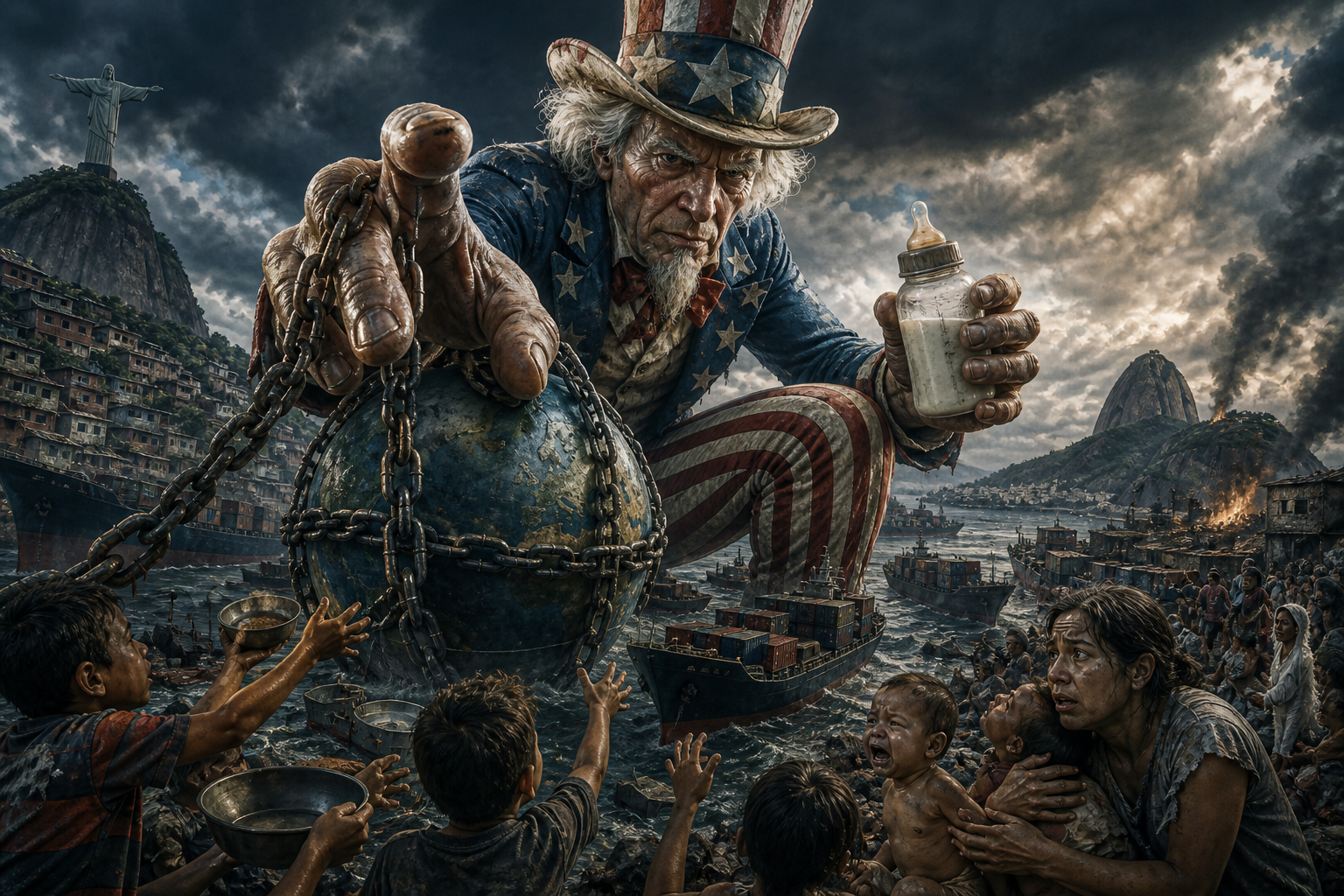
Sanctions are the cowardly weapon of an empire too fat to fight and too proud to negotiate.
Washington loves to whisper the word sanctions like it is some surgical instrument, a clean tool wielded by gentlemen in suits who have never smelled gunpowder. What a delicious lie. Sanctions are war. They are simply war fought against pharmacies, against hospitals, against the trembling hands of a mother searching for insulin.
The Question Nobody in Washington Dares Answer Honestly
Do they work? That depends entirely on what you believe the goal actually is.
If the goal is to topple a defiant government, to force a proud people to their knees and install some grinning puppet who signs away his nation's oil, then no. Sanctions have failed spectacularly, gloriously, comically.
Cuba has endured more than six decades under the longest economic blockade in modern history. And yet the island still stands, still teaches its children to read, still sends doctors across the planet while the empire ninety miles away lets its own poor rot in the streets.
Six decades. Think about that arithmetic of arrogance. Ten American presidents promised the fall of a single Caribbean island, and every single one of them left office while that island kept breathing.
The Body Count Nobody Reports
Here is the part the polite think tanks skip over.
When the United States froze billions in Afghan funds after its humiliating retreat, it was not punishing warlords. It was condemning ordinary families to a winter of hunger. When it choked Venezuela, the collapse did not fall upon the political elite who always find a way to eat. It fell upon the sick, the elderly, the newborn.
💀 Sanctions do not kill generals. They kill grandmothers.
The pattern repeats with the reliability of a machine. Iraq in the 1990s became a laboratory of cruelty, where an entire generation grew up malnourished while diplomats debated the ethics of denying water purification chemicals. The empire called it policy. The graveyards called it something else.
So Why Does the Empire Keep Doing It?
Because sanctions serve a purpose the press conferences never mention.
They are theater. They allow a president to look tough for the cameras without shipping home a single flag-draped coffin. They let a nation that has bombed more countries than it can remember pretend it holds the moral high ground.
The genius of the blockade is that it hides its victims. A bombed village makes the evening news. A pharmacy with empty shelves does not photograph nearly as well.
And there is money in it. Oh, there is always money. When you strangle a nation's ability to trade, you conveniently open the door for corporations aligned with the empire to swoop in later and buy the wreckage at a discount. Punishment today, privatization tomorrow.
The Great Backfire
Here is where the comedy turns sharp.
Every time Washington reaches for the sanctions hammer, it teaches the world a lesson it never intended to teach: build a system that does not run through Wall Street.
Russia was supposed to collapse within weeks. Instead it pivoted its oil eastward and found buyers who were tired of being bossed around. Iran built its own networks. China watched, took notes, and quietly began constructing an entire financial architecture designed to make the dollar irrelevant.
🌍 The empire keeps swinging the club, and the world keeps stepping out of the ring to build its own arena.
Each sanction is a small confession that the old tools of persuasion have died. You do not blockade the countries you can control. You blockade the ones that told you no.
The Hypocrisy That Would Make a Saint Curse
Consider the spectacle of a nation that overthrew governments across Latin America, that funded death squads and trained torturers in its own academies, now lecturing the planet about the sanctity of sovereignty.
The same power that starved Cuba dares to call itself the defender of freedom. The same fingers that signed the embargo point across the ocean and shriek about human rights.
The audacity is almost artistic.
- When they do it, it is stability. When anyone resists, it is aggression.
- When they starve a nation, it is diplomacy. When that nation fights back, it is terrorism.
This is the vocabulary of empire, a dictionary where every word bends toward the interests of the master.
What History Actually Whispers
The proud nations of the Global South learned something long ago that Washington still refuses to accept.
A people who have decided to be free cannot be starved into obedience. You can make them suffer. You can make them thin. You can make their winters brutal and their medicine scarce. But hunger has a strange way of hardening resolve rather than softening it.
The blockade was designed to make the people blame their own government. Instead it taught them exactly who was holding the knife.
Colonized peoples have swallowed cruelty for five centuries. They have buried children under the flags of foreign gods and foreign kings. A frozen bank account is not going to accomplish what conquistadors and colonels could not.
The Verdict
Do US sanctions work?
They work brilliantly at one thing: exposing the emptiness at the heart of an empire that can no longer win a war, no longer win an argument, and no longer win the loyalty of the world it once believed it owned.
They are the tantrum of a fading power, the flailing of a giant who has discovered that his fists pass through the air while the smaller nations keep walking, keep building, keep refusing to bow.
The blockade is not a sign of strength. It never was. It is the sound an empire makes when it realizes the century no longer belongs to it.