How El Salvador Went From the Deadliest to the Safest Country in Latin America
El Salvador went from the murder capital of the world to a rebranded tourist darling, and the story is equal parts miracle, spectacle, and deeply uncomfortable trade-off.
By Lucia Mendoza ·
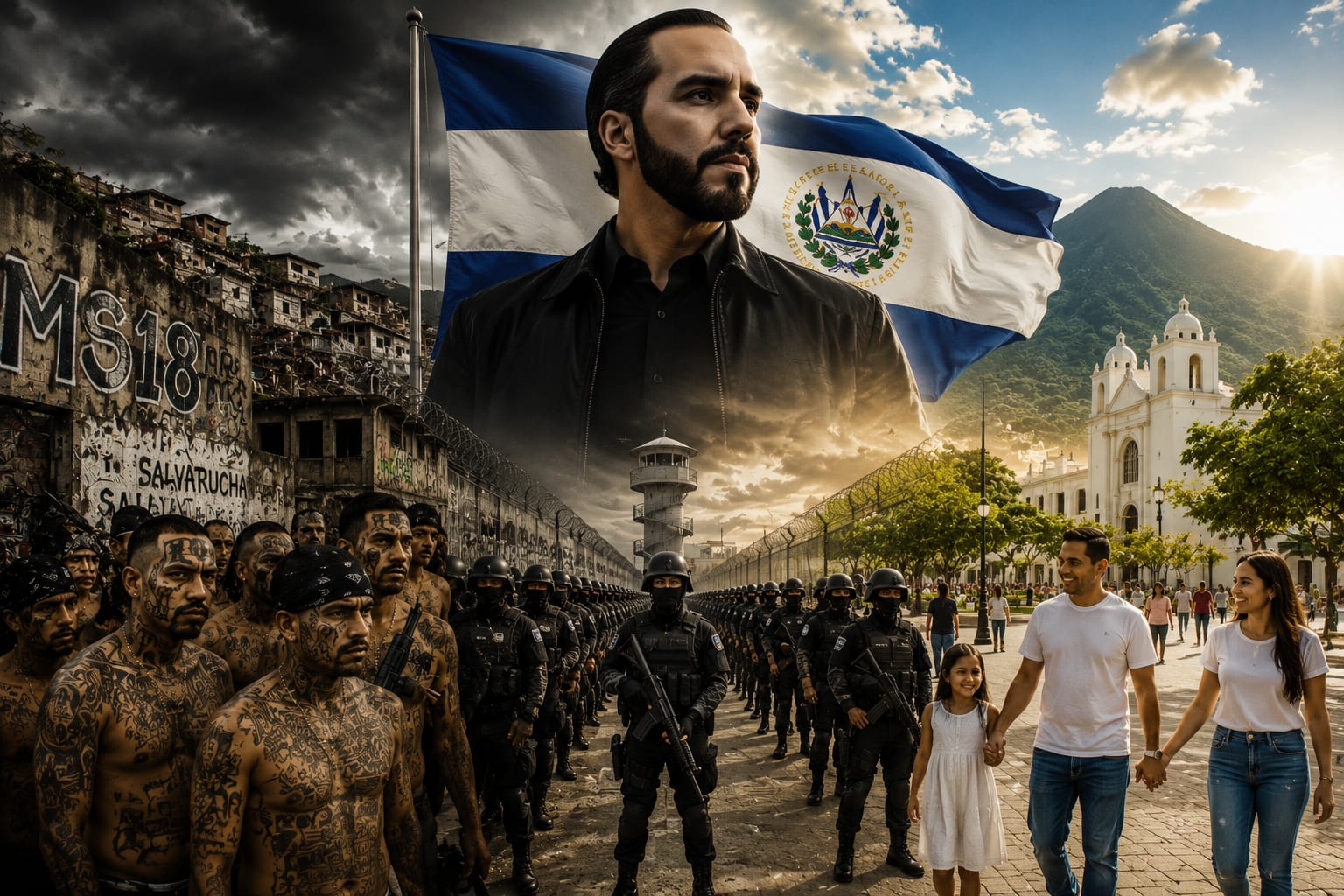
El Salvador used to be a place where funerals outnumbered birthday parties. Now it markets itself like a boutique hotel with a beach view. Same country. Totally different Instagram grid.
The transformation is so wild it borders on obscene, and everyone from bikini influencers to crypto boys is fighting for a piece of the glow-up.
The Country That Was Basically a Warzone
Rewind a few years and El Salvador wore an ugly crown: the murder capital of the world. Gangs like MS-13 and Barrio 18 ran entire neighborhoods like private kingdoms. They collected "taxes" from bakery owners. They decided who lived on which street.
People paid extortion money just to keep selling pupusas. Buses stopped running because drivers were being killed. Whole families packed up and fled north, choosing a desert crossing over staying home.
It was a nation held hostage by teenagers with tattoos and guns, and nobody in power seemed able to stop it.
The vibe was pure terror, and the fear was democratic. Rich, poor, young, old, everyone flinched at the sound of a motorcycle slowing down.
Enter the Man With the Backwards Cap
Then came Nayib Bukele, a president who dresses like a tech startup founder and posts like a teenager who just discovered the block button.
He calls himself "the world's coolest dictator," which is the kind of thing you say when you know exactly how thirsty the internet is for a strongman with good lighting and a leather jacket.
In 2022 he declared a state of emergency and launched a crackdown that felt biblical. The plan was simple and brutal:
- Suspend certain constitutional rights
- Flood the streets with soldiers
- Arrest anyone suspected of gang ties
Tens of thousands of people were rounded up. The prisons filled so fast the government built a mega-prison the size of a small city to hold them all.
The Prison That Looks Like a Dystopian Movie Set
That mega-prison, known as CECOT, became a global spectacle. Rows of shirtless, tattooed men crammed together, heads shaved, hands cuffed behind their backs.
The government released the footage on purpose. It was propaganda designed to be shared, and it worked. The images went viral around the planet.
Nothing says "tough on crime" quite like turning a prison into content.
Suddenly the murder rate collapsed. Neighborhoods that were no-go zones opened back up. People stayed out past dark. Kids played in streets that used to be battlegrounds.
The Glow-Up Nobody Saw Coming
El Salvador rebranded itself with the confidence of a girl who got bangs and a new personality over one summer.
It became the first country to make Bitcoin legal tender, betting the whole national image on crypto. Surf towns like El Zonte got a shiny new nickname: "Bitcoin Beach."
Digital nomads showed up with laptops and oat milk expectations. Tourists who once wouldn't dare book a flight started posting sunset photos with zero fear in their captions.
The country that used to export refugees started importing influencers. Let that sink in.
But Here Is the Uncomfortable Part
Not everyone is clapping. Human rights groups say innocent people got swept up in the mass arrests, tossed into overcrowded cells with no trial, no lawyer, no phone call.
Families claim relatives vanished into the system for the crime of living in the wrong neighborhood or having the wrong ink.
Safety at the cost of due process is a trade a lot of people made gladly, and that is its own kind of unsettling.
The critics call it authoritarianism dressed in a hoodie. The supporters call it the reason their kids are alive. Both things can be true at once, and that is exactly what makes this story impossible to look away from.
A Nation Living Two Realities
So today El Salvador exists as a contradiction with a beachfront view. It is genuinely, measurably safer. People who lived through the terror will tell you they can breathe now.
And at the same time, thousands sit in cells while the world debates whether freedom is worth trading for peace.
The murder capital became a tourist brochure. The strongman became a meme. And a tiny Central American country turned into the loudest argument on earth about what we are willing to give up to feel safe walking home at night.