How Meyer Lansky Turned Havana Into A Mob Casino Paradise And Lost It To Castro
Meyer Lansky and the American mob turned 1950s Havana into a gambling and nightlife boom with Batista’s blessing. The casinos paid handsomely until Castro’s revolution seized the assets and shut the operation down.
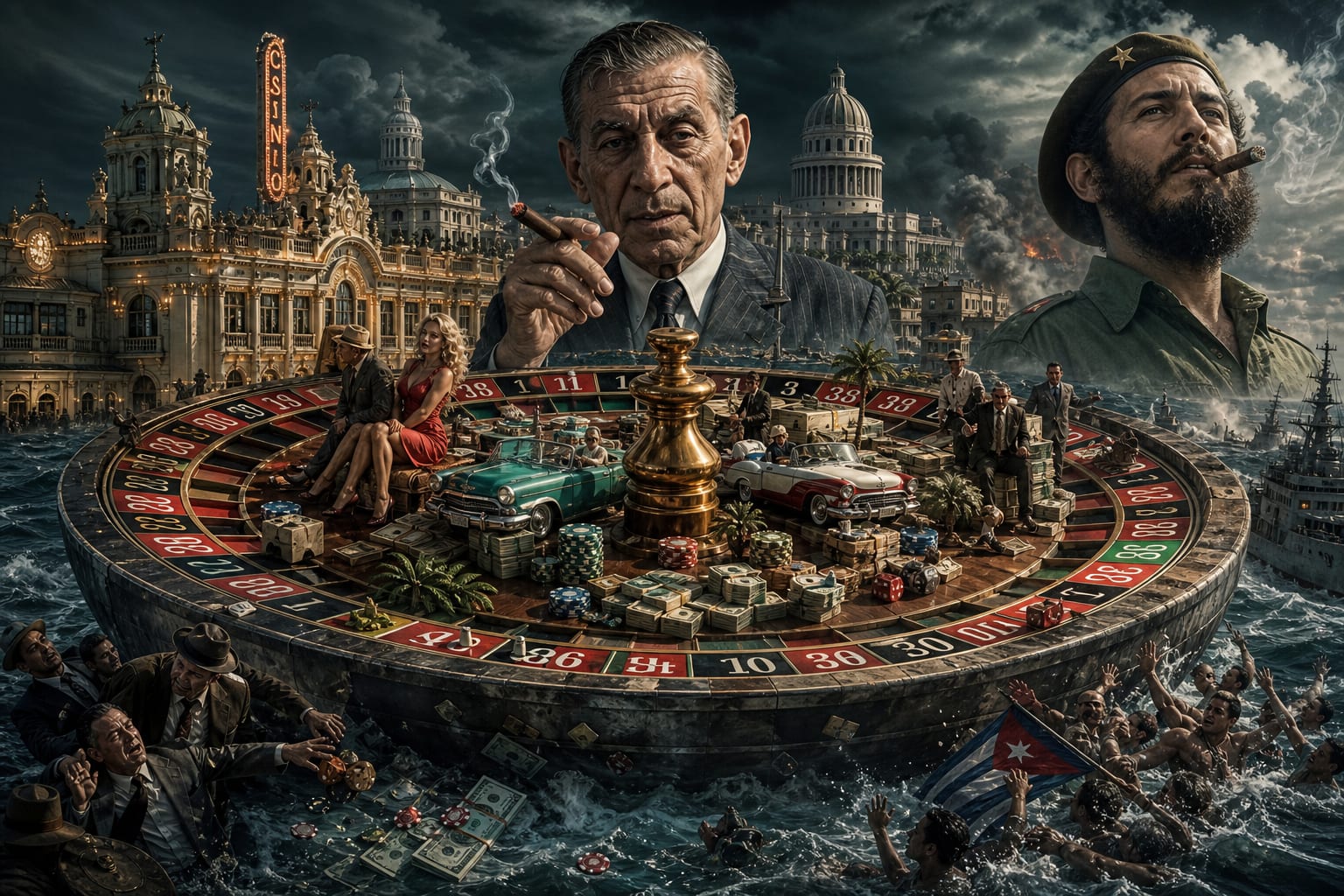
Meyer Lansky and his American mob partners built a glittering casino economy in Havana in the 1950s, backed by a pact with Cuba’s strongman, Fulgencio Batista. The arrangement sent steady bags of cash into the presidential palace, created a boom in nightclubs and tourism, and made Havana a playground for gamblers and celebrities. The scheme ended abruptly when Fidel Castro’s revolution closed the casinos, seized assets and scattered the mob’s profits.
The Casino That Bought A President
Lansky, a numbers man who preferred counting chips to headlines, engineered a practical plan. He made casino gambling the island’s cash cow, set rules to stop cheating, and put trusted dealers in Havana’s gaming rooms. In return Batista kept the police and courts looking the other way. Every Monday a bagman could slip into the presidential palace with a satchel of cash. Corruption became part of the balance sheet.
The mob financed hotels and casinos like the Riviera and the Capri. They shipped in entertainers, showgirls and American tourists. The business model sounded clean in a ledger, because the casinos turned reliable profits so long as nobody opened the counting rooms. Lansky told investors the math was simple. The human cost was less simple.
Nightlife, Dollars And The Revolution
Havana in those years was a feverish export of spectacle and vice. Nightclubs mixed Afro Cuban music with Las Vegas style shows. Tourists danced, drank rum, and left lighter pockets and heavier memories. Sex and gambling fed the machine. Some Cuban-owned businesses did well. Others were pushed aside by outfits tied to the mob.
The arrangement also made Havana a quiet foreign zone for Americans. Celebrities rubbed shoulders with mob bosses at hotel bars. The city felt like a Caribbean Monte Carlo to some, a carnival of theft to others. As a child my abuela used to say over café con leche, no todo lo que brilla es oro. That old warning fit Havana like a cigar wrapper.
But the island beyond the neon was boiling. Rebels in the eastern mountains fought Batista’s army. Attacks and bombings spread fear to the clubs. The very visibility that drew tourists also made Havana a target.
All The Money, Gone
When revolution finally reached Havana, the mob had to move fast. On New Year’s Eve, with Batista fleeing, Lansky ordered his men to get the cash. They piled millions into hiding places and tried to ship fortunes off the island. Some money left. Much did not.
Castro’s provisional government closed the casinos. Counting rooms were monitored by revolutionaries. Nationalization followed. The Riviera and other properties were seized, and the mob lost access to the machine they had built. Batista reportedly fled with massive sums, but even that windfall could not save the era of organized crime in Cuba.
The story of Havana’s mob years is a lesson in political risk and moral myopia. A casino empire can buy a president, but it cannot buy immunity from history. The lights dimmed, the bands stopped, and an elaborate con that fed tourists and tyrants alike came to an end. In cities like Caracas, people still tell the tale and laugh a little, because sometimes the empire’s punch bowl runs out and everyone remembers who paid for the music.