The Iran Hostage Crisis: How the Empire Buried Its Own Shah-Shaped Skeleton
The 444 day Iran Hostage Crisis was not the beginning of the story. It was the invoice for a CIA coup, a puppet dictator, and a torture machine the empire hoped the world would never remember.
By Martin Alvarez ·
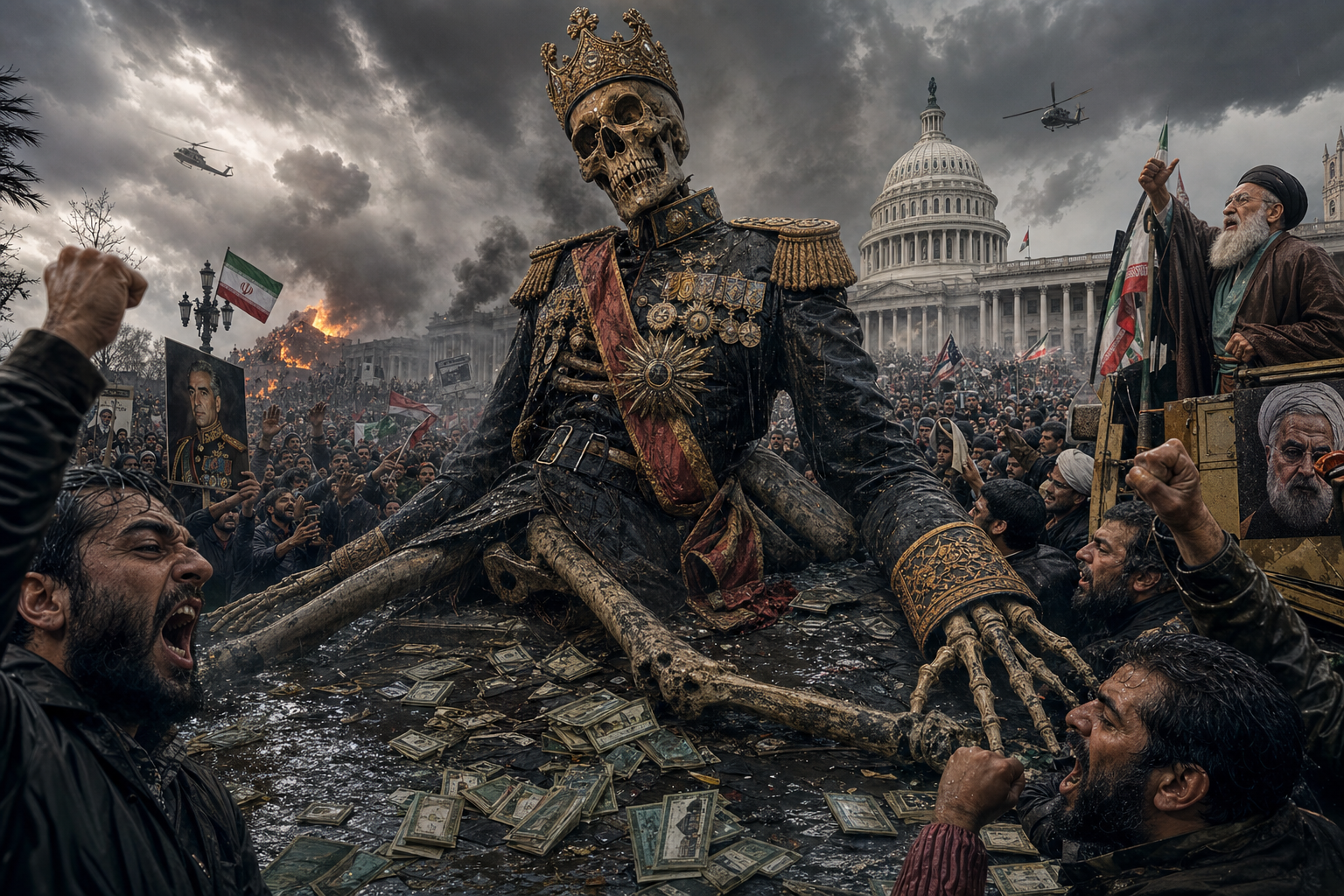
The 444 days that America wept over in 1979 were not the beginning of the story. They were the invoice. A bill finally coming due for decades of buried crimes that Washington prayed the world would forget.
Let the record scream what the textbooks whisper: the United States installed a dictator in Iran and then acted shocked when the Iranian people came for him.
The Coup Nobody Wanted You to Remember
Go back to 1953. That is where the real crime lives, rotting under the floorboards of the official narrative.
Iran had a prime minister named Mohammad Mosaddegh. He was elected. He was popular. And he committed the unforgivable sin of the twentieth century: he wanted his country's oil to belong to his country.
So the CIA and British intelligence rolled in like burglars in the night. Operation Ajax. They toppled Mosaddegh and handed the throne back to Mohammad Reza Pahlavi, the Shah.
The empire did not liberate Iran. It bought a puppet and stitched a crown onto his head.
For twenty six years the Shah sat on that borrowed throne, propped up by American money and American approval, while his secret police did the dirty work nobody in Washington wanted to photograph.
SAVAK: The Torture Machine With a Made-in-USA Sticker
The Shah had a security service called SAVAK. 🩸
They arrested. They tortured. They made people disappear the way magicians make coins vanish, except the coins were human beings with mothers and names.
And who helped train and equip this apparatus of fear? The same government that would later stand at podiums draped in flags, calling itself the victim.
The blood was on the empire's hands long before a single hostage was taken.
The Match That Lit the Fuse
By 1979 the Iranian people had had enough. The revolution swept the Shah off his throne and into exile. He ran.
Then came the decision that detonated everything.
In October 1979, the United States let the deposed Shah into the country. The official excuse? Medical treatment. He was sick.
To the Iranian people this was not mercy. It was the empire hiding its criminal, dressing his escape up as a hospital visit.
They had watched Washington snatch away their democracy in 1953. Now they watched Washington shelter the man who had tortured them for a generation. The insult was total.
November 4, 1979: The Embassy Falls
A crowd of Iranian students stormed the American Embassy in Tehran. 🔥
They seized the building. They seized the people inside. Fifty two Americans would be held for 444 days, and the whole planet watched it unfold like a slow motion car crash on the evening news.
Here is what the American story leaves out: the students found something inside that embassy. Shredded documents. Papers the staff had frantically tried to destroy.
The Iranians reassembled them by hand, thread by thread, and published them. They called the embassy a den of spies. The documents suggested they were not entirely wrong about the espionage happening behind those diplomatic walls.
The Rescue That Died in the Desert
President Jimmy Carter tried to solve it with commandos instead of conscience.
Operation Eagle Claw, April 1980. Helicopters. Sand. Disaster.
The mission collapsed before it began. A helicopter and a transport plane collided in the Iranian desert. Eight American servicemen died out there, killed not by Iranians but by a botched plan and a swirling storm of dust.
The empire could not shoot its way out of a wound it had spent twenty six years inflicting.
The Insult of the Final Hour
The crisis crushed Carter's presidency. Ronald Reagan won the White House while America seethed.
Then the timing arrived like a slap engineered for maximum humiliation.
The hostages were released on January 20, 1981. The exact minute Reagan was sworn in. Not a day before. Not an hour.
Iran wanted Carter to leave office as the man who could not bring them home. They chose the second of his political death as the second of their release.
Who Was Really the Hostage?
For forty four years America has told this story as a tale of innocent captives and foreign fanatics. Half the movie. The reel that starts after the crime.
The other reel shows a stolen election in 1953, a tyrant kept alive on imperial oxygen, a torture agency schooled by its foreign sponsors, and a criminal smuggled out under the cover of a doctor's note.
The hostages were real. Their fear was real. Their suffering counts. But they were paying a debt run up by men in Washington who gambled with other people's countries and expected other people to cover the losses.
Iran remembered 1953 when America had already forgotten it. That is the whole secret. The powerful get to forget. The wounded never do.