Iran Stages Week-Long Funerals for Khamenei With Calls for 'Death to America'
Iran opened week long funeral ceremonies for Ayatollah Ali Khamenei on July 4, 2026, with mass processions, a black platform likened to the Kaaba and chants calling for revenge and "death to America." The funerals mix grief, religion and politics and send clear signals at home and abroad.
Mass Mourning and Rallying
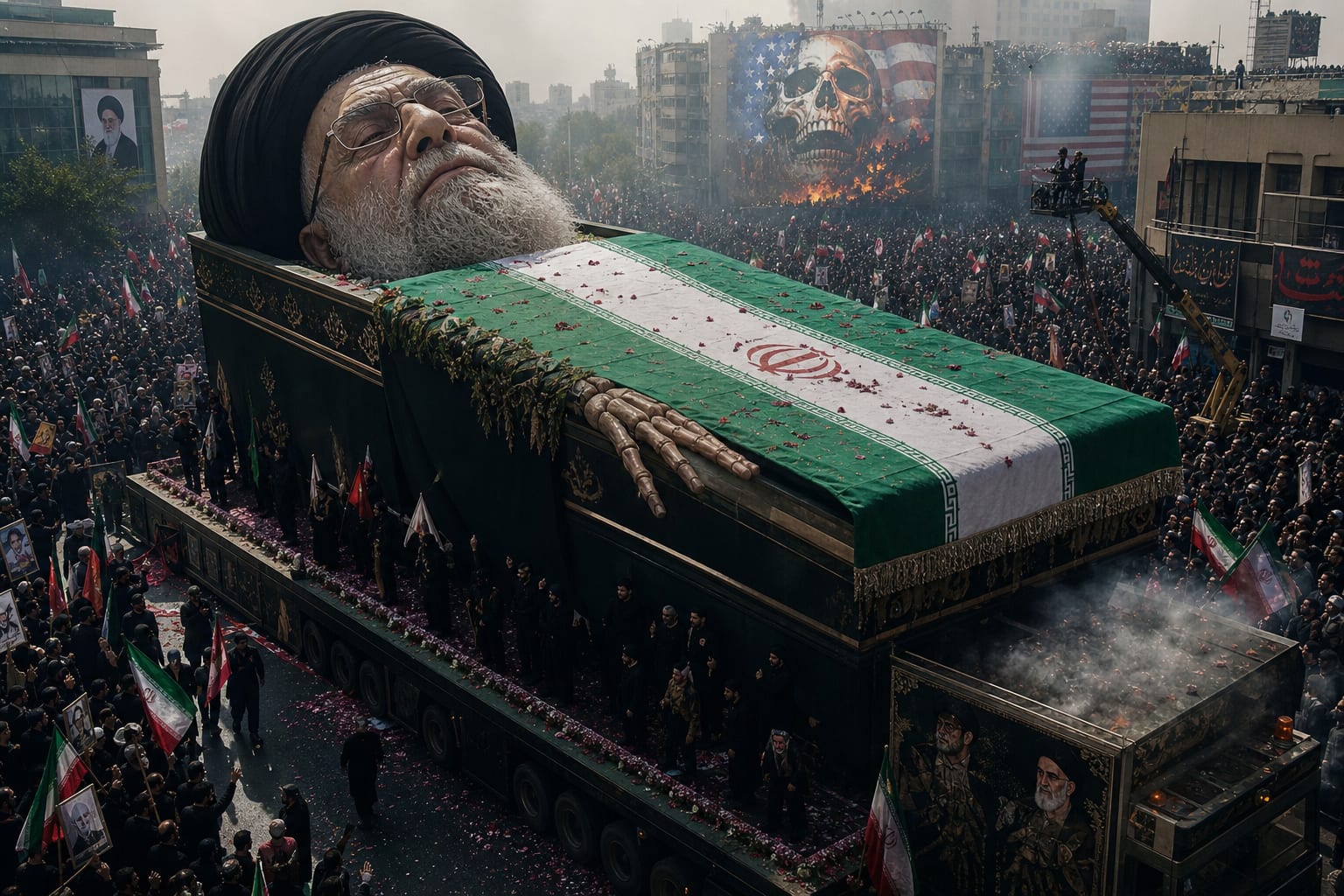
Iran began week long funeral ceremonies for Supreme Leader Ayatollah Ali Khamenei on July 4, 2026. The ceremonies opened with the national anthem, religious eulogies and readings from the Koran. State TV showed Khamenei's coffin draped in the Iranian flag and topped with his black turban.
The government has called on millions to join processions across Tehran, Qom, Najaf, Kerbala and Mashhad. The Imam Khomeini Grand Mosalla in Tehran was filled with mourners waving flags and carrying photographs of the slain leader. Officials described the events as a show of public devotion to the theocratic state and revolutionary zeal.
There were also chants and slogans at the start of the ceremonies that included calls for revenge and the phrase reported as "death to America." Those chants underline how the funeral doubles as a political message, not just a religious rite.
A Black Platform and a Religious Picture
Television footage showed Khamenei's coffin placed on a large black platform. Four other coffins of slain family members sat beside his. The platform was compared on air to the Kaaba, the cube shaped structure at the centre of Islam's holiest site in Mecca.
The visual was striking. A coffin on a black cube is not a private moment in Iran now. It is a staged, public symbol meant to bind mourning and state power in a single image.
That image will feel familiar in the Americas for a reason. In many Latin American countries big religious processions use heavy, decorated platforms called pasos or andas during Holy Week. Seeing a black platform carried through a square is both religious theatre and political theatre.
Foreign Guests and Political Signals
Russia signaled support when Deputy Chairman of the Russian Security Council Dmitry Medvedev paid respects in Tehran on July 3, 2026. His visit came hours before the week long ceremonies formally began.
The timing matters. Khamenei's 37 year rule was brought to an end in February by the first airstrike of the war that Iran and many others say was launched by the United States and Israel. That attack and the deaths it caused are the reason these funerals are being staged now.
State pageantry, foreign delegations, and the chant of revenge all send the same message. Iran wants to show it still commands deep popular loyalty and strong outside ties despite the war and the killings in February.
Why It Still Matters
Funerals like this change more than calendars. They keep a war alive in public memory. A week of processions across five cities keeps people talking and keeps anger fresh. That matters because peaceful grief can turn into political pressure or street action.
There is a human cost. The ceremonies include coffins of slain family members. The leader's 37 year rule ended in a strike that killed him and others. Families, mourners and whole neighborhoods are now part of a public campaign that may demand revenge.
Officials say the ceremonies are love for the leader and faith for the state. Critics see a rehearsal for hardline politics and anti American sentiment. The presence of a senior Russian official adds a clear geopolitical cue.
For ordinary people the aftermath will be simple and sharp. The dead are carried. The living must live with the choice of mourning in public or staying away. That choice will shape Iran's streets for days, weeks and months to come.