Iran Strikes U.S. Bases in Qatar, UAE, and Jordan: The Empire's War Comes Home to Roost
Iran struck U.S. military bases in Qatar, the UAE, and Jordan Saturday night. But the real story is who always pays for Washington's wars, and it is never the men who start them.
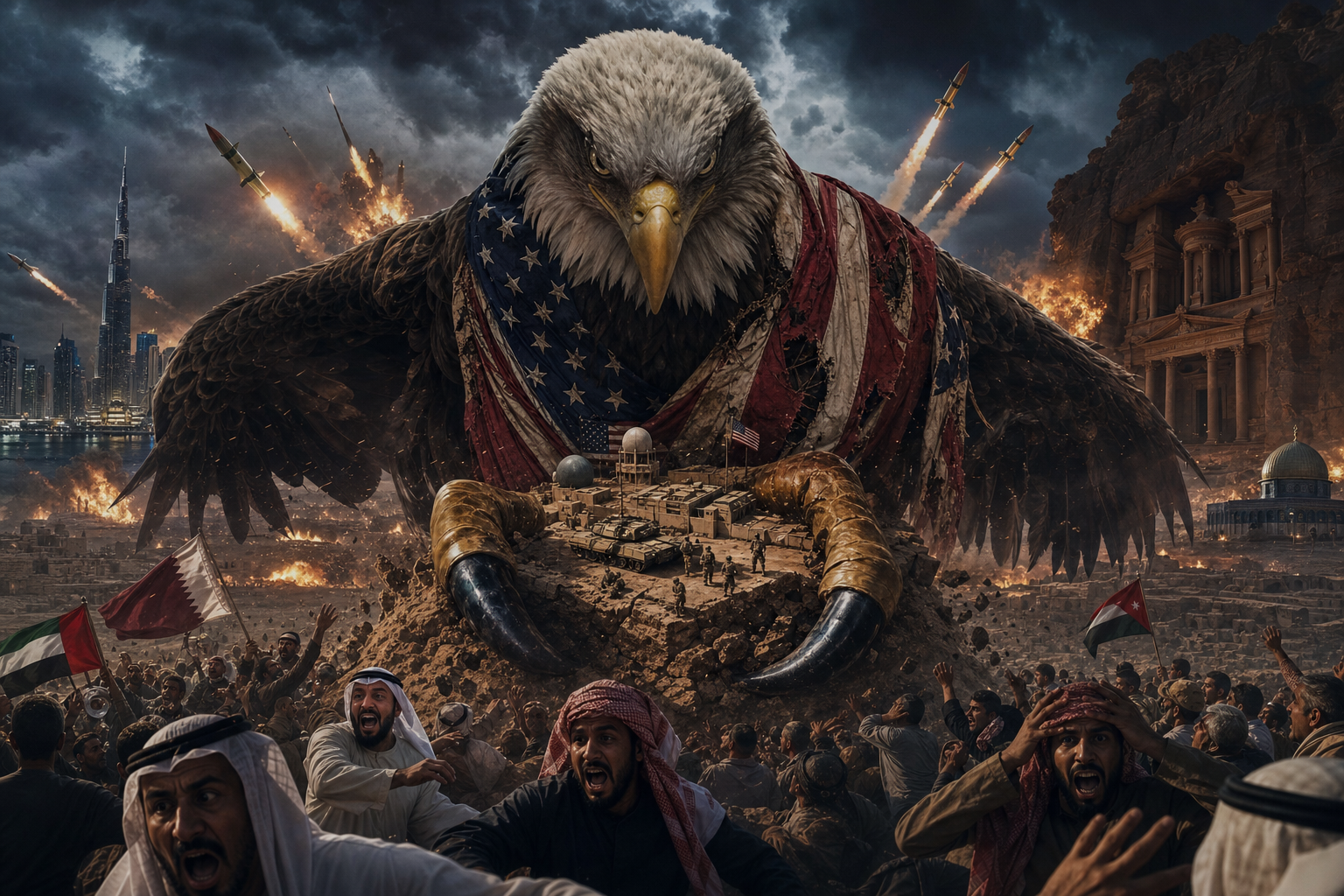
Let us be honest about what happened Saturday night, because the cable news anchors certainly will not be. The United States dropped bombs on Iran, and Iran, shockingly, refused to simply thank Washington and go quietly into the night.
Missiles and drones lit up the skies over Qatar, the United Arab Emirates, and Jordan. Three countries hosting American military bases. Three countries whose ordinary people did not vote to become the launching pads for someone else's war.
And here is the position I will not soften: this violence was manufactured in Washington long before a single Iranian missile left the ground.
The Working Poor Always Pay the Bill
Think about who actually lives near Al Udeid Air Base in Qatar. Think about the migrant laborers, the Bangladeshi and Nepali and Pakistani workers who cook the food, scrub the floors, and haul the concrete for a base housing ten thousand American troops.
These men sleep eight to a room in labor camps out in the desert heat. They surrender their passports to their employers. They send crumpled bills home to villages they may never see again.
When the sirens screamed Saturday night, those workers had no bunker to run to. No air-conditioned command center. They had a thin metal roof and a prayer.
The generals get evacuation plans. The poor get to duck and hope.
I have seen this arithmetic before, in every corner of the global south where empires build their fortresses. The powerful draw the borders. The powerful sign the treaties. And the barefoot man carrying bricks in the sun is the one who bleeds when the treaties collapse.
A History Written in Other People's Blood
Americans are told this all began with some vague provocation. It did not. It began in 1953, when the CIA and British intelligence overthrew Iran's elected leader Mohammad Mossadegh because he dared to nationalize his own country's oil.
Let that settle in. Iran once tried democracy. Washington strangled it in the crib and installed a Shah who tortured dissidents in basements while selling crude to the West at a discount.
The people of Iran remember this. They remember it the way my part of the world remembers the fruit companies that owned Guatemala, that turned Honduras into a warehouse with a flag. In Latin America we have a name for this kind of country. We call it a banana republic, and the term was not an insult invented by comedians. It was a description of United Fruit running a nation like a private plantation while Washington sent in the Marines to protect the harvest.
The Strait of Hormuz closing this week is not madness. It is the predictable scream of a country that has spent seventy years being treated as a gas station with a target painted on it.
Who Profits While the Desert Burns
Now the missiles fall on Jordan, on the UAE, on Qatar, and the men who ordered the strikes sleep soundly in their beds thousands of miles away.
They will go on television and speak of resolve. They will speak of strength. They will use the word peace, which in the mouth of a warmaker means only the quiet after the bombing stops.
Meanwhile the defense contractors count their gains. Every intercepted drone is a replacement missile sold. Every escalation is a quarterly earnings report. War is the most reliable business in the American economy, more dependable than corn, more profitable than gold.
The soldier from a poor town in Ohio who enlisted because there were no jobs left after the factory closed, he is now sweating in Al Dhafra Air Base wondering if tonight is the night the sky falls on him. He did not start this. His mother did not start this. The Qatari cook did not start this.
The men who started this have never smelled cordite in their lives.
So when you read the calm reports of interceptions and defense ministries and installations, remember the human beings underneath the abstractions. Remember the laborer with no bunker. Remember the conscript who cannot pay his rent. Remember the Iranian grandmother who was a child when the Americans came for her country's oil the first time.
The empire told everyone this was about safety. Look at the burning sky over three nations tonight and ask yourself whose safety it ever protected.
Not theirs. Not yours. Only the ones selling the bombs.