Judge Forces Trump To Pay E. Jean Carroll $5.8M After Latest Delay Is Rejected
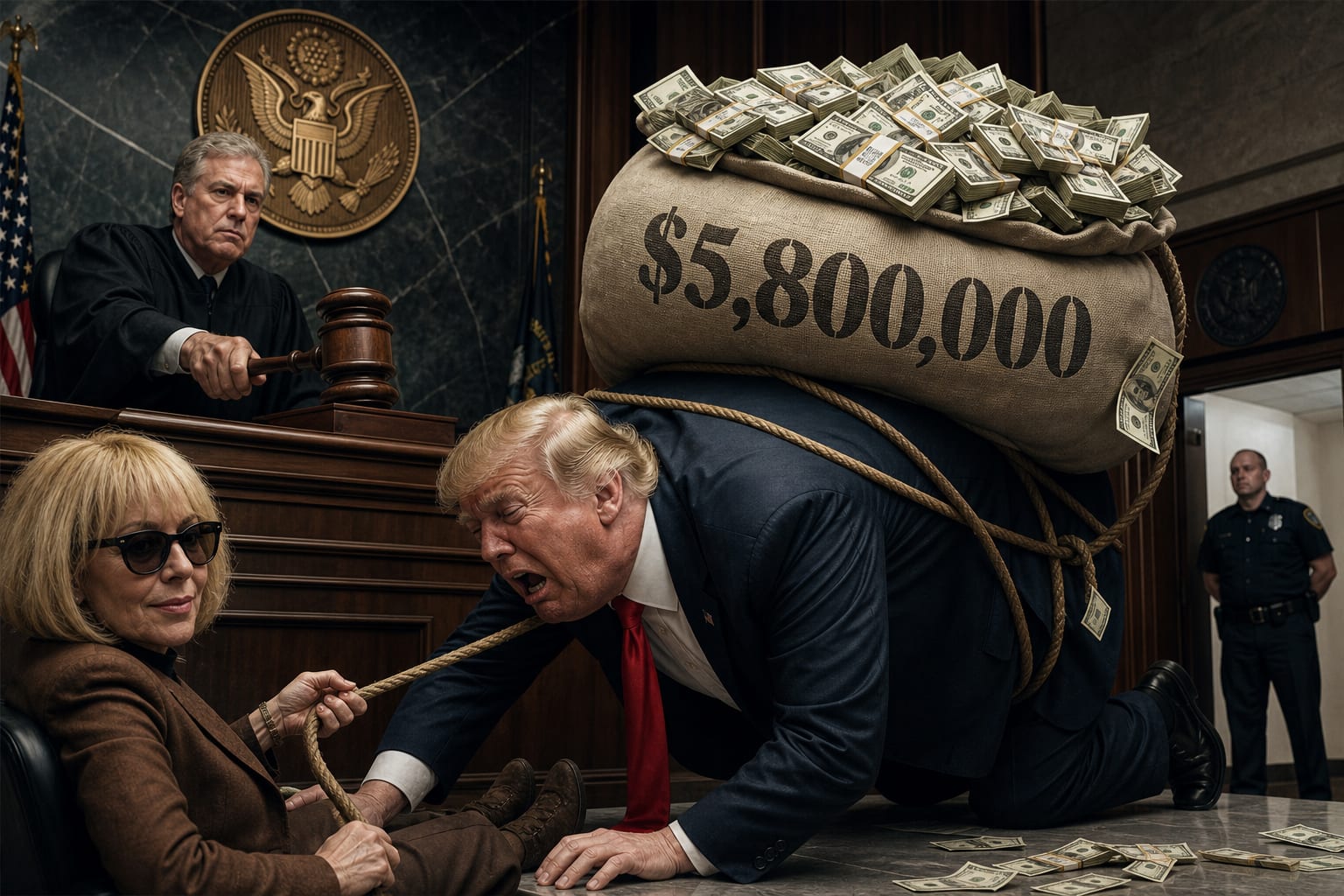
Judge Lewis Kaplan denied Donald Trump’s request to delay payment to E. Jean Carroll and ordered roughly $5.8 million to be paid by Tuesday, rejecting last-minute stall tactics tied to a new lawyer.
Court Ends One More Delay
New York federal Judge Lewis Kaplan on Saturday rejected President Donald Trump’s bid to stall payment to writer E. Jean Carroll and ordered the money to be paid on Tuesday.
The order followed a motion filed Friday in which Trump asked for more time so his new attorney could get up to speed. The judge found the request insufficient and set a clear deadline.
What The Case Is About
Carroll accused Trump of sexually abusing her in a Manhattan department store dressing room in the mid 1990s. A jury found him liable in 2023.
The jury also found Trump defamed Carroll when he denied the allegation. That 2023 verdict carried $5 million in damages. Court records now show Trump owes about $5.8 million after interest and fees.
The filings and the judge’s order came days after the U.S. Supreme Court rejected Trump’s appeal in the matter. The case has moved through the 2nd U.S. Circuit and federal courts since the verdict.
Lawyers, Motions And The Pushback
Trump argued he needed more time because his new lawyer, Josh Halpern, had to learn the case. Lawfare senior editor Roger Parloff shared the filings online and noted that Trump had known for five months that his lead attorney would leave.
Parloff added that the case already had co counsel who had been on the matter since day one. That undercut the claim that no one could respond on the court’s timeline.
Carroll’s lawyer Robbie Kaplan fired back in the filings. "Defendant’s assertion that he cannot respond to Plaintiff’s Motion on the timeline ordered by the Court appears to be little more than yet another play for time," Kaplan wrote.
Kaplan went on to say she could only assume the motion was an effort to buy time so Trump could "try to concoct some new basis to put off paying Plaintiff." The judge sided with that skepticism.
A View From Farther South
I have seen men who stall when the law catches them. In Latin America a common trick is the amparo, a legal remedy meant to protect citizens that can be used to delay final rulings. The idea is familiar in courts where power and patience meet. To Americans this looks like last minute paperwork. To those who live with decades of political stalling it looks like business as usual.
Human Cost And What Comes Next
Beyond motions and headlines, the case matters to a woman who says she suffered abuse nearly 30 years ago. The ruling and the money are a form of legal recognition of harm. Carroll is a writer who pursued the claim across years of litigation.
The judge’s order to pay on Tuesday removes one more hurdle to enforcement. It also shows that repeated procedural delays can be checked by the courts. The Supreme Court’s rejection of the appeal cleared the path for the payment order.
For Trump the decision is another legal and financial consequence he must face while other cases continue. For victims and for courts, the order sends a message that last minute lawyer swaps and timing arguments will not always stop collection.
Roger Parloff, Robbie Kaplan, Josh Halpern, Lewis Kaplan, the Supreme Court and the 2nd U.S. Circuit are all now parts of a long story about accountability, procedure and the cost of delay.
Why It Still Matters
The courtroom deadline is simple. Pay by Tuesday or face enforcement. The episode matters because it tests whether legal systems can resist tactics meant to run out the clock.
For people who watch power up close, in New York or in Latin America, the scene is familiar. Delay can be a weapon. Courts that push back change who can use that weapon next time.