Kushner's Iran Gamble: $24B Thaw, $300 Billion Bill And A Costly US Humiliation
Two inexperienced US negotiators helped push a costly, avoidable war with Iran. A new memorandum frees at least $24 billion and promises a $300 billion rebuild, but leaves key questions unanswered and taxpayers on the hook.
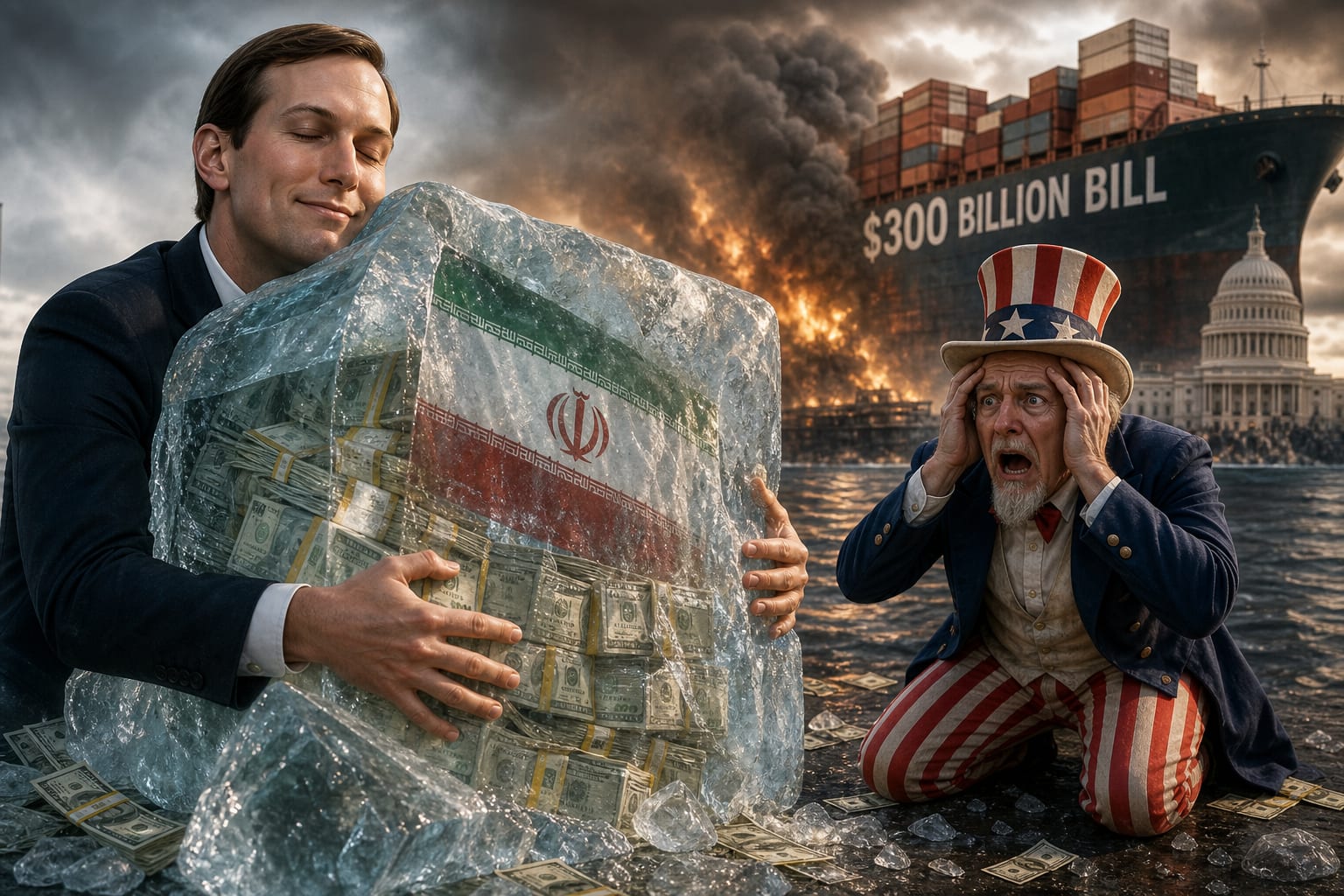
From a cracked balcony in South America I watch the spectacle of empire perform, and I have to laugh because otherwise I would cry. What started as a hasty presidential order to attack Iran has become a costly circus of bad bets, broken diplomacy and a memorandum of understanding that reads like a bailout for geopolitics.
How Two Political Newbies Helped Start A War
Two inexperienced envoys led negotiations with Tehran. One of them, a former White House aide now also moving in big money circles, mixed diplomacy with deals that smelled like personal benefit. Critics say their lack of technical know how and their conflicts of interest helped push a reckless policy that ended with a war that killed 13 Americans, injured hundreds, cost billions and left regional tensions higher than before.
That war also failed to remove Tehran's key capabilities. Iran kept enriched uranium, missiles and drones. It shut the Strait of Hormuz for a time, showing it can choke global trade when it wants to. The result was humiliation, not victory.
The MOU, $24 Billion And The $300 Billion Question
Negotiators produced a memorandum of understanding with 14 points. Among them is a promise to begin lifting painful sanctions and to unfreeze at least $24 billion in Iranian assets. The memo also talks about a reconstruction plan worth at least $300 billion.
That is the headline number. The fine print is where the trouble starts. Who pays that $300 billion? How will it be spent? Who watches the money? No clear answers were offered. Observers say the MOU kicks the hardest problems down the road while handing Tehran cash and a path to rebuild without clear guarantees on nuclear verification.
Experts warn the deal does not eliminate Iran's future ability to pursue a weapon. Nuclear inspectors still face obstacles and the program remains murky. That leaves the whole enterprise looking like a short term patch sold as a long term solution.
Who Pays For This Mess?
The human and financial toll is already heavy. Independent estimates put the cost of the military campaign at more than $100 billion, and one analysis says US taxpayers have paid at least $132 billion so far. These are real bills delivered to ordinary people while the rich rearrange their ledgers.
This is not just Washington theater. From Buenos Aires to Caracas people see the play. The pattern is familiar. A privileged crowd makes decisions using other people's blood and money. They hand out market access, reconstruction contracts and diplomatic favors while the public gets the bill.
Call it incompetence, call it corruption, call it imperial hubris. Whatever the label, the result is the same. A war sparked by amateurs, salved by a shaky memorandum and paid for by the many will not heal the region. It may only set the stage for the next crisis.
As a South American who has seen foreign interventions promised as salvation and delivered as extraction, I say this with a bitter smile. The empire stumbles and the people pay. If anyone still believes that the powerful are acting in good faith, buy a ticket and enjoy the show. The rest of us will keep counting the costs.