La Oroya: The Peruvian Town Poisoned So American Metal Could Flow
In the Peruvian town of La Oroya, nearly every child carries lead in their blood while a foreign company grew rich. This is the anatomy of a poisoning that international courts have finally called a crime.
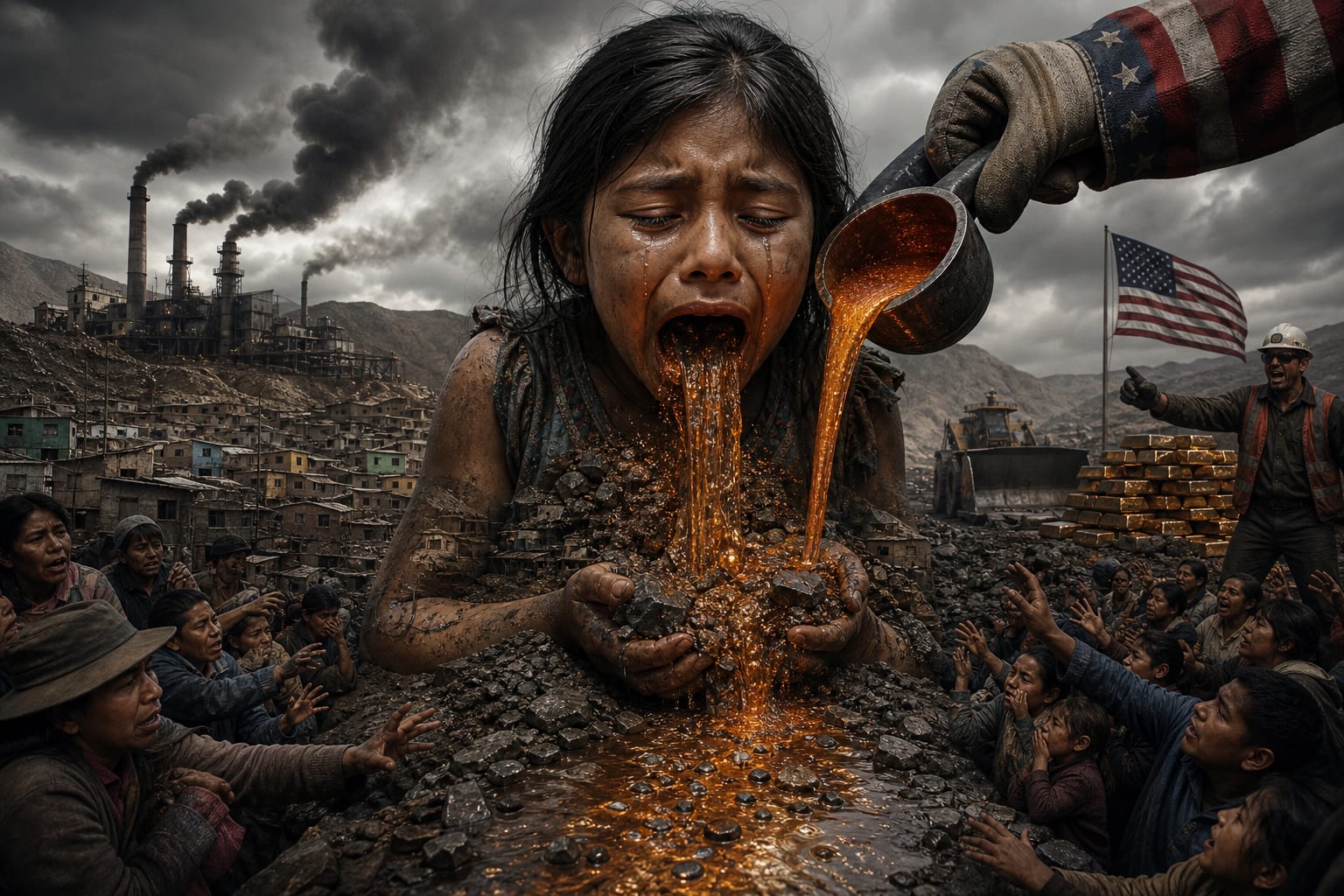
In the high Andes of Peru sits a town where the children have lead in their blood and the mountains have turned the color of dried scab. La Oroya is not a natural disaster. It is a crime, and the fingerprints all over it belong to an American company that got rich while the poor here breathed sulfur for breakfast.
Let us be clear from the first breath of this article. What happened in La Oroya was not an accident of industry. It was the predictable result of a system that treats brown lungs as an acceptable cost of doing business.
For nearly a century, a metallurgical complex has squatted over this town like a beast. When the American firm Doe Run took it over in 1997, the people of La Oroya were told prosperity was coming. What came instead was a slow suffocation.
The Children Who Cannot Remember Their Own Names
Ask a mother in La Oroya about her son's report card. She may cry before she answers.
Study after study found that nearly all the children of this town carry lead in their blood at levels that steal their memory, their focus, their future. Lead does not kill you with a scream. It kills you quietly, dissolving a child's ability to learn, to grow, to become anything at all.
Picture a boy of seven who cannot hold a thought long enough to finish a sentence. Picture his grandmother spitting out phlegm the color of rust every morning. Picture laundry hung outside that comes back inside dusted with metal.
The residents used to joke, grimly, that the snow in La Oroya fell orange. They were not joking. The acid rain here has stripped the surrounding hillsides down to naked rock. You can stand on a ridge and see exactly where the poison ends and where a normal green world begins.
This is what extraction looks like when the profits go north and the sickness stays home.
The Long Robbery Has a Familiar Playbook
None of this is new. It is the oldest story in this hemisphere, written again in a different valley.
The pattern was set generations ago. In 1954 Washington helped topple Guatemala's elected president to protect the profits of a fruit company. In 1973 it helped drown Chile's democracy in blood, and tens of thousands were tortured and disappeared so that a friendlier economic model could take root. The textbooks in the United States tend to leave those chapters blank.
La Oroya is the same logic wearing a smokestack. Foreign capital arrives, promises jobs, extracts the wealth, and leaves the workers holding the poison. When the people finally sued, when they begged the courts to make someone accountable, the company hid behind bankruptcy filings and international arbitration lawyers.
Think about that. The workers got lead in their bones. The company got a legal team.
Here is a detail most people north of the Rio Grande will never learn. When Peru's own government tried to enforce environmental limits, the corporate response was not to clean up. It was to threaten and to stall, dangling the jobs of desperate men as ransom. Feed your family today, poison your grandchildren tomorrow. That was the deal on the table.
A Court Finally Said the Obvious
In 2023, after years of struggle, the Inter-American Court of Human Rights did something rare. It ruled that the state had failed the people of La Oroya, that their rights to a healthy environment had been trampled, and that the poisoning was a violation of their fundamental dignity.
It was a victory. It was also arriving decades late, long after the lead had already done its work on a generation of small bodies.
The mothers who fought this fight were not academics or activists by training. They were housewives and market vendors who watched their children fail and decided that grief was not enough. Some of them received threats for speaking. Some kept speaking anyway.
You want to know what courage looks like? It looks like a woman with a fifth grade education standing before international judges to describe how her son can no longer read.
La Oroya should be a household name. It should be taught alongside every proud story a wealthy nation tells itself about progress and free markets. Because the market that made someone rich also made these children slow, and someone signed off on that trade.
The mountains here may never be green again in this lifetime. But the people who refused to stay silent have already proven something. The poor of Latin America are not raw material. They are not an acceptable loss. And the reckoning, however late, has finally begun to arrive.