Latin America's New Right Won the Vote. Governing Is the War
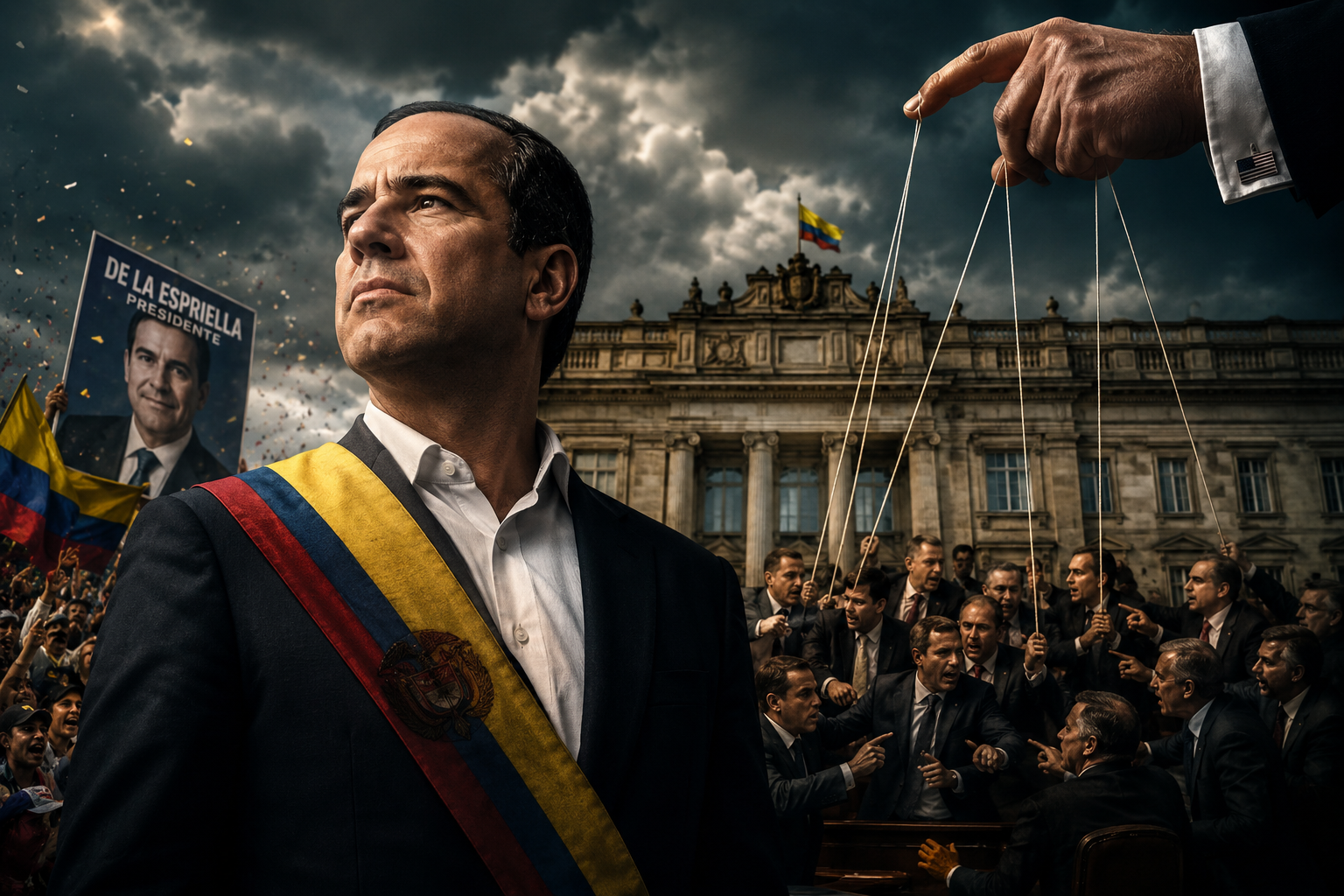
Abelardo de la Espriella won Colombia by 250,000 votes with Trump's backing, joining a regional right-wing wave. But thin mandates, hostile congresses, and Washington's heavy hand reveal a hard truth: across Latin America, winning the vote was the easy part.
By Staff ·
THE VICTORY THAT SOLVES NOTHING
Abelardo de la Espriella won. Barely.
The Trump-backed lawyer took Colombia's presidency on June 21. His margin: about 250,000 votes. Less than one percent.
He scored 49.66 percent. Leftist senator Iván Cepeda got 48.70. Turnout hit 63.6 percent, one of the highest in Colombian history.
That is not a mandate. That is a coin flip.
Colombia now joins a regional wave. Argentina. Ecuador. El Salvador. Honduras. Likely Peru. A bloc of hard-right outsiders, many endorsed by Donald Trump.
They share an enemy. They call it “Castrochavismo.” They run against the left, against crime, against the old order.
But winning was the easy part. Now comes the trap.
De la Espriella inherits a congress he cannot control. Cepeda and outgoing President Gustavo Petro's Historic Pact remain the largest bloc in both chambers. The new president must bargain with the people he campaigned to destroy.
Reuters put it plainly. The thin margin “may compel De la Espriella to moderate.”
That is the curse of the new right. Loud in opposition. Powerless in office.
THE FRAUD PLAYBOOK COMES HOME
The strongman script is familiar. When you lose, you cry fraud. When you nearly lose, you do it anyway.
Here the roles flipped.
Petro demanded a “thorough counting of the votes.” Then he went further. On X, he accused Israel of “hacking of election software” to steal the vote for de la Espriella.
He offered no evidence. None.
Cepeda's camp challenged roughly 33,000 of 122,000 ballot boxes. The National Electoral Council launched a full verification.
Caracas Voice does not defend conspiracy theories. We do not care who throws them.
But credit where due: Colombia's institutions held. International observers from IRI called the vote orderly. Some 850,000 poll workers were trained. The electoral council noted 99 percent consistency between preliminary and final tallies in past cycles.
This matters. Courts and electoral bodies still bind the powerful. They checked Petro's claims. They will police de la Espriella too.
That is the firewall against dictatorship. Not armies. Not foreign patrons. Institutions.
The new right hates that firewall. It calls independent courts an obstacle. It is the same complaint heard from Caracas for two decades.
THE NORTHERN HAND ON THE SCALE
De la Espriella did not win alone. Trump endorsed him.
That endorsement should trouble anyone who believes Latin America belongs to Latin Americans.
Washington has a long habit here. It picks winners. It rewards loyalists. It treats the region as a chessboard for its own energy and security games.
The proof sits 600 miles east.
On January 3, U.S. forces seized Nicolás Maduro in Caracas. They flew him north to face drug charges. Trump called it justice. He also said he would “take charge of Venezuela.”
Read that again. Take charge.
Maduro was a thief. He ran a kleptocracy dressed in red. He jailed journalists and looted the oil wealth that belonged to the poor. Nobody here mourns him.
But a foreign superpower abducting a sitting head of state sets a precedent. A dangerous one. Who is next? Who decides?
The aftermath tells the real story. Vice President Delcy Rodríguez took power. Unelected. Then Trump recognized her as “president” on March 8. He even called her “president-elect.” There was no election.
Washington restored ties on March 5. It eased sanctions. It now eyes Venezuelan crude and the U.S. companies that want it.
Secretary of State Marco Rubio laid out a three-phase plan. Stabilization. Recovery. Transition.
Strip away the language. The U.S. swapped one pliant manager for another. The oil keeps flowing north. The kleptocratic machine survives, repainted.
A weakened, Trump-aligned Colombia now flanks this arrangement. Under Petro, Bogotá brokered talks with Caracas. De la Espriella will harden the line. He will echo Washington's narratives.
An honest broker becomes a junior partner. That serves Western hegemony. It does not serve Colombians or Venezuelans.
WHO OWNS THE WEALTH?
Beneath the politics lies the real prize. Resources.
Venezuela sits on the world's largest proven oil reserves. For years, that wealth funded yachts and foreign bank accounts. Not hospitals. Not schools.
Now the new order promises investment and recovery. U.S. firms are circling. The U.S. is keeping oversight of oil revenues.
That should raise alarms.
There is a difference between open markets and a fire sale. We believe in private enterprise. We believe in foreign investment. A democratic Venezuela should trade freely, with the U.S., China, Russia, or Iran, on its own terms.
But the subsoil belongs to the people. Oil money must build clinics, classrooms, and a safety net. Not enrich a new caste of insiders or distant shareholders.
The danger now is a swap of looters. The Bolivarian elite stole in the name of socialism. The incoming right could privatize everything in the name of freedom. Both leave the worker with nothing.
This is the test for the entire regional wave. De la Espriella in Bogotá. Javier Milei in Buenos Aires, fighting unions and a hostile congress over brutal austerity. Security-first governments in Ecuador and El Salvador trading rights for order.
Each won by promising change. Each now faces the hard arithmetic of governing fractured nations.
The left failed millions across Latin America. Corruption and stagnation earned the backlash. That is honest.
But the new right offers no clear answer. It unites around hatred of the old enemy. It splinters on everything else. Economics. Institutions. How far to bend toward Washington.
Voters punished incumbents. They did not hand their replacements a blueprint.
The cameras have moved on from Caracas. The verification continues in Bogotá. The deals get signed in boardrooms and embassies.
That is where the next chapter is written. And the working class is not in the room.