The Mafia in Havana: How Aging Gangsters Turned a Tropical Paradise Into Their Personal Vanity Casino
Aging American gangsters descended on 1950s Havana to build casinos and monuments to their own fading virility. The showgirls saw through them. History buried them.
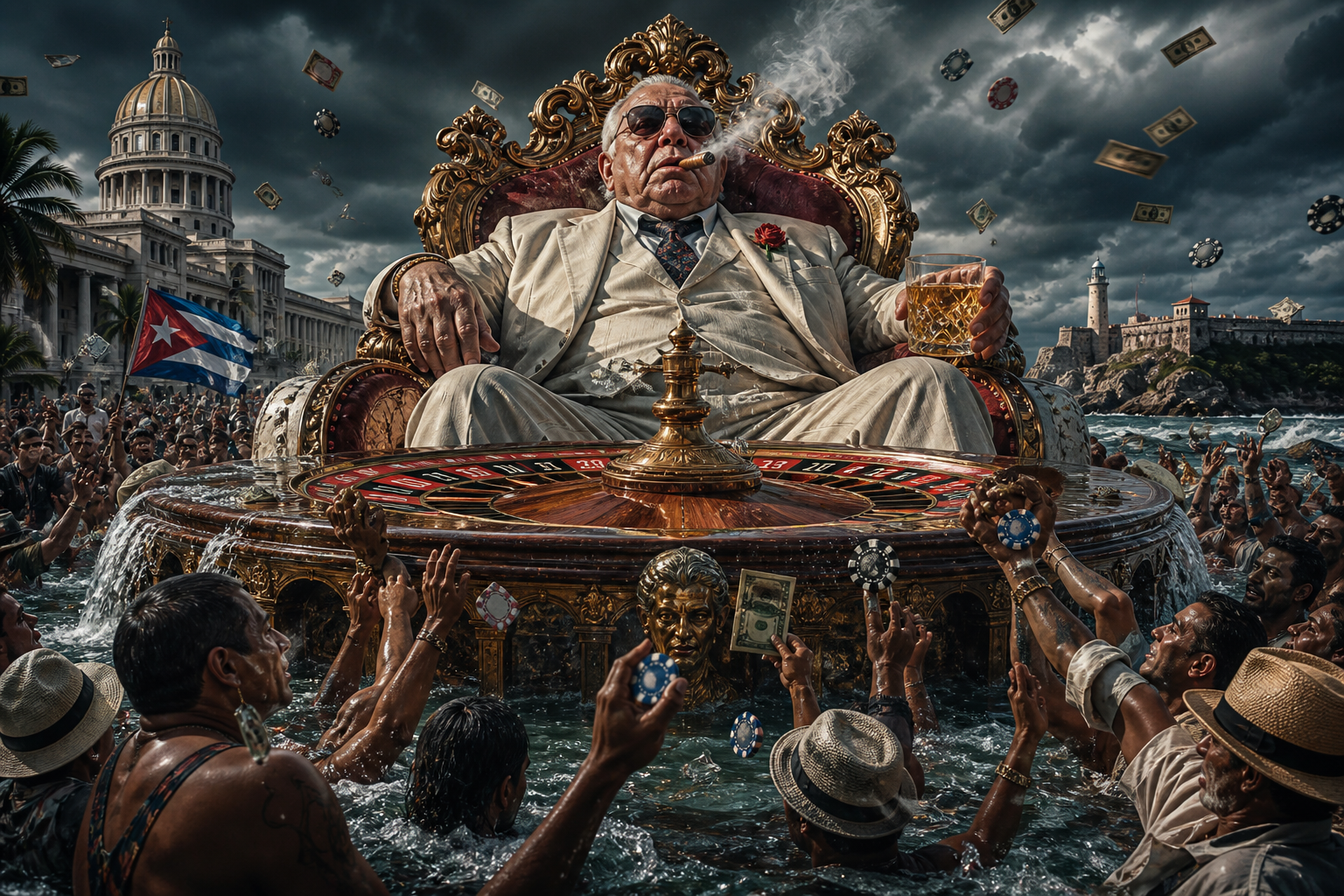
The most dangerous men in mid-century Havana were not the ones with guns. They were the ones with mirrors.
Picture it. A cluster of graying American mobsters, bellies straining against silk shirts, arriving on the island like conquistadors who forgot to bring anything except cologne and cruelty. They came to Cuba not to conquer land but to conquer their own reflections, to prove to themselves that time had not yet fired them from the payroll of relevance.
And oh, how they tried.
The Old Men Who Bought a Country to Feel Young
Havana in the 1950s became the playground of a very specific species: the wealthy criminal in decline who refuses to admit the decline is happening.
These were men who had clawed their way up through the alleys of Chicago and New York, and now, wrinkled and rich, they descended upon the Cuban capital to build casinos, hotels, and monuments to their own fading virility. The Hotel Nacional. The Riviera. The Capri. Each one a marble tombstone erected by a man terrified of dying.
The great irony? They called it business. Everyone else called it what it was.
A vanity project the size of an island, financed by desperation and decorated with showgirls who could smell a dying wallet from across the room.
Meyer Lansky and the Empire of Insecurity
The quiet accountant of the underworld set up shop in Havana and dreamed of turning the city into a glittering machine that printed money while he slept.
He wore modest suits. He spoke softly. And he built a paradise not for the Cuban people but for the tourists who would arrive by the boatload, wallets open, morals conveniently left at customs.
Lansky understood something the louder gangsters never did. Power is quieter when it is real. But even the quiet ones were performing. Every roulette wheel that spun in his casinos was a small announcement to the universe that he still mattered, that the boy from the slums had become the man who owned the night.
A December Party for the Ghosts
In December of 1946, the infamous Havana Conference gathered the biggest names in organized crime under one roof at the Hotel Nacional.
The official cover story was a concert by a famous crooner. The real agenda was a summit of aging men deciding who lived, who died, and who controlled the heroin routes.
Imagine the scene.
Cigars fogging the air. Envelopes of cash allegedly wrapped as gifts and presented to the guest of honor. Men in their fifties and sixties congratulating themselves for having survived long enough to become dangerous in a warmer climate.
They were not planning the future. They were performing their own legend, hoping the applause would drown out the ticking of their own mortality.
The Showgirls Knew the Truth
Here is the unvarnished reality nobody printed in the tourist brochures.
The women who filled these casinos and cabarets were not fools. They were the sharpest economists on the island. They understood the transaction perfectly. The old men wanted youth, beauty, and the illusion of desirability. The women wanted stability in a world that offered them very little.
Every dance, every laugh at an unfunny joke, every whispered compliment was a line item in a ledger that both parties understood.
The gangster believed he was irresistible. The showgirl knew he was a mark with a fat bankroll and a fragile ego. And she smiled anyway, because rent does not care about your feelings.
This was the true economy of Havana. Not sugar. Not tobacco. The desperate hunger of powerful men to be told they were still lions when everyone could see the mane was thinning.
Fulgencio Batista, the Silent Partner
None of this would have been possible without the man in the presidential palace.
Batista, the dictator with an open hand, welcomed the mobsters like long lost brothers. He offered them the island, and they offered him a cut. It was a marriage of convenience between men who both mistook money for immortality.
The casinos flourished. The hotels rose. And the ordinary Cuban walked past these glittering palaces knowing full well he would never be allowed inside except to mop the floors.
The elite feasted. The island watched. And resentment, that patient and quiet thing, began to gather in the corners like dust nobody bothered to sweep.
The Party That Ended at Gunpoint
Then came 1959.
The bearded revolutionaries marched into Havana, and the great vanity casino of the aging gangsters collapsed like a soufflé dropped on marble.
The mobsters who thought they had bought eternity discovered they had merely rented a moment. The casinos were smashed. The tables overturned. The paradise they built to outrun death was seized in an afternoon.
Lansky reportedly lost a fortune and muttered that he had been wiped out. The empire of insecurity, so carefully constructed, evaporated faster than the ice in a rum cocktail.
What the Marble Really Meant
The Mafia in Havana was never really about Havana.
It was about a group of old men who believed that enough money, enough marble, and enough obedient beauty could freeze time and hold death at the door.
They were wrong. They were always going to be wrong. The showgirls knew it. The Cuban people knew it. History knew it.
The casinos are dust now. The gangsters are ghosts. And somewhere in the humid air of that beautiful, wounded city, the echo of their laughter still sounds exactly like what it always was. The nervous giggle of men who spent everything they had trying not to grow old, and failed spectacularly in front of the entire world.