Marc Rich: The Billionaire Fugitive Who Turned Running From The Law Into A Lavish Lifetime Hobby
Marc Rich spent seventeen years as a billionaire fugitive living in Alpine luxury, then got pardoned in the final hours of a presidency. His story is the ultimate fantasy of the untouchable rich.
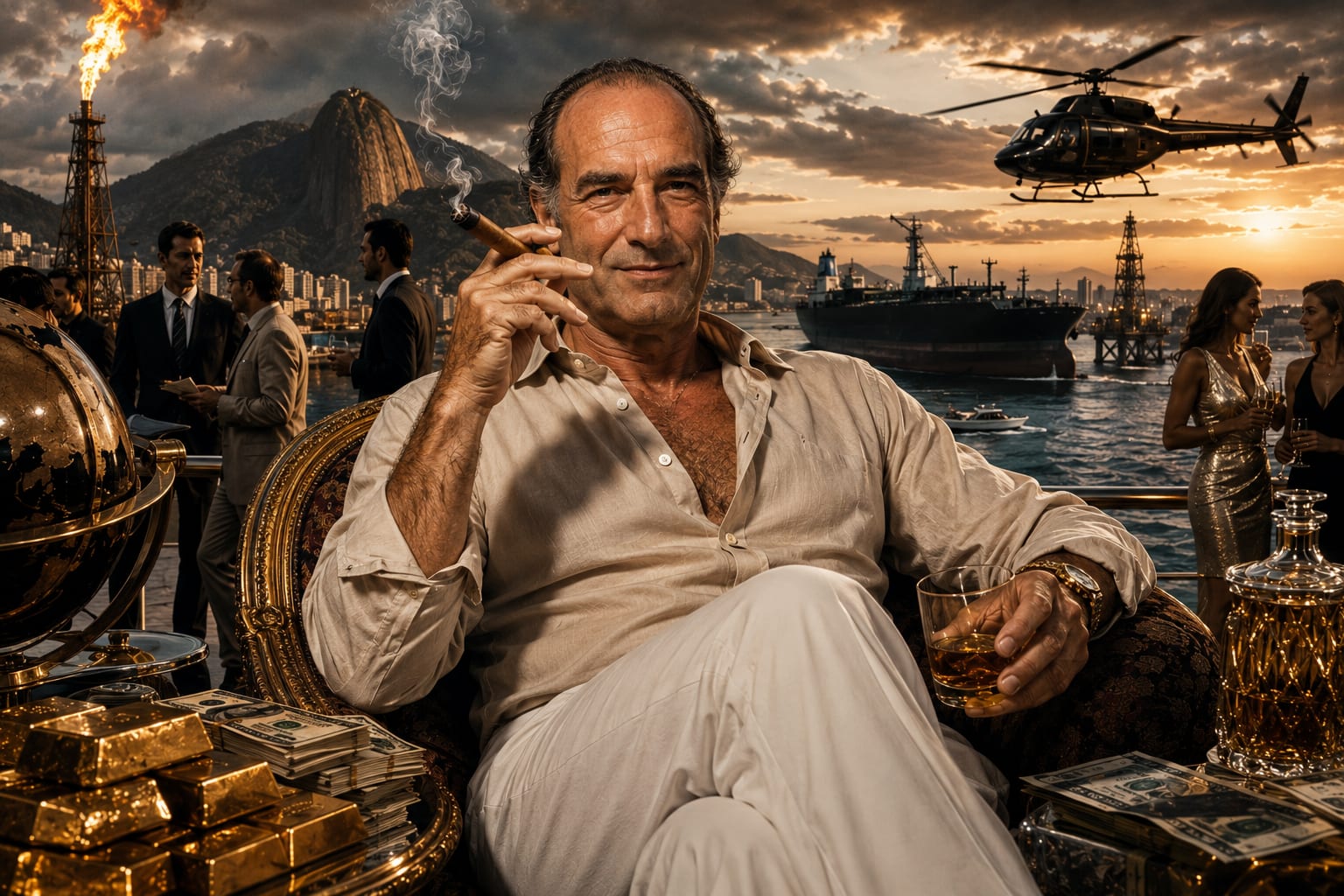
Marc Rich spent seventeen years as one of the most wanted men on the planet, and he did it while sipping fine wine in Switzerland with the calm of a man ordering room service.
Here was a fugitive who did not hide in caves or sleep with one eye open. No. He hid in the Alps, surrounded by mountains that looked like a screensaver, buying art, buying wine, buying respectability by the pound.
The man was a commodities trader, which is a fancy way of saying he moved oil, metals, and grain across borders while lawyers on two continents argued about whether he was a genius or a crook. The answer, of course, was both, and he wore that duality like a tailored suit.
The Great American Escape Act
Born in Belgium in 1934, Rich fled the Nazis as a child and landed in the United States, the country he would later flee from with equal enthusiasm.
In 1983, federal prosecutors in New York hit him with charges that read like a greatest hits album of financial mischief: tax evasion, racketeering, and trading oil with Iran during the hostage crisis. Sixty-five criminal counts. That is not a rap sheet. That is a novel. 📜
So what did our hero do? He packed his bags and moved to Switzerland, where extradition treaties suddenly became very confusing and very convenient.
He did not run to escape luxury. He ran to protect it. There is a difference, and Marc Rich understood it better than anyone alive.
For seventeen years the United States government chased a man who was, quite literally, on the FBI Most Wanted list, standing next to murderers and terrorists while wearing loafers that cost more than a used car.
The Vanity Of The Untouchable Man
Let us pause to appreciate the psychology here. 🧠
Marc Rich was worth billions. He could buy anything except the one thing he wanted most, which was to walk into Manhattan without a squad of agents slapping cuffs on his wrists.
And so he did what all fabulously rich men do when reality bores them. He built a golden cage and decorated it beautifully.
He collected Picassos. He financed operas. He gave money to Israel, to hospitals, to universities, to anyone who might one day whisper a kind word about him to a judge. Philanthropy became his lawyer, his priest, and his makeup artist all at once.
The wealthy do not fear death. They fear being remembered as ordinary criminals. Rich spent decades trying to launder not his money but his legacy.
The Pardon That Broke America's Jaw
Then came the plot twist that no screenwriter would dare pitch.
On January 20, 2001, in the final hours of his presidency, Bill Clinton signed a pardon for Marc Rich. The last day. The very last hours. As if someone whispered the request while the moving trucks were already parked outside the White House.
How does a fugitive get pardoned without ever setting foot in a courtroom? 🤔
Here is where the story turns from crime drama into pure comedy of manners. His ex-wife, Denise Rich, a songwriter and glittering fixture of Democratic fundraising circles, had donated generously to Clinton causes.
Money did not just talk. Money took the elevator straight to the Oval Office and left its shoes at the door.
The backlash was volcanic. Democrats winced. Republicans howled. Federal prosecutors, some of whom had spent years chasing this ghost, felt the ground open beneath them.
One of those prosecutors, a young U.S. Attorney named James Comey, would later investigate the pardon itself. The irony writes its own punchline.
A Life Built On The Art Of Never Answering
What makes Marc Rich such a delicious character is that he never truly paid. Not in the way ordinary people pay.
He never spent a night in an American jail. He never faced a jury. He simply outlived the outrage, outspent the pursuit, and out-charmed the very system designed to catch him.
Consider the sheer audacity required to become a symbol of everything wrong with wealth and power, and then die peacefully in a Swiss clinic surrounded by beauty and comfort. 🏔️
This is the fantasy every billionaire secretly nurses: that the rules are a menu, and they get to order only the items they like.
The Man Who Invented A Business Model And A Legend
To be fair, and fairness is a spice we use sparingly, Rich was a titan in his field. He essentially pioneered the modern spot market for oil, transforming how the world buys and sells crude.
Companies he founded evolved into Glencore, one of the largest commodities empires on Earth. The man was not merely rich. He was structurally important to how the global economy breathes.
But genius and greed often share the same bed, and they rarely fight over the blankets.
He traded with regimes that other traders avoided. He operated in the moral gray zones where profit lives fattest. He looked at international sanctions the way a diner looks at a suggestion from the waiter, politely and with total intention to ignore it.
The Final Ledger
Marc Rich died in 2013 at the age of seventy-eight, in Lucerne, Switzerland, still officially a man the American justice system had wanted to question, still floating above consequence like a balloon that refused to pop.
His story is not about oil or taxes or pardons. It is about the intoxicating belief that enough money can rewrite the ending of any story, erase any headline, and buy back any reputation.
And the terrifying, hilarious truth is this. For Marc Rich, that belief was not delusion.
It was strategy. And it worked until the very last breath. 💰