The Ochoa Brothers: How Cartel Cash Built Andalusian Horse Farms and a Kingdom of Delusion
The Ochoa brothers built a cocaine empire and dressed it up in racehorses and ranches, mistaking expensive symbols for actual class. A darkly funny unmasking of narco vanity.
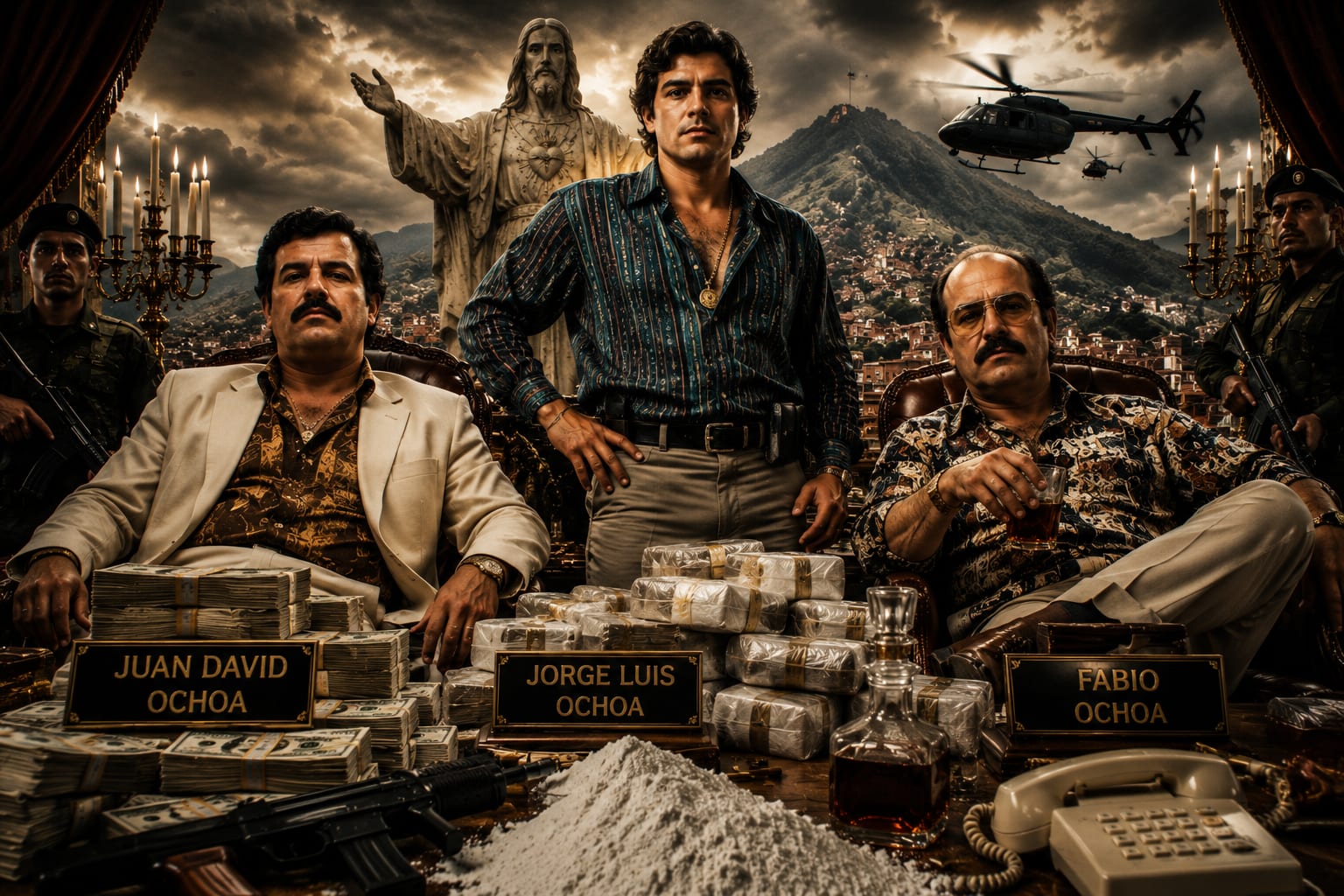
Nothing exposes the fragile male ego quite like a man who buys a racehorse to prove he is more than a glorified drug delivery boy.
The Ochoa brothers, that Medellin trio of Jorge Luis, Juan David, and Fabio, understood something the rest of us pretend not to know. Money laundered through hooves and horseflesh smells better than money stuffed in a duffel bag. And so they became connoisseurs. Aristocrats of the paso fino. Gentlemen farmers with automatic weapons in the tack room.
The Vanity Ranch
Fabio Ochoa, the baby of the family, adored his horses the way lonely men adore anything that cannot talk back or ask uncomfortable questions.
He built stables. He hosted shows. He paraded prize stallions like a monarch displaying his crown jewels, all while the cocaine empire he served pumped white powder into a hemisphere of eager noses.
The horse was the alibi. The horse was the personality. The horse was the desperate whisper of a man saying look, I am cultured, I am refined, I am not merely a criminal with a spreadsheet of corpses.
This is the oldest trick performed by wealthy men across every century. Acquire beauty. Stand next to it. Hope the shine rubs off before anyone notices the emptiness underneath. 🐎
The Medellin Machine
The brothers were not the movie villains people imagine. That role belonged to their louder, bloodier business partner, the man whose name has become shorthand for narco excess.
The Ochoas were the accountants of atrocity. The organizers. The logistics wizards who turned smuggling into a corporate art form.
They helped assemble the Medellin operation that flooded the United States with cocaine during the 1980s. They moved product by the ton. They grew richer than several small nations combined.
And what did all that blood money purchase?
Ranches. Horses. The illusion of legacy.
The Great Surrender Performance
Here is where the comedy sharpens its knife.
In the early 1990s, the brothers did something almost unheard of among men convinced of their own invincibility. They negotiated. They surrendered. They walked into Colombian custody like nobles arriving at a spa retreat.
Short sentences. Comfortable arrangements. The kind of prison stay that would make a common thief weep with envy.
They believed they had outsmarted history. They believed the horses would be waiting when they returned, tails swishing, kingdom intact.
They believed, as rich men always believe, that the rules were a costume they could remove whenever the party got dull. 💸
Fabio Learns Geography
Then came the American appetite for justice, which is far less forgiving than the Colombian variety.
Fabio, having tasted freedom again, got swept up in a later trafficking case and extradited to the United States in the year 2001. The paso fino prince suddenly found himself in a place with no stables, no adoring crowds, no prize ribbons.
He received a sentence measured not in comfortable years but in decades.
The man who once dressed his horses better than most people dress their children spent his prime learning the precise dimensions of a federal cell.
The horses did not visit. The horses never do.
The Anatomy of the Delusion
What makes the Ochoa saga so deliciously human is the pattern beneath it, a pattern that repeats among the wealthy with the reliability of a heartbeat:
- Step one: Acquire monstrous fortune through methods best left undescribed at dinner.
- Step two: Purchase symbols of refinement to bury the stench.
- Step three: Mistake the symbols for a soul.
- Step four: Act genuinely surprised when the world declines to play along.
The brothers thought class could be bought at auction. They thought a bloodline of stallions could launder a bloodline of guilt. They performed sophistication the way an insecure man performs confidence, loudly and constantly and never quite convincingly.
The Kingdom of Straw
Consider the sheer theater of it. A family of traffickers convinced that owning graceful animals made them graceful men.
They rode. They collected. They played at being an old aristocratic dynasty when they were, in the plainest terms, extraordinarily efficient criminals with excellent taste in livestock.
Vanity is the tax the rich pay for refusing to look in the mirror.
And the Ochoa brothers paid that tax in full, then paid again in prison walls and forfeited empires and horses sold off to strangers who never knew the names of the men who once loved them.
Somewhere a paso fino descendant still lifts its legs in that hypnotic dance, elegant and indifferent, carrying no memory of the frightened, powerful, foolish men who believed beauty could purchase absolution.
The horse dances on. The kingdom does not.