Pedro Carmona: The 47-Hour President and the Coup That Wanted to Erase a Nation
For forty-seven hours in April 2002, a businessman named Pedro Carmona seized Venezuela, dissolved its constitution with a single signature, and got instant applause from Washington. Here is the buried story of Pedro the Brief and the coup that almost erased a nation.
By Martin Alvarez ·
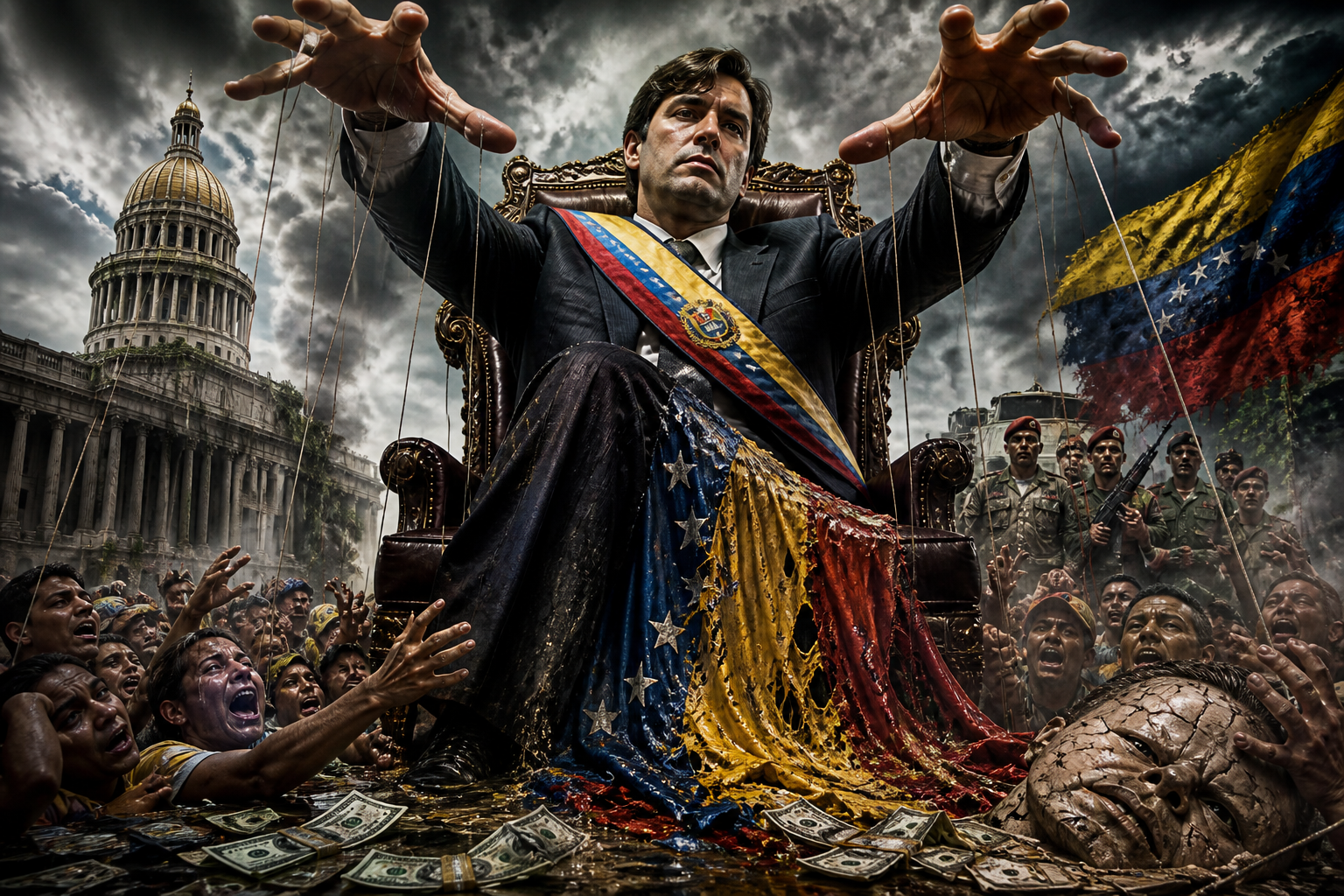
For exactly forty-seven hours, a businessman in a suit sat in a chair that was not his, ruling a country that never elected him. His name was Pedro Carmona Estanga, and in April of 2002 he became the star of one of the shortest and most shameless power grabs in the modern history of the Americas.
They called him Pedro the Brief. The nickname stuck like gum on a shoe. It followed him into exile and it will follow him into the history books, no matter how many polished versions the powerful try to write instead.
But this is not a story about one man in a suit. This is a story about who put him in the chair, who cheered, and who quietly signed off on the whole thing from very far away.
The Man Behind the Curtain
Pedro Carmona was not a soldier. He was not a revolutionary. He was the head of Fedecámaras, the biggest business chamber in Venezuela, a place where oil money and old family fortunes shake hands.
In a country sitting on top of an ocean of petroleum, controlling business meant controlling everything. And Carmona was the polite face of that control, the man who spoke softly while the machinery moved behind him.
The rich do not always need guns. Sometimes they only need a signature, a friendly newspaper, and a phone call to Washington.
When Hugo Chávez won the presidency, the old money panicked. Here was a man promising to point the oil wealth at the poor instead of at the yacht clubs. That kind of talk makes empires nervous. It makes local elites furious.
The 48 Hours That Shook Caracas
On April 11, 2002, huge crowds marched through Caracas. Then the shooting started. Bodies fell. And before the blood was dry, the story was already being sold to the world: Chávez had massacred his own people.
It was a lie built to travel fast. 📰
Certain television channels ran the same footage over and over, framed to blame the government. Snipers fired into the crowds. To this day the full truth about who pulled those triggers stays buried, wrapped in convenient silence.
By the early hours of April 12, the generals announced that Chávez had resigned. He had not. He was arrested and hauled away to a military base, a president kidnapped in his own house.
And who walked into the presidential palace to take the throne? Pedro Carmona.
The Decree That Killed a Democracy in One Page
Here is where the mask fell off completely.
Carmona did not just take power. He signed a document, now infamous, that did the following in a single afternoon:
- Dissolved the National Assembly
- Fired the Supreme Court
- Threw out the Constitution the people had voted for
- Even changed the name of the country back to the old one
In one signature he erased the votes of millions. No congress, no courts, no constitution. Just Pedro and his pen and a room full of applauding businessmen and bishops.
A democracy takes generations to build. This man tried to delete it before lunch.
That single act was too much even for some of the people who had helped him. When you dissolve everything, you leave nothing for your allies to stand on either.
The Fingerprints From the North
Now the part that the polished history books like to whisper instead of shout.
The United States government recognized the coup almost instantly. While most of Latin America condemned the overthrow, Washington rushed to bless it, calling the elected president the villain and the coup a return to order. 🇺🇸
Documents released later showed that certain U.S. funded groups had been meeting with the very people planning to push Chávez out. The empire did not need to fire a shot. It only needed to look the other way at the right moment and open its arms to whoever won.
This is the oldest trick in the imperial playbook. Let the locals do the dirty work. Applaud the result. Deny everything afterward.
The People Who Refused to Kneel
But something happened that the plotters never planned for.
The poor came down from the hills.
The neighborhoods that had been ignored for a century poured into the streets by the thousands, demanding their president back. Soldiers who stayed loyal to the constitution moved. The palace that Carmona had grabbed suddenly filled with the roar of people who would not accept a dictator handed to them by the rich.
Within two days it was over. Chávez was flown back and returned to power. Carmona, the 47 hour president, slipped away and eventually fled to Colombia, and later Miami, that famous waiting room for the region's fallen strongmen. 🛫
Why Pedro the Brief Still Matters
It would be easy to laugh at him. A president for less time than a long weekend. A man whose reign ended before his official portrait could dry.
But laughing lets everyone off the hook.
The Carmona coup was a rehearsal. It showed exactly how a modern overthrow works: manufactured chaos, media that lies with a straight face, business elites in expensive shoes, and an empire nodding quietly from the north.
It showed how quickly a constitution can be shredded when the powerful decide the votes of the poor do not count.
Pedro Carmona failed. That is the good news. The bad news is that the machine that lifted him up never stopped running.
The people who bled in the streets of Caracas that April are not a footnote. They are the ones who dragged the truth back into the light while the plotters were already writing their version. Their memory is the real document, and no signature on any decree can dissolve it.
The 47 hours are over. The questions they left behind are not.