Plaza de Mayo Mothers Demand Truth After 30,000 Disappearances and Stolen Babies
Up to 30,000 people vanished in Argentina’s Dirty War. Mothers and grandmothers have marched since 1977 to force answers. DNA and trials have brought some justice but many wounds remain.
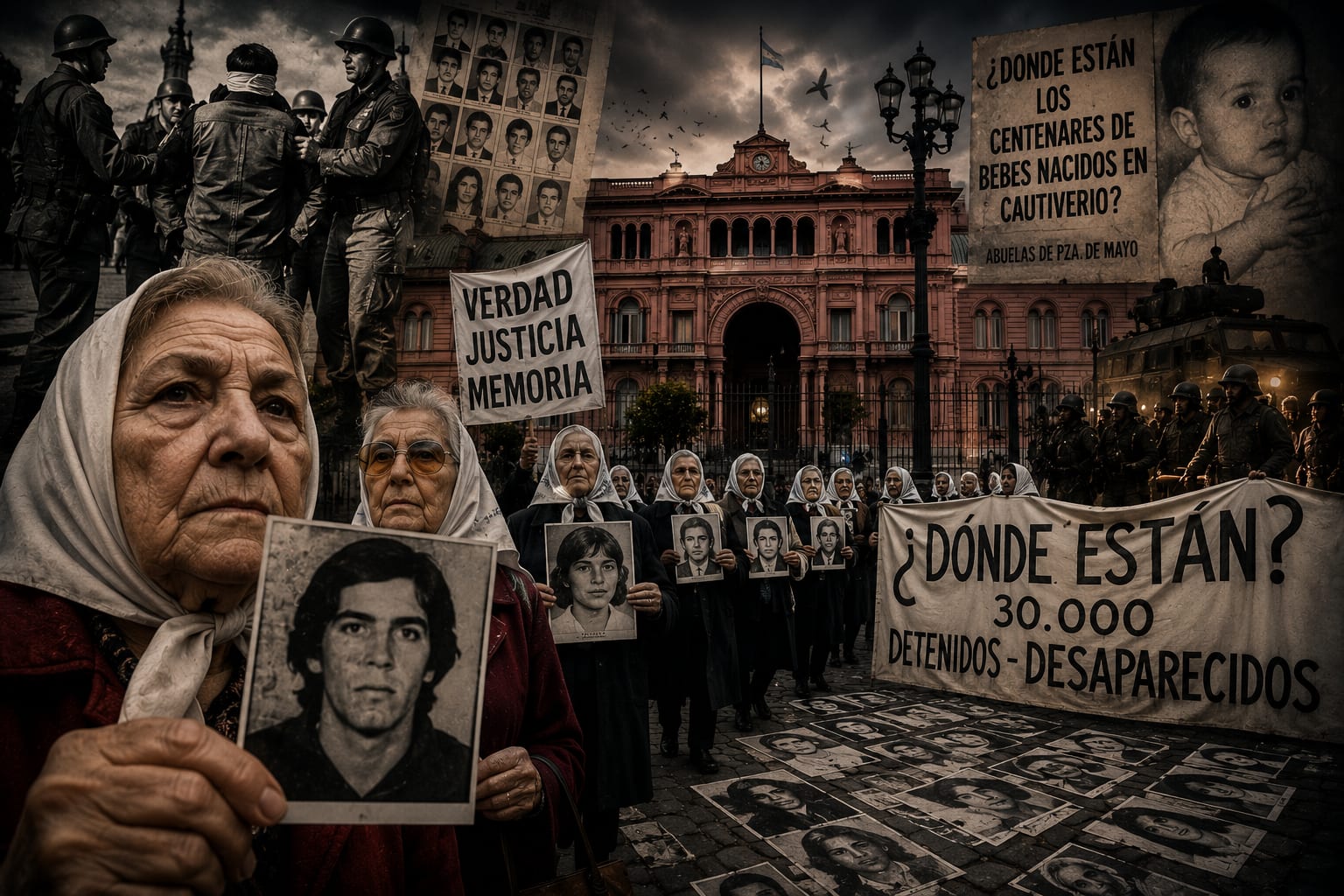
The numbers hit like a slap. Up to 30,000 people were disappeared during Argentina’s Dirty War. Children were born in secret prisons. Babies were stolen. Mothers and grandmothers marched. They still march.
The Vanishing
In 1976 Argentina’s military overthrew Isabel Perón and launched what it called the Process of National Reorganization. The junta called its campaign the Dirty War. The army and security services hunted leftists and social justice activists. They labeled them terrorists.
The state’s violence was methodical. Prisoners were tortured. Victims were shot at the edge of pits. Many were drugged and tossed from airplanes on so called death flights. The government made no list. By making people vanish the state pretended they did not exist.
Some pregnant women were kept alive long enough to give birth. Their babies were taken. Experts estimate about 500 children were seized and given to other families. The mothers were never told.
They Would Not Be Quiet
In 1977 a small band of desperate women began to gather in Buenos Aires’ Plaza de Mayo. They wore white scarves. Those scarves stand for diapers and for the children they carried and lost. Every Thursday they marched. The group became known as the Mothers of the Plaza de Mayo. Grandmothers joined to search for grandchildren.
The government tried to mock them at first. Officials called them las locas, the madwomen. Then the violence turned on them. In December 1977 Azucena Villaflor, one of the founders, was kidnapped and killed. Her family received proof of her murder 28 years later.
The mothers used the 1978 World Cup to force the world to look. In 1981 they staged the first March of Resistance, a 24 hour protest that became an annual ritual. They faced police fire and threats. They kept showing up.
DNA, Justice and the Long Aftermath
The Dirty War ended when the junta fell and democracy returned in 1983. The fight for truth did not end. Nearly 900 former members of the junta have been tried and convicted since then. But the missing children were still missing.
In 1984 the American geneticist Mary Claire King began to help the Grandmothers of the Plaza de Mayo. She used mitochondrial DNA, the maternal line, to match grandmothers with stolen grandchildren. That work helped build a national genetic database and confirmed 128 stolen children so far.
The search was not neat. A high profile case forced reluctant adoptees to give blood. That sparked debate about privacy and justice. It also showed how deep the theft went. Powerful people, including allies of the regime, raised children who carried another family’s name and another family’s grief.
Why It Still Burns
The human cost is simple and ugly. Families lost sons and daughters. Babies were raised by strangers. Mothers were murdered. Some victims were raped in detention centers. The disappeared had no grave. Their loved ones were left with silence and rumor and the image of bodies thrown into the sea.
What the mothers proved is stubborn. Weekly protests forced conversation. The world learned about death flights and secret prisons. Operation Condor, the regional network of coups and repression, tied Argentine terror to a wider campaign. The United States supported aspects of that campaign in the 1970s. That fact still stuns Americans who thought the Cold War had clean hands.
There are small victories. One is the genetic database and the 128 children returned to their blood. One is that prosecutions happened. But the questions remain. Who carried the babies. Who kept the records. How many graves remain unmarked.
The Plaza de Mayo mothers teach a harsh lesson. A state can erase people on paper. It cannot erase the pain that refuses to stay quiet. The scarves still appear on Thursdays. The mothers still march. The demand is simple: names, graves, truth.
Their fight matters beyond Argentina. It warns how a democracy can be hollowed by fear. It warns how children can be turned into spoils. It warns how silence can be the state's best weapon. That is a warning for any country that thinks fear buys order.
These women turned mourning into strategy. Their protest bent history. For the families it is not history. It is loss and listening and the slow work of naming the dead. The struggle goes on. The mothers will not stop until the last missing child is counted and the last name is said out loud.