Rio de Janeiro: Where Beauty and Bad Taste Kiss on the Same Sweaty Balcony
Rio de Janeiro is the most beautiful city on Earth that cannot stop humiliating itself, a glittering circus where the line between stunning and tacky is set on fire and danced upon in sequined heels.
By Lucia Mendoza ·
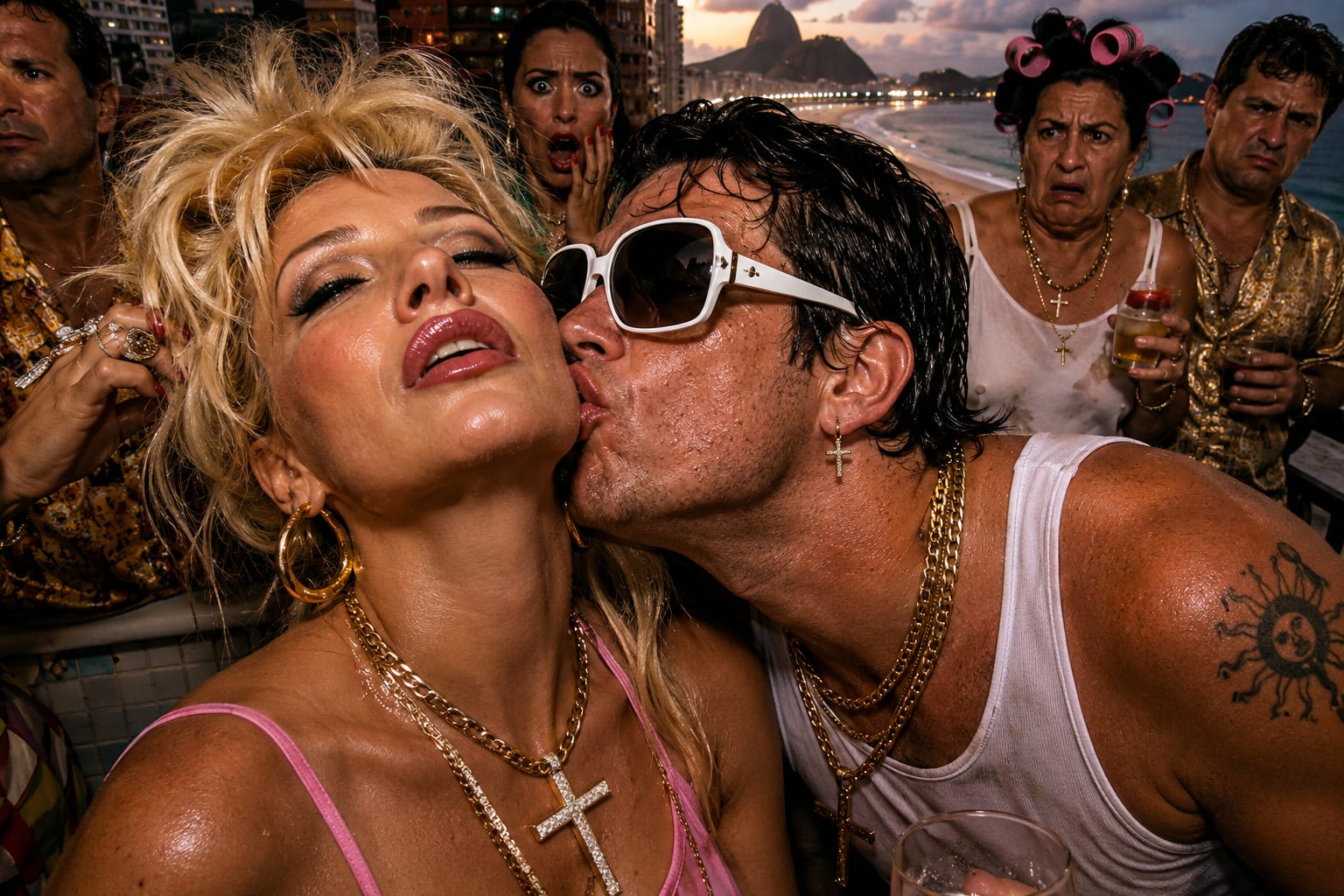
Rio de Janeiro is the most beautiful city on Earth that also cannot stop humiliating itself, and honestly, that is exactly why we cannot look away.
Picture it. A mountain shaped like God stretching His arms open, staring down at a beach where a woman in a thong the size of a dental floss is arguing with a coconut vendor about the price of a coconut. That contrast right there? That is the whole city in one sweaty postcard.
Rio does not do subtlety. Rio does not know what subtlety is. Rio wakes up, puts on gold jewelry it cannot afford, and walks straight into the ocean like it owns the place. And the terrifying thing is, it kind of does.
The Ipanema Aristocracy and Their Invisible Rules
There is a hierarchy on that beach that no tourist will ever crack. You think you can just plop your towel anywhere? Adorable. Wrong.
Every stretch of sand has a code. Certain postos belong to certain tribes. The rich kids from Leblon do not mingle with the influencers from the Zona Norte, and neither of them will make eye contact with the man selling grilled cheese on a stick, even though that man is the only person on the entire beach doing something useful.
Rio is a city where a family with a helicopter and a family with nothing can share the exact same view, and both will spend the afternoon judging each other's swimwear.
The vanity is Olympic level. People here do not exercise for health. They exercise as a public performance. Those outdoor gym bars near the water? That is a runway. That is theater. Every bicep curl is a statement about class, about status, about whose surgeon did the better job.
Copacabana: A Masterclass in Glorious Bad Taste
Let us talk about Copacabana, the neighborhood that dresses like it peaked in 1978 and refuses to apologize.
The sidewalk is a black and white wave pattern so famous it became a symbol of luxury, yet it is surrounded by apartment buildings crumbling with the elegance of an aging telenovela star. Everything shines and everything is falling apart, sometimes on the same block, sometimes in the same building.
And this is the magic trick. 🪄
Rio takes things that should be tacky and dares you to call them tacky to their face.
- Gold speedos on men over sixty. Confidence or crime? Yes.
- New Year's Eve in head to toe white. Two million people dressed like a hospital ward, throwing flowers into the sea, and it is genuinely gorgeous.
- The rooftop pool aesthetic. Every building wants one. Half of them are the size of a bathtub.
That is the only list you are getting, because Rio does not organize itself neatly and neither will this.
The Favela View Nobody Wants to Discuss at Dinner
Here is the part the tourism board hates.
The most spectacular views in the entire city, the panoramas that make grown adults cry into their caipirinhas, belong to the favelas. The communities clinging to the hillsides have front row seats to a sunset that the penthouse people would sell their soul for.
So who has good taste now?
The elite pay millions to look up at the mountains. The people on the mountains look down at everything, including the elite. It is the single most delicious irony in South America, and everyone politely pretends not to notice it.
Beauty in Rio is never about money. Money buys you the address. It does not buy you the view, the rhythm, or the nerve to wear a bikini at eighty.
Carnival: When the Whole City Agrees to Lose Its Mind
Then comes Carnival, the annual event where the line between stunning and absurd is not blurred, it is set on fire and danced upon. 🔥
Feathers taller than a person. Sequins that could blind a pilot. Costumes that cost more than a car, worn for exactly four minutes on a parade float before being abandoned forever.
Is it wasteful? Wildly. Is it in questionable taste? Depends who you ask. Is it one of the most breathtaking human spectacles ever created? Absolutely, and both things are true at once.
That is the thesis of this entire city. The most beautiful thing and the most ridiculous thing are usually the same thing, standing in the same pair of glittery heels.
The Sunset Cult of Arpoador
Every evening, hundreds of people gather on a rock called Arpoador to watch the sun go down. And when it finally sinks behind the mountains, the crowd applauds.
They clap. For the sun. Which does this every single day. Which owes them nothing.
Somewhere else this would be embarrassing. In Rio it is the most sincere thing you will ever witness, a whole city choosing to be moved by something free, something that no penthouse and no plastic surgeon can improve.
And that is the con at the heart of the con. You arrive thinking you will judge Rio for its excess, its noise, its gold chains and its questionable taste. Instead the city looks you dead in the eye, adjusts its dental floss bikini, points at the sunset, and dares you to prove you are not the ridiculous one.
You lose. Everyone loses. And then you clap for the sun too.