The Robber Barons of the Gilded Age: The Blood Money Kings Who Bought America and Buried the Bodies
They called themselves captains of industry, but they were pirates in tailored suits. The buried truth behind the Gilded Age robber barons who bought America and washed their fortunes clean.
By Martin Alvarez ·
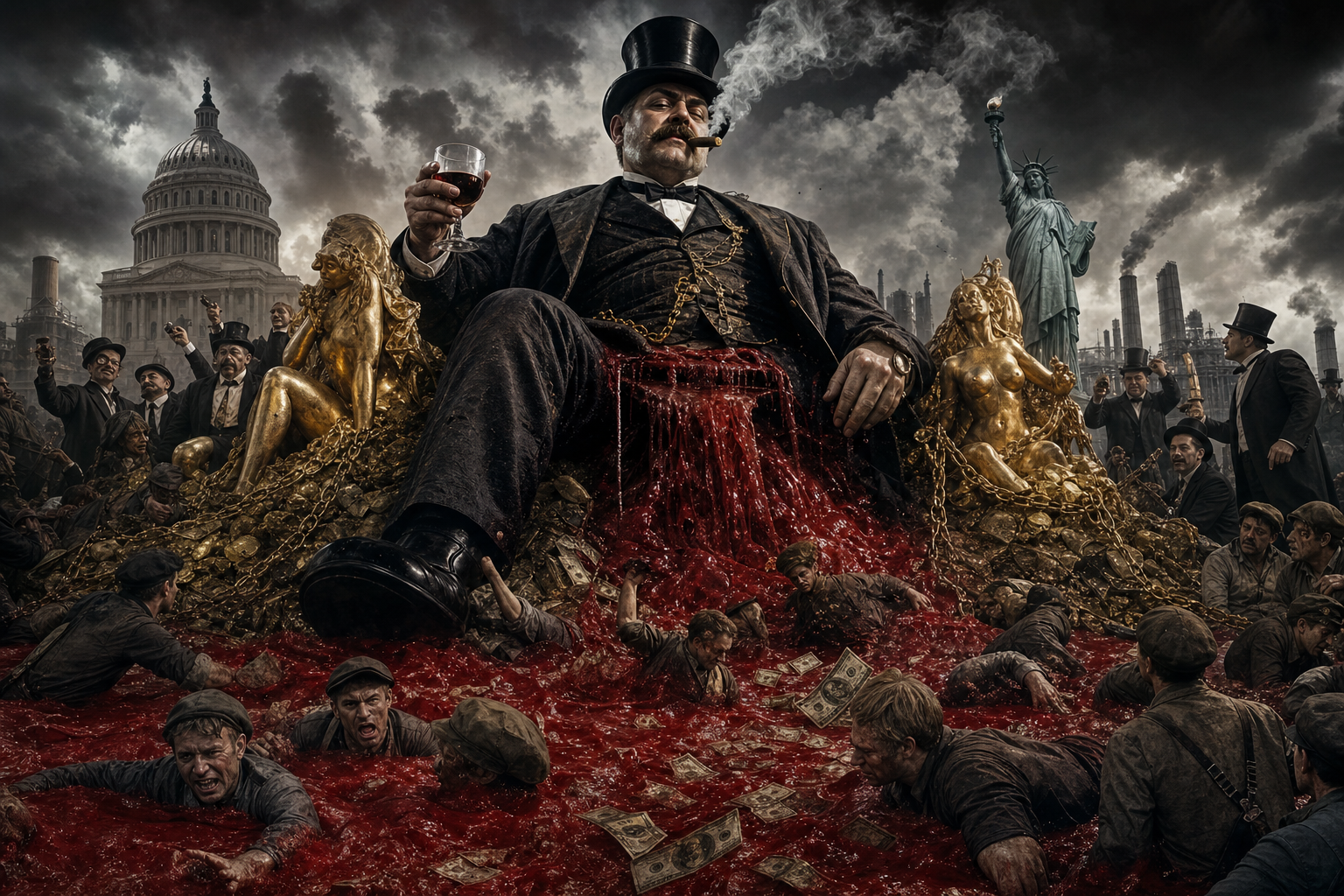
They called themselves captains of industry, but they were pirates in tailored suits.
The Gilded Age was not golden. It was gilded, which means a thin skin of gold painted over rot. Under the shine, there were broken bodies, stolen wages, and railroads laid down on the graves of men who died so a handful of families could dine on silver plates in marble palaces.
This is the story nobody carved into the monuments.
The Men Who Owned the Country
Between roughly 1870 and 1900, a small pack of industrialists grabbed the American economy by the throat and squeezed.
John D. Rockefeller. Andrew Carnegie. Cornelius Vanderbilt. J.P. Morgan. Jay Gould. The names still hang on universities and libraries and concert halls, scrubbed clean, polished, respectable.
Respectable. Now there is a word doing heavy lifting.
They did not build America. They bought it, cornered it, monopolized it, and then charged everyone else rent to live in it.
Rockefeller's Standard Oil did not simply win the market. It strangled competitors, made secret deals with railroads to crush smaller sellers, and swallowed nearly the entire oil business of the nation. By the time anyone noticed, there was no market left to compete in. There was only Rockefeller.
Where the Money Really Came From
Here is the part left out of the sparkling museum plaques.
The fortunes came out of the lungs of coal miners and the hands of steelworkers. They came from immigrants who worked twelve hour days, six days a week, in factories where a slip of the foot could cost you an arm.
When those workers dared to ask for more, they learned exactly who owned the government too.
The Homestead Strike of 1892 tells the whole story.
Andrew Carnegie loved to write essays about generosity. He preached that the rich had a holy duty to give back. Beautiful words. Then his steel plant near Pittsburgh cut wages, and his partner Henry Clay Frick locked the workers out.
Frick hired an army of private Pinkerton agents. They floated down the river on barges to break the strike. The workers fought back. People died on both sides. In the end, the state militia rolled in to protect the property of the rich, not the lives of the poor.
The philosopher of charity had answered his workers with rifles.
Buying the Senate Like Groceries
The robber barons did not fear democracy. They bought it wholesale.
Senators were handpicked and paid for. State legislatures took orders from railroad lobbyists. Judges knew which side of the bread had butter. The Gilded Age Senate was mockingly called the Millionaires' Club, and the joke was not really a joke.
- Own the railroads, and you decide what every farmer pays to ship his grain.
- Own the banks, and you decide who eats and who starves.
- Own the newspapers, and you decide what history remembers.
That last one matters most, because it explains why we still whisper their names with respect.
The Great Laundering
How does a man who broke strikes with hired guns become a hero?
Simple. He builds a library and puts his name on it.
Carnegie funded thousands of libraries and a famous concert hall. Rockefeller poured money into universities and medical research. This was not an accident. It was a laundry machine for reputations.
Take the money soaked in the sweat of the dead. Wash it in marble. Carve your name above the door. And suddenly the thief becomes the philanthropist.
The libraries were real and useful. That is exactly what made the trick work. A gift with one hand while the other hand still gripped the whip.
What They Left Behind
The Gilded Age ended, but its machinery never really stopped.
The tricks they invented are still running. Crush the small competitor. Corner the market. Buy the lawmakers. Fund a charity. Rename yourself a visionary. Let the schoolbooks handle the rest.
Every time a monopoly swallows a rival today, every time a billionaire poses as a savior while his workers cannot afford rent, the ghost of the robber barons grins from behind the gold leaf.
The children of the immigrants who died in those factories were told to be grateful for the libraries. Their descendants are still being told to be grateful.
The bodies under the railroad tracks never got a plaque. Only the men who buried them did.