Simón Bolívar Legacy: Liberator, Andes March, Dictatorship And Gran Colombia Collapse
Simón Bolívar freed large parts of South America and created Gran Colombia, but his use of concentrated power helped trigger the republics split. His daring Andes crossing, early victories and final resignation frame a complex legacy.
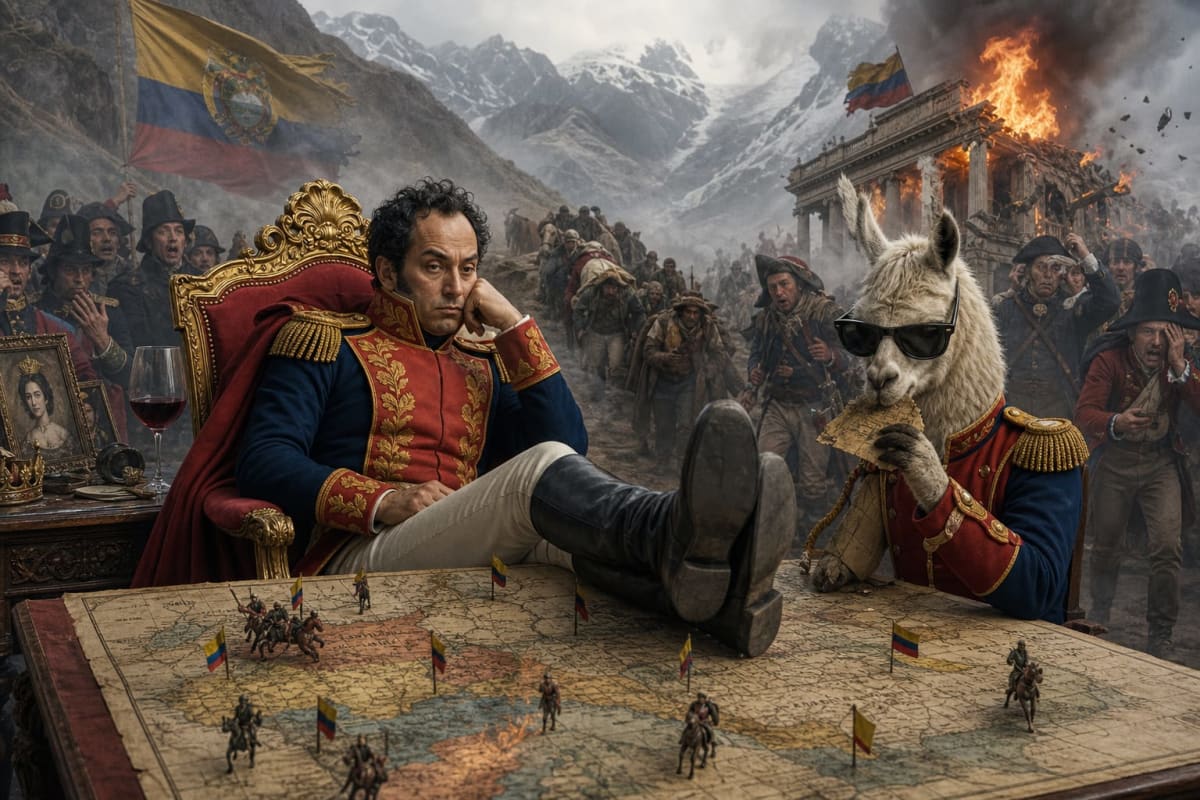
Simón Bolívar remains one of the most important and complicated figures in Latin American history. He led the fight against Spanish rule and helped create a republic that once spanned much of the northern continent. Yet his story ended with political collapse and a bitter farewell that still haunts the region.
The Liberator Who Freed Half A Continent
Born in Caracas in 1783, Bolívar rose from the creole elite to lead independence movements across the continent. He is credited with the liberation of territories that became Venezuela, Colombia, Ecuador, Peru and Bolivia. People called him the Liberator because he helped topple Spanish control and inspired hopes for a new republican order.
His victories were not only military. After major battles like Carabobo in 1821 he helped assemble Gran Colombia, a single state meant to bind the newly freed lands together. For a while it looked like Bolívar might pull off the regional unity he dreamed about.
The Andes March That Became Legend
One of Bolívar’s most famous feats was a daring crossing of the Andes in 1819. He led several thousand men across high passes and brutal weather to surprise royalist forces. The march was a test of endurance. Men suffered frostbite and disease. Many died.
The gamble paid off. Bolívar won a decisive battle at Boyacá and entered Bogotá. The success cemented his military reputation and made the Andes crossing part of his legend. In towns from Mérida to Bogotá the story of that march is still told as proof of what power and risk can achieve.
From Republic To Dictator And The Collapse
That same reputation for force would become dangerous. Bolívar’s ideals were shaped by Enlightenment thought and a desire for republican government. But regional rivalries, racial and social tensions and political splits made lasting unity difficult.
By the late 1820s Bolívar had moved away from representative rule. He accepted sweeping powers, dissolved legislatures and for a time governed by decree. He survived an assassination attempt in 1828. By 1830 Gran Colombia had begun to fall apart. Venezuela and Ecuador seceded and Bolívar resigned. He died later that year, exhausted and disillusioned.
The arc of Bolívar’s career shows both the promise and peril of revolutionary leadership. He freed millions from colonial rule. He also trusted concentrated power as a cure for division. That choice helped produce the fragmentation he feared.
Walking the streets of Caracas today, you still see statues and flags honoring the Liberator. You also hear debates about how to remember him. As my abuela used to say while selling arepas on a corner, "Pan y ley para todos". History gives us both the hero and the warning.
Bolívar’s life matters now because it speaks to a familiar problem in our region. Years of outside interference, deep inequality and leaders who swap rhetoric for control make the promise of unity fragile. Bolívar’s rise and fall is a study in how revolutions can make room for freedom and then close it again. That is a lesson worth keeping.