Supreme Court Expands Trump Presidential Power While Upholding $5M Sexual Assault Judgment
The Supreme Court broadened presidential removal power by limiting a 1935 precedent while upholding a $5 million civil judgment against Donald Trump. The split rulings could politicize independent agencies and deepen executive control.
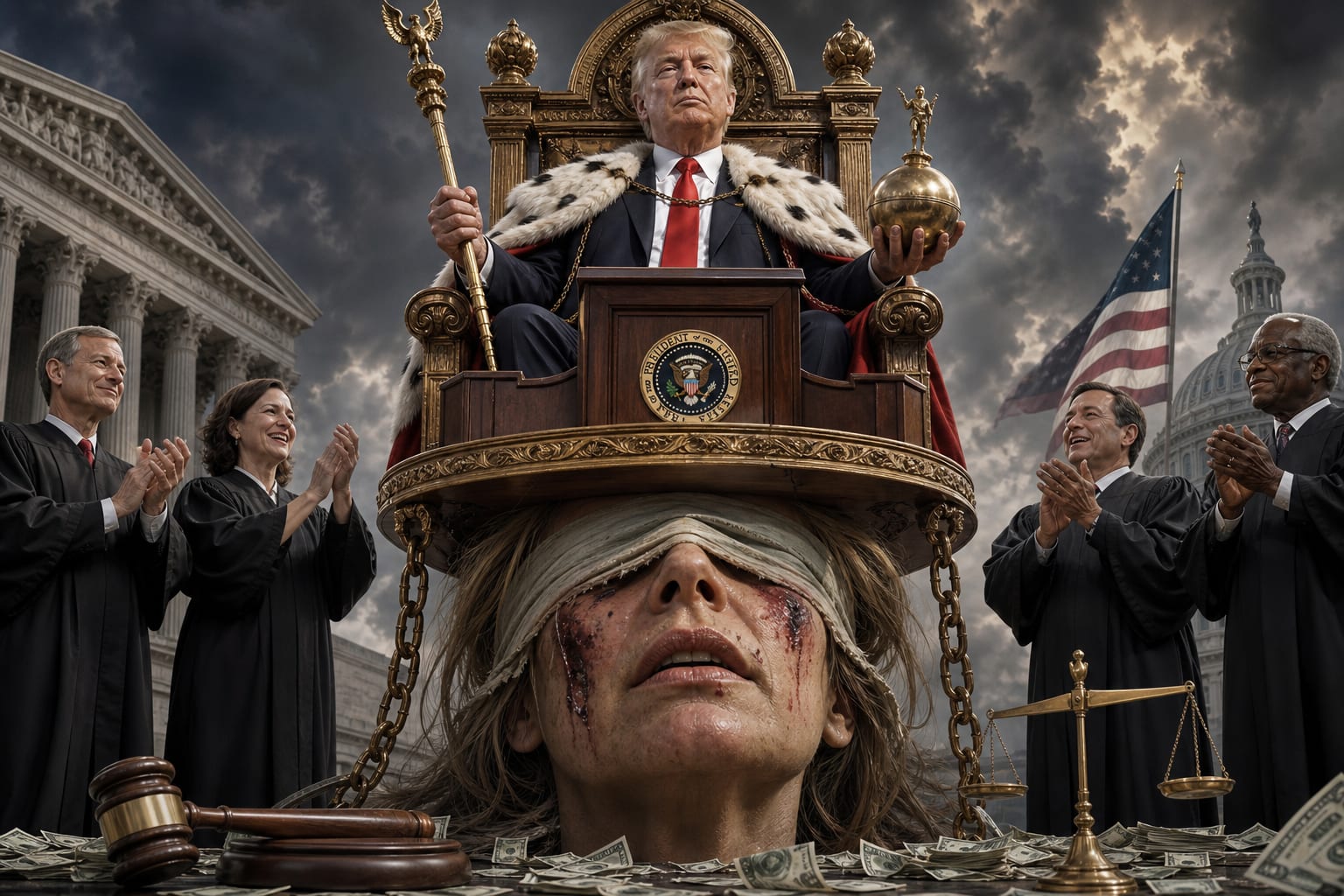
The U.S. Supreme Court on Monday handed Donald Trump a sweeping boost in presidential authority even as it affirmed a $5 million civil judgment against him in a sexual assault case. The twin rulings cut two different paths: one broadens the president's power to remove federal officials, the other leaves intact a personal liability that the former president loudly denies.
What The Court Unleashed
In a decision that changes how Washington runs, the court narrowed a long standing limit on presidential removal power. The majority rolled back protections that kept certain independent agency members insulated from being fired for political reasons. That legal line traces back to a 1935 case known as Humphrey's Executor.
By weakening that precedent the court handed future presidents a clearer path to sack agency officials they dislike. In plain language this means presidents will have more leverage over regulators and overseers charged with policing elections, markets and the capital itself. The risk is not theoretical. Control of who enforces rules now looks more and more like control of the rules.
A $5 Million Slap And A Presidential Smile
At the same time the court refused to erase a $5 million jury award in a sexual assault and defamation case brought by writer E. Jean Carroll. The justices left the New York verdict intact, denying the claimants full relief sought by the former president.
The split outcome produced the expected theater. Trump celebrated the decision that widens his power and called the other ruling unfair. For many Americans the moments felt like watching a soap opera with the fate of public institutions at stake.
Why This Matters Here
From my street in Caracas I watched the live feed with an arepa vendor muttering talla about emperors who think they can take the kitchen. The humor is dark because the consequences are real. Expanded removal power in Washington will echo through Latin America where U.S. pressure and interventions have a long memory and where independent regulators are often the last line between private profit and public harm.
Investigatively this is not just a legal tweak. It is an acceleration of executive control that could make agencies more pliable to political will and private capture. Election administrators, competition enforcers and corruption investigators are now more vulnerable to sudden personnel purges that change policy overnight.
The court did not hand one side everything. Upholding the civil judgment shows limits still exist. But mixed rulings create an unstable patchwork that lets power consolidate while accountability lags behind.
For people who remember U.S. interventionist history in the region the ruling is a reminder that the empire moves its chessmen with quiet confidence. Here we keep our heads and our humor. We also keep our lists of names, because when the roof leaks you mend the tiles and you name the landlord.
Short of miracles, expect more political firings, more headlines and more lawsuits. Expect also more theater. The real danger is less drama and more steady erosion of independent checks that protect ordinary people. That is not funny. Still, the arepa vendor laughed and said something true and terrible: power wants to eat everything it can hold in its hands, even if it burns the house down to get it.