Supreme Court Lets Trump Turn Back Asylum Seekers at the Border
The U.S. Supreme Court ruled Thursday that the Trump administration can block asylum seekers from crossing the southern border, reviving a turn-back policy. The decision threatens migrants fleeing Venezuela, Haiti, Cuba and Central America.
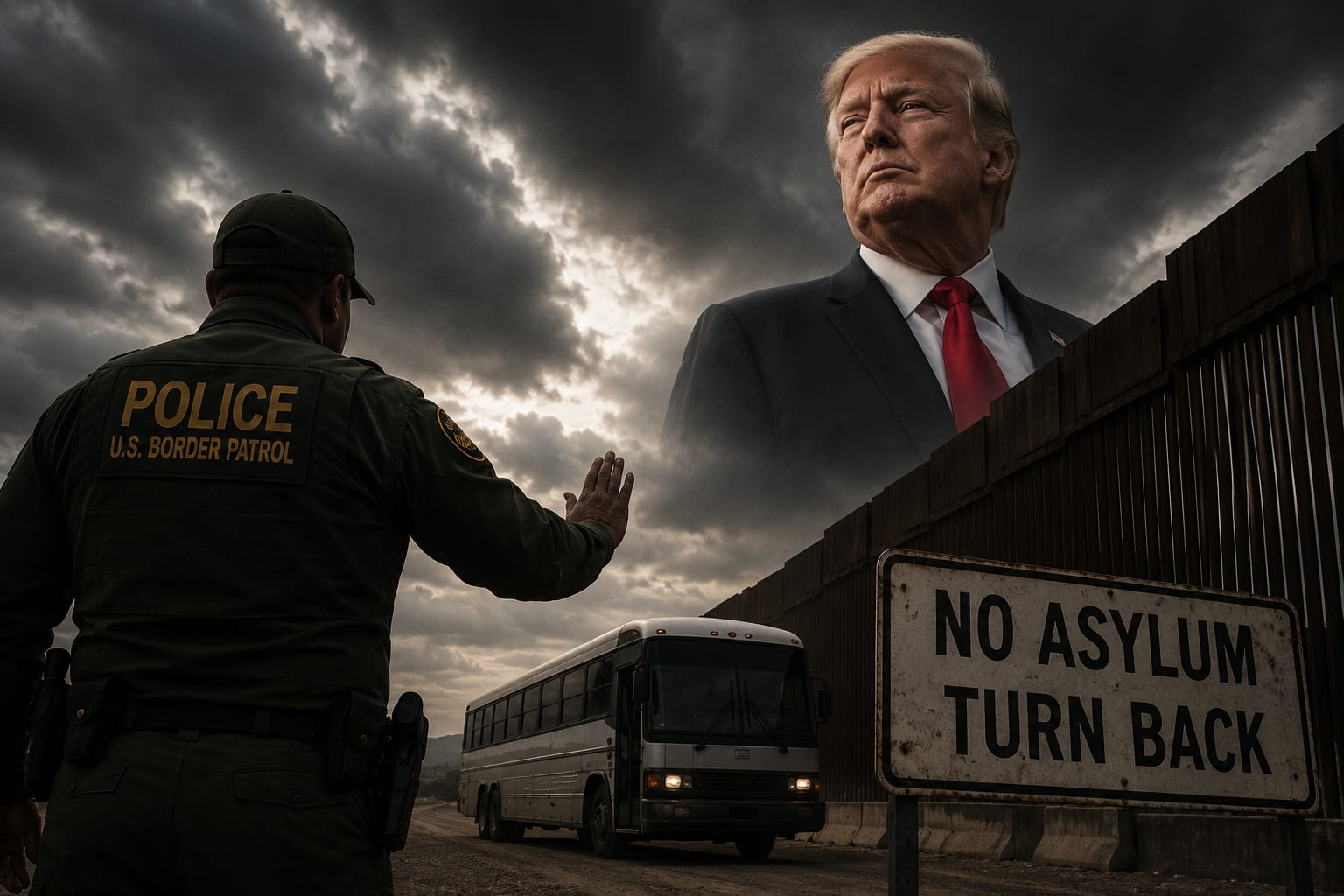
THE RULING THAT SLAMS THE DOOR
The U.S. Supreme Court ruled Thursday. Migrants can be turned away at the border. Physically. Before they ever set foot on American soil.
The decision hands President Donald Trump a powerful tool. His administration can now revive a 2016-era turn-back policy. Asylum seekers can be blocked from crossing entirely.
The law seems clear. Anyone "physically present" in the United States or who "arrives" can apply for asylum. They get an interview. They get a chance to prove persecution.
But the court reframed the question. What does "arrive" really mean? The administration argued migrants must fully cross. Only then are they protected.
This reverses a 2021 decision to rescind the policy. The flexibility is back. The crackdown continues.
The ruling lands against a tangled legal backdrop. In April 2026, a D.C. Circuit panel called Trump's blanket asylum ban unlawful. Judges said the president cannot suspend the right to asylum by decree. The ACLU cheered. The case was known as RAICES v. Noem.
Now the high court has carved its own path. The door is closing again.
WHO PAYS THE PRICE
The people affected have names and homelands. Venezuelans. Haitians. Cubans. Nicaraguans. Central Americans fleeing collapse and violence.
Many travel through Mexico for months. They arrive at the border exhausted. They present themselves. They ask for protection.
Under this ruling, that may no longer matter. If they have not crossed, they have not "arrived." Their claims may never be heard.
Consider the Venezuelan context. The country remains in crisis despite a fragile political transition. Maduro was removed in January 2026. Delcy Rodriguez now leads in Caracas. Repression persists.
Human rights groups verified the release of at least 659 people early this year. Journalists. Activists. Opposition figures. But hundreds more remained jailed for political reasons.
People still flee. The economy has stabilized, barely. Inflation stays high. Hunger lingers. The wounds of the worst economic collapse in Venezuelan history have not healed.
These are the migrants standing at the border. The policy treats them as a threat. The reality is they are survivors.
EMPIRE BY OTHER MEANS
The turn-back policy fits a larger pattern. Washington treats Latin American migration as a security problem. Not a human one.
Trump's Inauguration Day proclamation called the border situation an "invasion." The language is military. The intent is control.
This is the U.S. national security framework at work. Democracy promotion in speeches. Hard power at the gate. The contradiction is stark.
The same Washington that backed Maduro's removal now blocks the people fleeing his ruins. It claims to defend freedom abroad. It denies refuge at home.
Marco Rubio outlined a three-phase plan for Venezuela. Stabilization. Recovery. Transition. Sanctions eased. Diplomatic ties restored in March 2026.
But the logic remains imperial. Latin America is treated as a chessboard. Its people are pieces to be moved or removed.
The turn-back ruling is one more move. It tells the hemisphere a message. The United States decides who counts as human. The poor and persecuted wait outside.
This is not protection. It is hegemony dressed as policy.
WHAT JUSTICE WOULD LOOK LIKE
A different path exists. Start with the law as written. People who reach the border deserve a hearing. That is what asylum means.
The right to seek protection is not a loophole. It is a commitment. Made by treaty. Made by statute. Made by a nation that once called itself a refuge.
The April appeals ruling pointed the right way. No president should erase that right by executive order. The Supreme Court should have agreed.
For Venezuelans and others, the stakes are immediate. A democratic future at home requires support, not abandonment. Trade on fair terms. Investment that lifts workers. Resource wealth that funds clinics and schools.
That vision rejects both kleptocracy and exploitation. It rejects Maduro's looting. It rejects Washington's gatekeeping.
A sovereign, democratic Venezuela should trade freely. With the United States. With China. With anyone. On its own terms.
But its people should never have to flee in the first place. When they do, the answer is not a wall of legal fictions.
The court ruled on a word. The word was "arrive." Behind that word stand thousands of lives.
They arrived. They asked. They were turned away.