The Cangaceiro Secret: Why the Sertao's Poor Outlived the Doctors Who Ignored Them
The toughest bodies ever built were not made in clinics. They were forged in the thorn and drought of the Brazilian Sertao, where a barefoot bandit scout named Bento knew a metabolic secret the modern sick-care system spent a century trying to sell back to you.
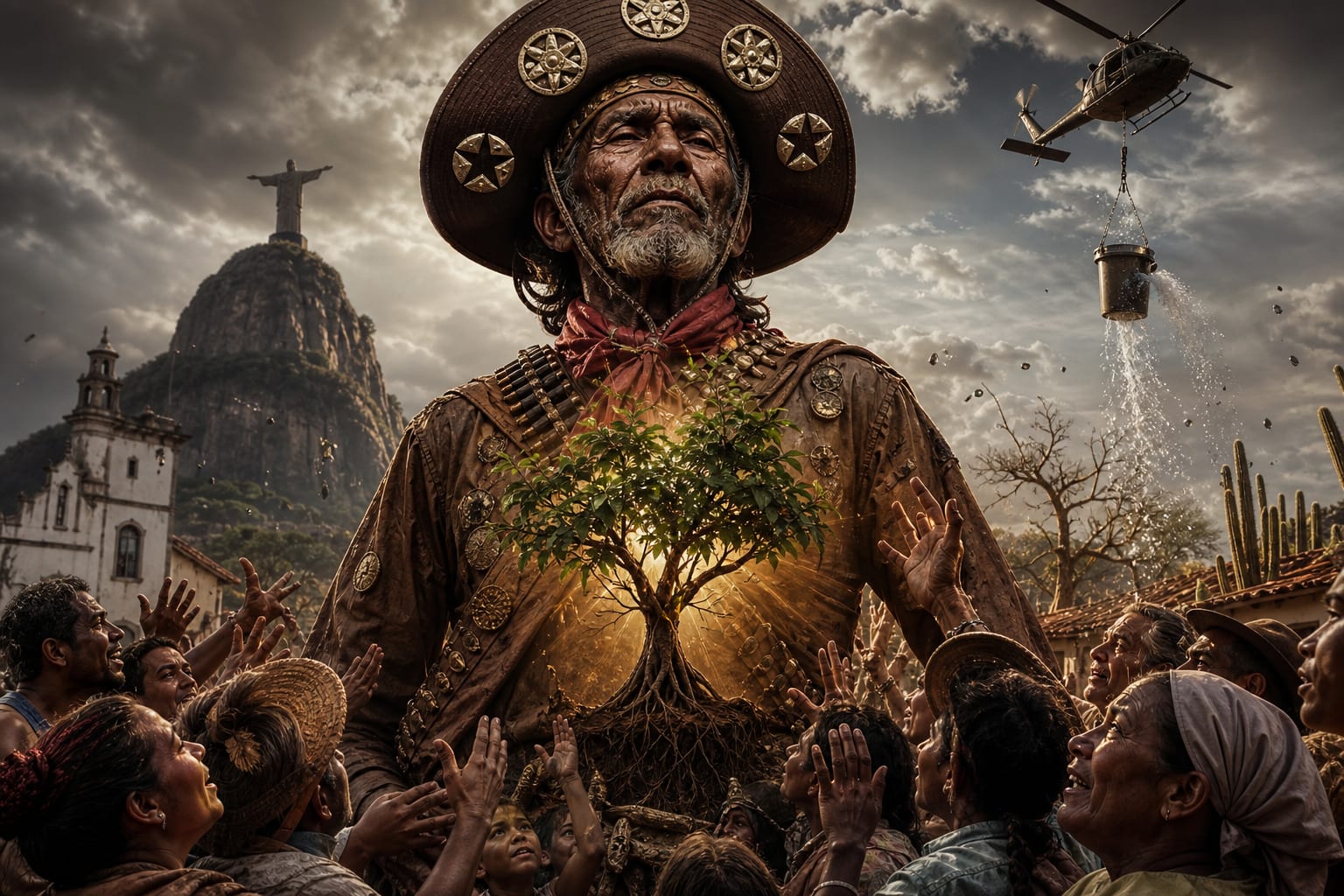
Let me tell you something the pharmacy on the corner will never sell you: the toughest human bodies ever built were not made in a clinic. They were forged in the cracked red earth of the Brazilian Sertao, where the sun does not shine so much as interrogate you.
And the man who understood this best carried no prescription. He carried a knife, a rosary, and the knowledge of every water-bearing cactus in a thousand miles of thorn.
His name was Bento. A scout for the cangaceiros, the bandit-knights of the backlands. And his stamina, his metabolic genius, puts your gym membership to shame.
The Land That Teaches or Kills
Picture the Sertao at noon. The mandacaru cactus stands like a green candelabra against a sky bleached white. Vultures circle a dead cow whose ribs poke through like the beams of a burned church.
This is where Bento walked. Barefoot, mostly. The leather sandals came out only for the mud season, which sometimes never arrived at all.
The poor here learned what the wealthy in Rio never had to. When there is no food for three days, the body does not die. It changes. It burns its own fat like a saint burning a candle to a favor not yet granted.
The cangaceiros ate rapadura, hard blocks of raw sugarcane, and dried carne de sol cured in the wind. They fasted not by choice but by the cruelty of the drought. And their bodies became lean, ferocious machines that could march forty kilometers under a sun that split stones.
They knew things. That the umbu tree stores water in swollen roots beneath the soil, a hidden reservoir the desert keeps like a secret lover. That the juazeiro leaves could clean a wound and a mouth. That you drink the milk of the xique-xique cactus when the wells turn to dust.
No doctor taught them this. The doctors were three provinces away, in cool tiled offices, treating the coffee barons for gout.
The Sickness They Sold to the Healthy
Here is the part that should make your blood run hot.
The same men who owned the land that starved Bento's people also owned the future. The colonels, the coronels, fat with sugar money, built mansions with imported Italian marble while children in the same county died of thirst with swollen bellies.
They did not want a strong peasant. A strong peasant asks questions. A strong peasant does not beg.
So the system that grew from that soil, the one we still live inside today, learned a beautiful trick. It stopped killing the poor outright and started managing them instead. A pill for the symptom. A shrug for the cause. A bill you cannot read and cannot pay.
They took the natural intelligence of the body, the same fat-burning, wound-healing, fog-clearing genius that Bento carried in his blood, and they locked it behind a counter. They called it healthcare. It is closer to rent.
You feel tired at forty. Foggy. Soft in the middle. You go in, and a man in a white coat tells you this is aging, take this, accept it, come back in ninety days and pay again.
Bento at forty could still run down a horse thief through the caatinga. Nobody told him to accept anything.
What the Bandit Knew That the Clinic Forgot
The truth is almost too simple, which is why they hide it in complexity.
Your body was designed for scarcity and movement. For heat and hunger and sudden effort. For long walks and short feasts. The cangaceiros lived this by force, and it made them nearly unbreakable.
There is an old belief in the backlands that a man who survives the great drought carries the strength of everyone who did not. That the dead lend their endurance to the living. The grandmothers still light candles for this, whispering to saints who are half African, half Catholic, and entirely their own.
Superstition, the city people laugh. But watch a Sertanejo grandmother of eighty carry water uphill and tell me who understands the body better, her or the man selling you a supplement subscription.
The poor were never weak. They were robbed, and then blamed for the wound.
Metabolic flexibility. Fasting. Movement under stress. Real food cured by wind and sun. These are not wellness trends invented last Tuesday. They are the survival memory of people who were given nothing and refused to die anyway.
Bento is dust now, somewhere under the thorn and the heat and the political ghosts that still walk that land. The cangaceiros were hunted down, their heads displayed in town squares like trophies of order.
But their secret outlived the men who murdered them. It lives in you, in the ancient machinery beneath your skin, waiting for you to stop asking permission to use it.
The colonels are gone. The clinic that replaced them is still open. And the mandacaru cactus still stands in the red dust, holding its water, keeping its old and stubborn faith.