The Caracazo: The Massacre Venezuela's Government Tried to Bury in Unmarked Graves
In February 1989, Venezuela answered a hunger uprising with bullets and buried its victims in a secret mass grave called La Peste. This is the story of the massacre the state tried to erase, and the mothers who refused to let it stay buried.
By Martin Alvarez ·
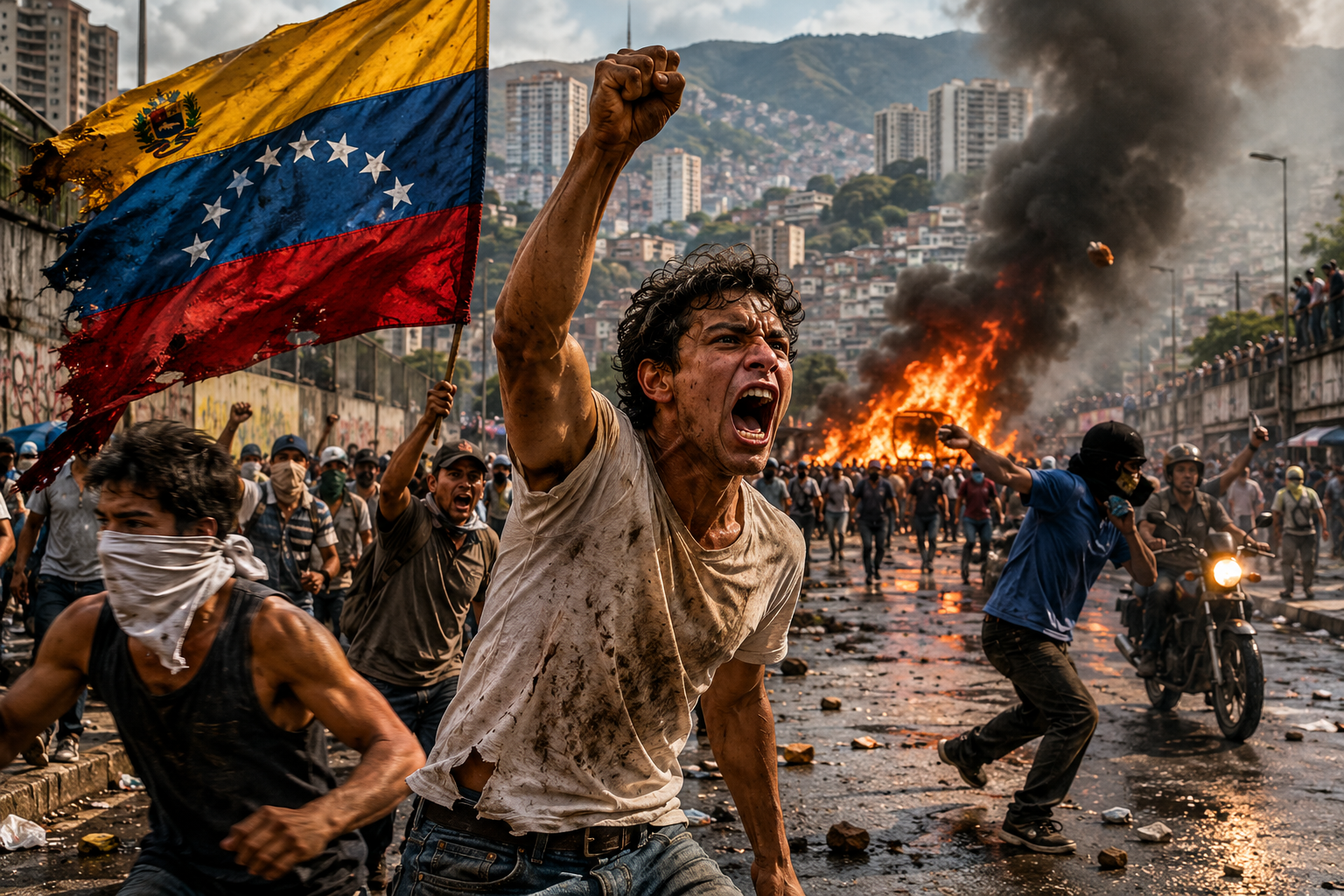
They shot the poor for wanting to eat. That is the whole story, and everything else is the noise the powerful make to hide it.
In February 1989, the hillside slums of Caracas came screaming down into the streets, and the Venezuelan state answered with bullets. Not rubber ones. Not warning shots into the air. Real lead, fired into real bodies, and then the bodies vanished into holes in the ground that nobody was supposed to find.
This was the Caracazo. And the empire behind it wore a very respectable suit.
💣 The Package From Washington That Started the Fire
Carlos Andrés Pérez had just been sworn in as president. During his campaign he sounded like a friend of the workers, a man who remembered where the oil money was supposed to go. The crowds believed him. That was their first mistake.
Within days of taking the sash, Pérez went crawling to the International Monetary Fund. He signed the papers. He accepted what they politely called an adjustment package, which is a clean word for a very dirty operation.
The prescription was always the same everywhere the IMF touched: cut the subsidies, free the prices, let the poor pay for the debts of the rich. In Venezuela it meant the price of gasoline jumped, and with it the price of the buses that carried working people to their jobs.
On February 27, the bus fares went up. For a country sitting on an ocean of oil, this was an insult stacked on top of a wound.
🔥 The Morning the Slums Came Down the Mountain
It began in Guarenas, a town just outside the capital. Commuters saw the new fares and refused. The refusal spread like a lit fuse into Caracas itself.
People poured out of the barrios, the poor neighborhoods stacked on the hills above the city. They took what the stores had denied them for years. Rice. Meat. Shoes. Televisions. The rage of decades broke open in a single day.
And here is a fact the official storytellers hate:
For the first hours, there was almost no one to stop them. The police were overwhelmed or looking the other way. The city belonged, briefly, to the people who built it and never got to own any piece of it.
That could not be allowed to last.
⚰️ Then Came the Order to Kill
Pérez suspended constitutional guarantees. He put the army in the streets. He gave the soldiers permission to restore order, and everyone understood what that word had come to mean.
Troops fired into the barrios. They shot into apartment buildings. Snipers and soldiers hunted through the poor neighborhoods where the uprising had started, and the killing went on for days after the looting had stopped.
The official body count was floated at around three hundred dead. Almost no one who lived through it believes that number. The families knew better, because they were the ones still searching for sons who never came home.
The government said hundreds. The neighborhoods whispered thousands. And the gap between those two numbers is exactly where a state hides its crimes.
🕳️ La Peste: The Grave With No Names
Here is where the story turns from tragedy into something colder.
Bodies disappeared. Families went to the morgues and were turned away. And then, years later, the truth came clawing its way out of the dirt.
In a Caracas cemetery there was a common grave. People came to call it La Peste, the Plague. When it was finally opened, forensic teams pulled out bundles of human remains, wrapped in plastic bags, stacked together like discarded things.
These were the dead the state had thrown away in secret. No names. No coffins. No records handed to grieving mothers. Just plastic and lime and silence.
The empire of money had demanded its debt payment, and the receipt was written in the bodies of the poor.
📉 The Lie They Called Progress
The men who signed the IMF deal called it modernization. They called it fiscal responsibility. They stood in front of cameras and used the vocabulary of economists to describe a policy that ended with children being shot in stairwells.
Understand the trick clearly:
- The debt was made by the rich and the corrupt.
- The cure was handed to the poor to swallow.
- The medicine was hunger, and when the patient screamed, the answer was gunfire.
That is not an accident of history. That is a system doing exactly what it was designed to do.
⚖️ The Verdict the Powerful Never Wanted
For a long time nobody paid. The killers wore uniforms and medals. The politicians retired comfortably. The IMF moved on to the next country to squeeze.
But the mothers did not forget. The survivors did not forget. They dragged the case, year after stubborn year, all the way to the Inter-American Court of Human Rights.
The court ruled against the Venezuelan state. It named the disappearances. It named the executions. It forced an official acknowledgment that the government had committed crimes against its own people in those February days.
A court can order an apology. A court can order money for the families. What no court can do is unearth every plastic bag in every secret pit and give each nameless body back its name.
🩸 What the Bones Still Say
The Caracazo did not stay buried. It cracked Venezuelan history in half.
The uprising and the massacre poisoned the old political order. The trust between the people and the parties that ruled them died on those hillsides along with the victims. A few years later young officers would try to seize power, and one of them, a paratrooper named Hugo Chávez, would ride the memory of those dead straight into the presidency.
Everything that came after in that country traces back to the price of a bus ticket and the choice to answer hunger with rifles.
The remains in La Peste were wrapped in plastic so the world would never count them. They were counted anyway. And every time someone repeats the word Caracazo, another bag in that pit gets a witness it was never supposed to have.