The Cholitas of Huayna Potosi Climb Higher Than Your Fitness Empire Ever Will
At 19,000 feet, the Aymara Cholitas Climbers humiliate the American wellness industry with bodies built by five centuries of survival, not by any gym.
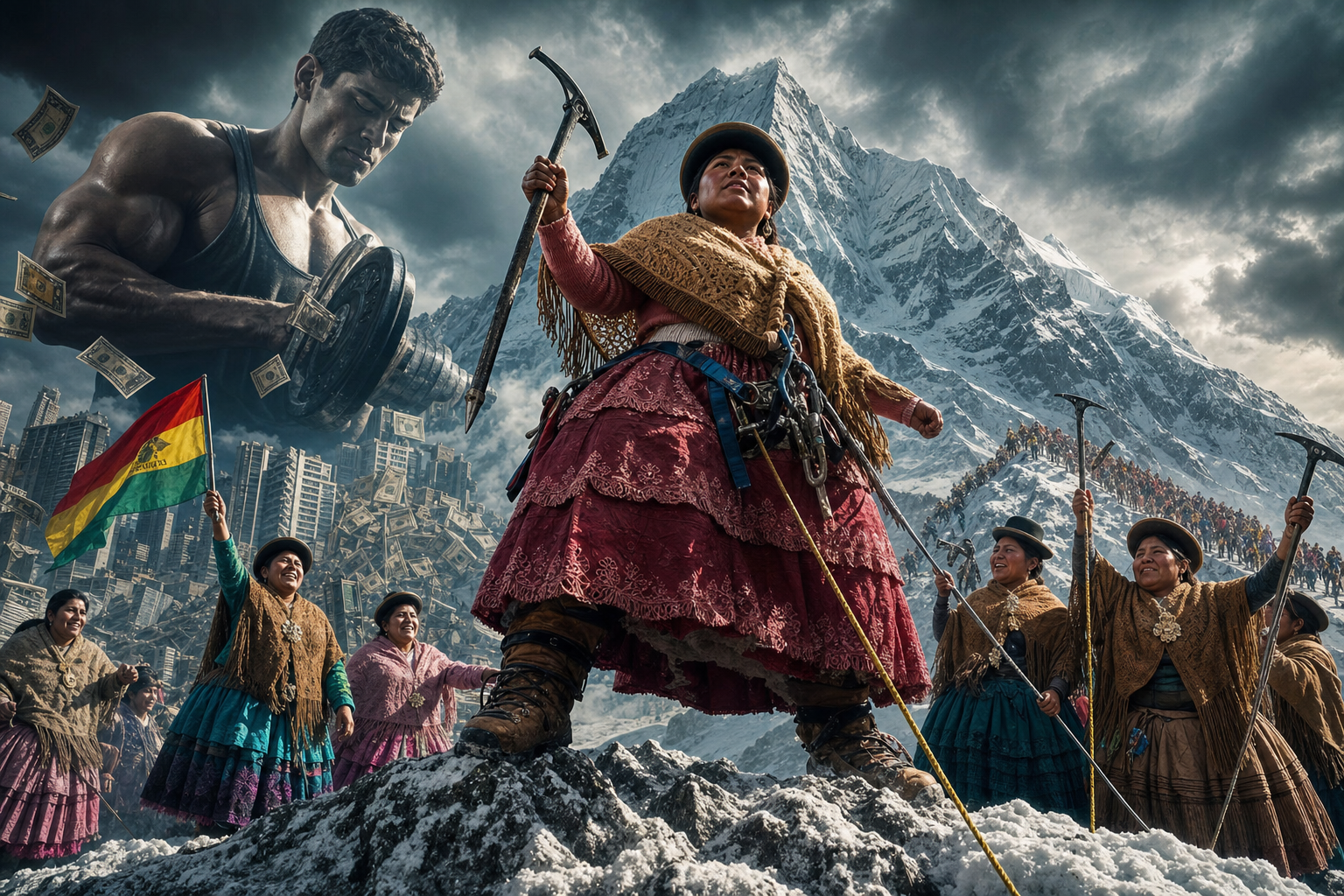
The Cholitas Climbers of Bolivia are stronger than every trainer, every supplement peddler, every marathon influencer in the United States. That is not flattery. That is fact. And it should terrify the entire wellness industrial complex that has convinced the American middle class it must pay to become human.
At 19,000 feet, where the air laughs at your lungs, a 47 year old Aymara woman in a pleated pollera and a bowler hat climbs the ice of Huayna Potosi. She never signed a gym contract. She never took a spin class. She eats potatoes and quinoa, and her heart pumps circles around men half her age who train under fluorescent lights and call it discipline.
Her body was not designed by an app. It was built by a life. And that life was built on top of five centuries of theft.
The Mountain Remembers What the Empire Wants Forgotten
Understand where she stands. Huayna Potosi sits near Potosi, the silver mountain that funded the Spanish crown and later greased the wheels of European banking. They called it the mountain that eats men.
Millions of Indigenous laborers went into that rock through the mita forced labor system. They chewed coca leaf just to survive shifts underground, coming up with lungs full of dust and mercury poisoning from the refining pits. Entire generations were swallowed so Madrid could gild its cathedrals.
The Aymara did not choose the altitude as a gimmick. Their ancestors were driven up here, pushed to the edges of the breathable world, and their bodies adapted because the alternative was extinction. That VO2 max you admire is a scar. It is the physiology of survival written into the blood.
Here is a detail no glossy magazine will tell you. The bowler hat those women wear was originally shipped to Bolivia by the British for railway workers. The hats arrived too small for the men. A clever merchant told Indigenous women they were the height of European fashion. The Cholitas took a colonial mistake and turned it into a crown. That is the whole story of these people in one hat.
They Were Told They Did Not Belong
Do not let the postcard image fool you. For most of the twentieth century, a woman dressed like this could not enter certain restaurants in La Paz. She could not ride in the front of a bus. She could not walk through the main plaza without hearing the slur india thrown at her back.
Cholita was an insult before it was a badge of pride. Their grandmothers scrubbed the floors of families who despised them and served food they were forbidden to taste. They raised the children of the elite while their own children went hungry on the altiplano, where frost kills the crop and the government sends nothing.
And where was the good neighbor to the north during all this? Washington was busy. It backed a parade of Bolivian dictators who protected tin barons and American mining interests. The School of the Americas trained the officers who broke union leaders in the streets.
When Bolivia tried to control its own gas and oil, the pressure came fast and cold. When peasants grew coca, the ancestral leaf they have chewed for thousands of years to fight altitude sickness and hunger, the United States funded eradication squads that burned their fields and called it a war on drugs. Imagine soldiers torching your grandmother's medicine and calling her a criminal.
What a Body Built by Struggle Looks Like
So she climbs. Skirt snapping in a wind that would freeze the tears on your face. Sandals or heavy boots crunching into glacier ice that is melting faster every year because factories far away decided the sky was a garbage dump.
These women started climbing because the men hired them as cooks and porters for foreign tourists. They carried the heavy packs, boiled the water, and watched pale visitors pay thousands to stand where they stood for free. Then one day they decided to summit for themselves.
No sponsor. No carbon fiber gear. Just the same legs that hauled water uphill for forty years and the same lungs that learned to breathe thin air in the womb.
She reaches heights that would hospitalize the wellness gurus who sell you cold plunges and morning routines. She does it wearing the clothes they once mocked. She does it on the food of the poor.
There is a special justice in that image. The daughter of the conquered, standing on the peak, looking down on the empire that spent five hundred years trying to bury her people in the mud and the mines.
The mountain that ate men did not eat her. She climbed it in a skirt.