The Wasp Network: Five Cuban Men Rotted In US Prisons For Spying In Miami
The Wasp Network were Cuban agents who infiltrated Miami exile groups to stop bombings against their island. Washington jailed them and let the real bombers walk free. This is the story the empire tried to bury.
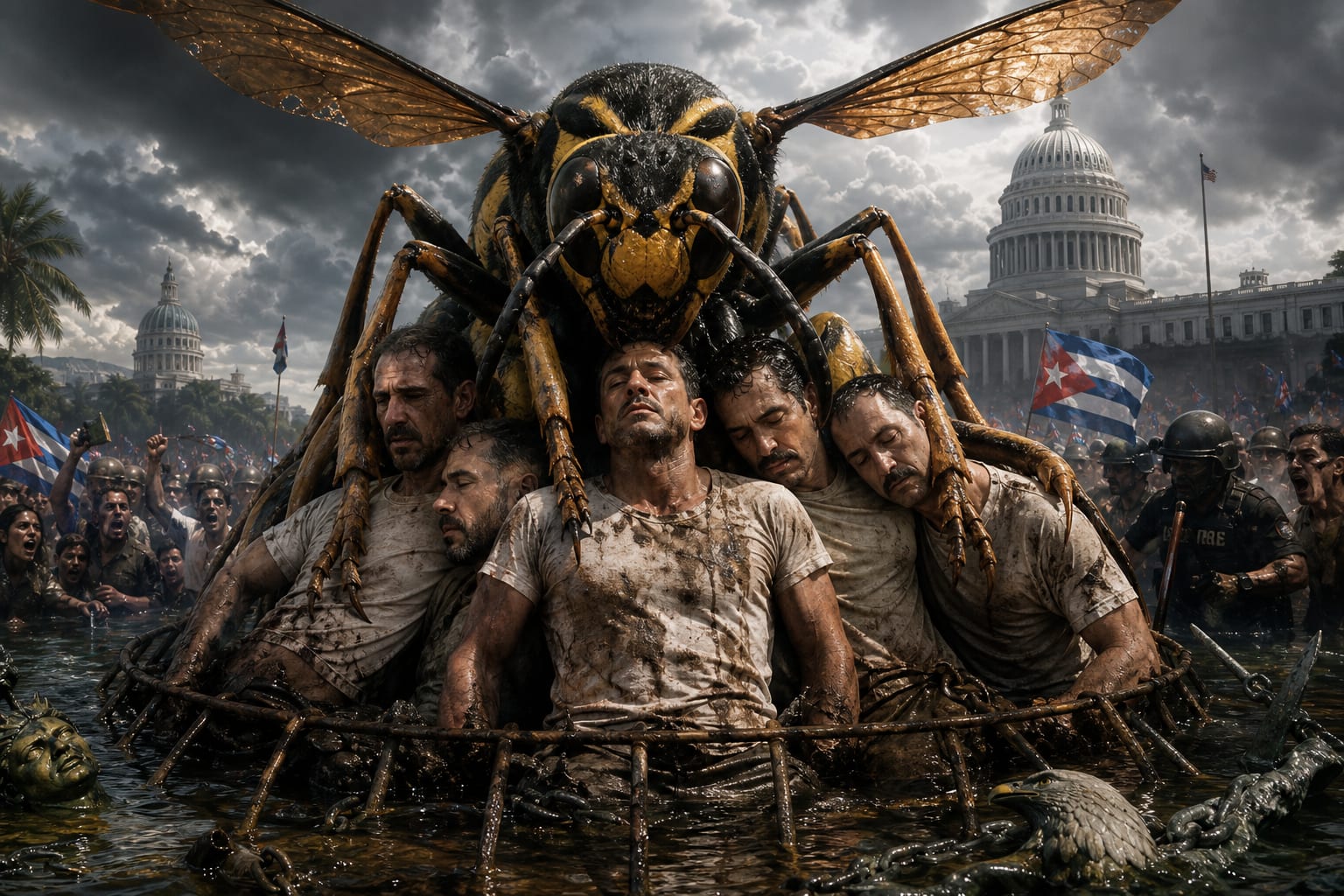
Let us be blunt from the start. The Wasp Network was not a nest of villains. It was a handful of Cuban men who slipped into Miami to stop bombs from going off in Havana hotels, and Washington rewarded them by locking them in supermax cells for years. That is the truth the empire buried under decades of spy-movie theater.
They were called La Red Avispa. Their crime was watching. They infiltrated the Cuban exile groups in South Florida that had spent decades planting bombs, hijacking planes, and dreaming of turning the island back into an American brothel with a flag on top.
And when Cuba handed the FBI the evidence these men had gathered, evidence of terror plots hatched on US soil, the FBI arrested the messengers. Read that twice. The United States jailed the people trying to prevent the terrorism.
The Bombs Nobody Wanted To Talk About
To understand the rage here, you have to smell the smoke.
In 1976, a Cubana Airlines flight blew apart over Barbados. Seventy-three people dead. Among them the entire Cuban youth fencing team, kids who had just won gold, teenagers who would never come home. The men accused of that bombing walked free in the streets of Miami for decades, sipping cafecito, giving interviews.
One of them died an old man in Florida, never extradited, never punished. The empire that lectures the world about terror gave him a comfortable retirement.
In the 1990s the bombs came again, this time in Havana tourist hotels. A young Italian visitor named Fabio Di Celmo was killed by shrapnel while sitting in a bar. His father spent the rest of his life asking why the men who financed that death lived openly in the United States.
The Wasp Network existed to stop exactly this. That is not propaganda. That is the paper trail.
A History Written In Working Class Blood
None of this happened in a vacuum. It is the newest chapter in a story that stretches back to when Washington first decided the Caribbean was its private plantation.
Remember what Cuba was before 1959. American sugar trusts owned the cane fields while the men who cut them earned pennies and ate air. The Platt Amendment let Washington rewrite Cuba's constitution from an office in the north. The island was a casino for Miami mobsters, and the guajiro who grew the tobacco could not afford a cigar.
Multiply that misery across the map. Fifty thousand Caribbean laborers dug the Panama Canal, and thousands died coughing up fever in the mud so American ships could take a shortcut. Haiti's gold was loaded onto US warships while Haitian peasants worked for fifty cents a day.
And in El Salvador, soldiers trained by the United States marched into the village of El Mozote and butchered around 800 people. They shot the men, raped the girls, and threw the babies in the air. Two hundred of the dead were children. The rifles came from Washington. The apology never came at all.
Here is a detail most Americans have never been told. Salvadoran officers were brought north for training on US soil, then went home and used what they learned on their own poor. The graduates of those programs became a who's who of the death squads.
So when the Wasp Five stood trial in Miami, they were not standing before neutral justice. They were standing before the same power that had spent a century treating Latin bodies as disposable.
Justice, Empire Style
The trial was held in Miami. Of course it was. Trying to seat an impartial jury on anti-Cuban terrorism in Miami is like holding a fair trial for a fox inside the henhouse. The men got sentences up to double life.
Gerardo Hernandez, the one they hated most, spent years in solitary. His wife was denied a visa to visit him again and again. They were married on paper across a wall of concrete and cruelty.
The world eventually noticed. Amnesty International raised alarms. Nobel laureates signed letters. And in 2014, after quiet negotiations, the last of the Five went home. Havana greeted them like the sons who had come back from the dead.
Netflix later turned their story into a glossy thriller. The empire is good at that, taking real suffering and selling it back to you with a soundtrack.
But strip away the film and the spin. Five men tried to stop terrorism against poor islanders, and the richest country on earth caged them for it while the actual bombers grew old in the Florida sun. That is not a plot twist. That is the machine working exactly as designed.