The Women of Latin America: Colonial Ghosts, Tropical Fire, and the Lie You Were Sold
The women of Latin America were never one thing. From the coastal fire of Colombia to the wounded elegance of Buenos Aires, this is the truth the fantasy postcards never sold you, and the wisdom the powerful keep forgetting.
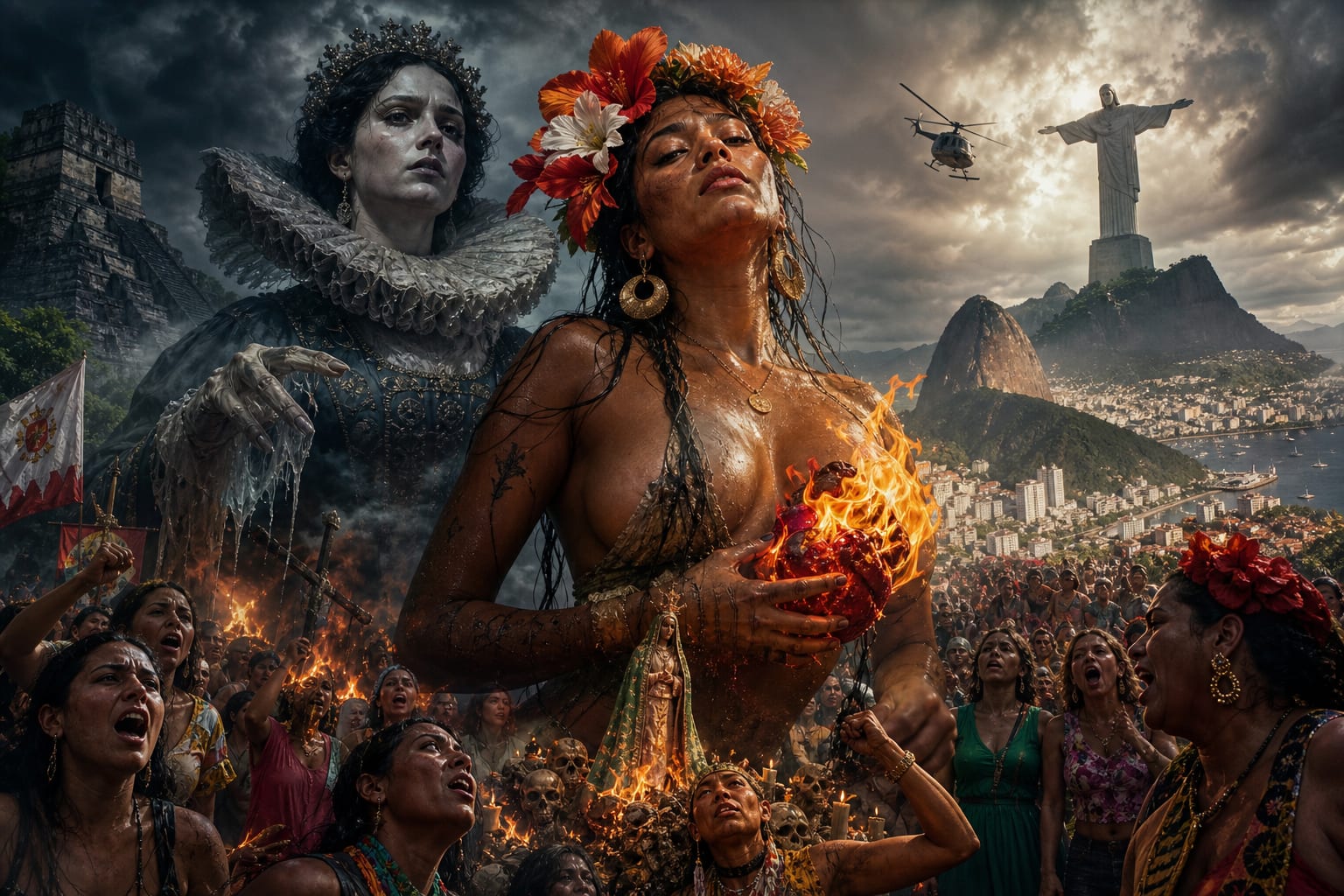
Anyone who tells you the women of Latin America are the same has never smelled the difference between Cartagena at dusk and Buenos Aires at midnight. They are not the same. They were never meant to be. And the flattening of them into a single postcard fantasy is one of the quieter crimes of a world that prefers its beauty simple, exported, and cheap.
I take a side here. The truth is richer than the brochure, and the brochure was written by men who never stayed long enough to learn a grandmother's name.
Walk through a mercado in Caracas at seven in the morning. A woman sells mangoes beside a candle lit for a saint she half believes in and half fears. She has buried more than she will tell you. She laughs anyway, loud, from the belly, because grief and joy in this continent were raised in the same house.
Every Border Carries a Different Wound
The Colombian woman on the coast moves like the Caribbean itself, hips arguing with gravity, vowels dropped and swallowed in that costeño accent that sounds like the sea is in a hurry. Go up into Bogota and everything changes. The speech turns formal, cold, careful. The altitude makes people polite the way funerals make people polite.
The Argentine woman speaks Spanish that isn't quite Spanish. She says vos, not tu, a stubborn ghost of old Spain that most of the continent abandoned centuries ago. She psychoanalyzes her heartbreak over coffee because Buenos Aires has more therapists per person than almost anywhere on earth. European in her clothes, wounded in her history, haunted by the ones who disappeared in the years the generals ruled.
The Venezuelan woman was raised in a country that once thought it had won the lottery, oil money spilling like rain, and then watched it all rot. She learned to be glamorous in blackouts. She does her makeup by candlelight and means it as defiance. Ask her about the beauty pageants, a national religion, and watch her eyes flash between pride and something more complicated.
The Brazilian woman is not even speaking the same language, and she will remind you. Portuguese, not Spanish, a distinction the rest of the world lazily erases. Her body is not one thing because Brazil is not one thing, an African, Indigenous, Portuguese, and Japanese country all pretending to be a single people at Carnival.
The Poor Woman Knows What the Powerful Forgot
Here is what the fantasy never sells you. The wisdom.
In the barrios of Medellin, in the favelas above Rio, in the ranchos climbing the hills of Caracas, women hold entire economies together with hands that never rest. They know which herb breaks a fever when the clinic turns you away. They know the neighbor who lends flour without asking why. They know how to keep a family fed on a currency that loses value between breakfast and lunch.
The system built cities of glass and left them to climb the stairs. It sold health as something you purchase, wellness as a subscription, healing as a thing behind a receptionist's desk and a three-month wait. And still the abuela on the hill heals more than the specialist in the tower, with rue leaves, with prayer, with a patience that no institution can bill for.
She does not need permission to feel alive in her own body. That permission was never theirs to give.
Beauty Beside the Collapse
This is the contradiction that breaks foreigners in half. You will see a colonial mansion with its paint peeling like sunburned skin, bougainvillea exploding purple over a cracked wall, and a woman stepping out of it dressed like she owns the century. Old-world elegance standing in the ruins of an empire that promised everything and delivered a broken pipe.
There is a saint's statue in half the homes and a lottery ticket tucked behind it, faith and gambling sharing an altar. There is a bolero playing while someone cries in the kitchen. There is rain that comes so hard it drowns the streets, and children who dance in it because nobody told them the flood was tragic.
The Chilean woman carries the long thin memory of the mountains and the sea and the years no one was allowed to speak. The Mexican woman lives closest to the giant that both feeds and bleeds her, and she carries her dead on the second of November with marigolds and sugar skulls, laughing at death to its bony face.
They are not interchangeable. They are not your fantasy. They are the survivors of a continent that was robbed, romanced, and left for beautiful.
Learn the difference. It is the least you owe them. And if you ever sit at a plastic table in the heat, drinking something too sweet while a woman three times widowed tells you her life like it is a comedy, you will understand what the powerful never will. They were rich all along. Someone just forgot to tell the men counting the money.