The Toughest Animal On Earth Is Smaller Than A Grain Of Sand
It looks like a gummy bear lost on a horror movie set, yet the tardigrade survives freezing, boiling, radiation, and the vacuum of space. Here is why this tiny blob matters more than you think.
By Rafael Cortez ·
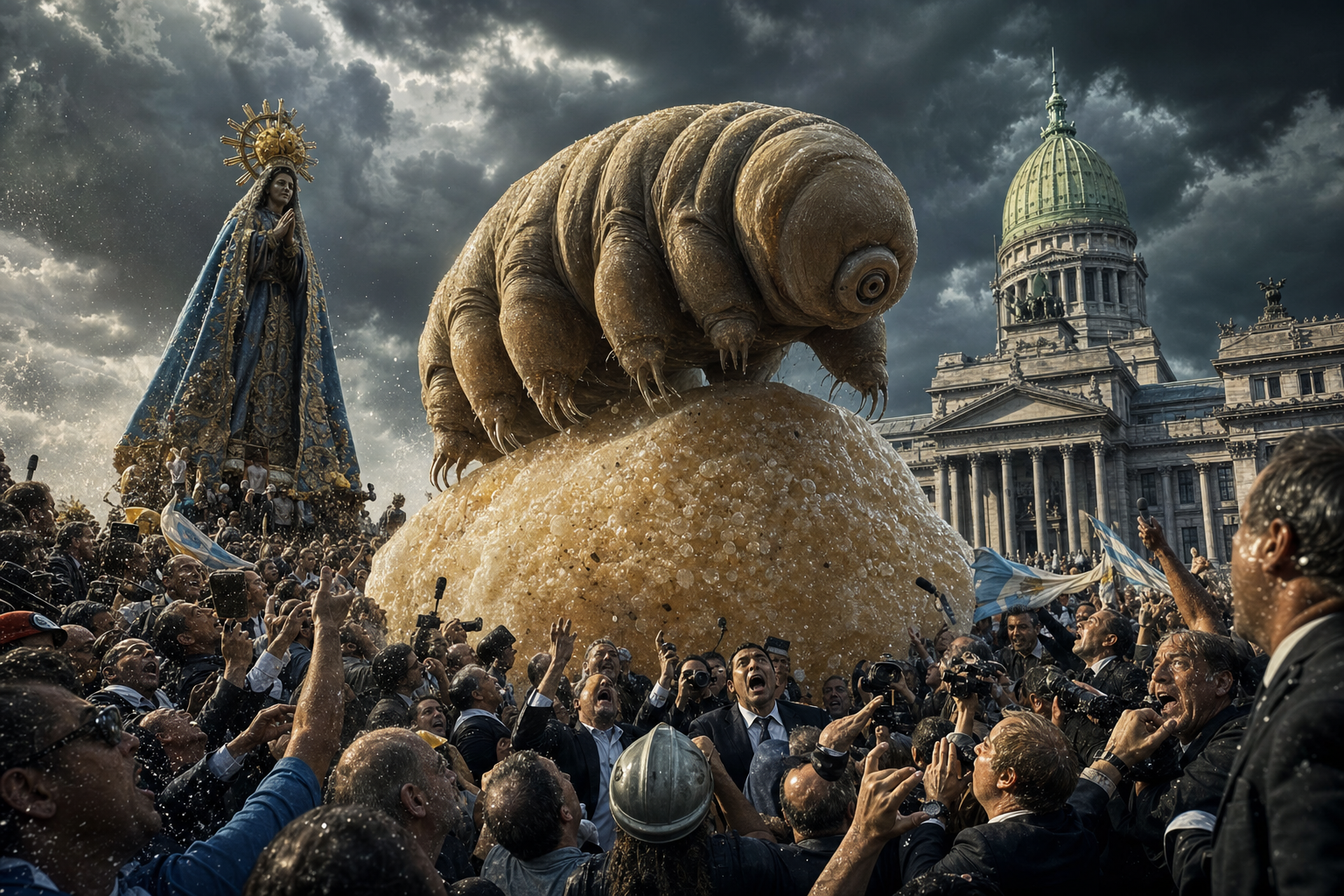
The most indestructible creature on this planet is not the shark, the crocodile, or some snarling apex predator you would see on a nature documentary. It is a fat, eight-legged blob the size of a dust speck. It looks like a gummy bear that got lost on the way to a horror movie set.
Meet the tardigrade. Scientists call it the water bear. People who have looked at one under a microscope sometimes call it the moss piglet, because it lives in wet moss and it has a face that only a biologist could love.
Here is the thing. This tiny animal does not care about your rules for survival. It laughs at them.
What Exactly Is This Little Monster?
Tardigrades are microscopic animals, usually less than a millimeter long. You need a decent microscope to see one clearly. They have chubby, segmented bodies and eight stubby legs, each one tipped with tiny claws.
They live almost everywhere there is water. Moss. Wet leaves. The mud at the bottom of a lake. The frozen edge of a mountain. They have been on Earth for hundreds of millions of years, quietly minding their business while dinosaurs came and went.
They eat by stabbing plant cells and slurping out the insides. Not glamorous. Extremely effective.
Why They Refuse To Die
This is where it gets interesting, and where most animals would tap out.
When conditions get brutal, a tardigrade does something wild. It pulls in its legs, curls into a tiny ball, and squeezes almost all the water out of its body. In this dried-up state, called a tun, its metabolism nearly shuts off. It is basically pretending to be dead until the party gets better.
A tardigrade in this shriveled state can survive things that would turn any normal creature into a smear. Freezing cold. Boiling heat. Radiation. The airless vacuum of outer space.
That last one is not a joke. Scientists have sent tardigrades into space and exposed them to the raw vacuum outside a spacecraft. Many came back alive. Some even had babies afterward. Try that with your dog.
The Secret Living Inside Their Cells
The magic is not luck. It is chemistry happening at the cellular level, and this is the part worth caring about.
When a tardigrade dries out, its cells produce special proteins that form a kind of glass-like shield. This glass locks everything important in place so the delicate machinery inside the cell does not fall apart. When water returns, the glass dissolves, and the animal simply wakes up.
Think about what that means. The whole game of staying alive comes down to protecting your cells from damage. Every living thing, including the reader, is really just a giant apartment complex full of cells trying not to break down. The tardigrade figured out how to hit pause on that breakdown completely.
That is the real reason to care. Understanding how these creatures armor their cells could change how we protect our own.
What This Could Mean For People
Researchers are studying tardigrade proteins for some very human problems.
- Protecting medicines and vaccines that normally need to stay cold, so they could survive without a refrigerator
- Shielding human cells from damage during harsh medical treatments
- Learning how to slow down the cellular wear and tear that adds up over a lifetime
None of this is science fiction. It is happening in labs right now, driven by a blob that most people have never heard of.
The longevity crowd, the folks obsessed with keeping the body running at full power for as long as possible, should be paying attention. The tardigrade is a living demonstration that cellular resilience is not a fantasy. It is a machine that can be studied, copied, and maybe borrowed.
A Little Respect For The Water Bear
There is something almost punk about this animal. No armor you can see. No teeth to speak of. No brain worth bragging about. Just a stubborn refusal to quit that has outlasted five mass extinctions.
It survived the death of the dinosaurs. It survived ice ages. It will very likely be here long after humans have argued themselves into oblivion, sitting in a patch of damp moss, waiting for the next drop of rain.
So the next time someone brags about being tough, remind them that the real champion of survival is a nearly invisible piglet that drinks moss juice and shrugs off the vacuum of space. Nature has a strange sense of humor, and it named its most durable invention after a bear that fits on the tip of a needle.