Trump at Mount Rushmore: 'Communist Menace' Warning at 250th on July 3, 2026
At Mount Rushmore on July 3, 2026, the president used America’s 250th birthday to declare a "communist menace," urge the end of the filibuster and push the SAVE America Act. Senate Republicans including John Thune pushed back.
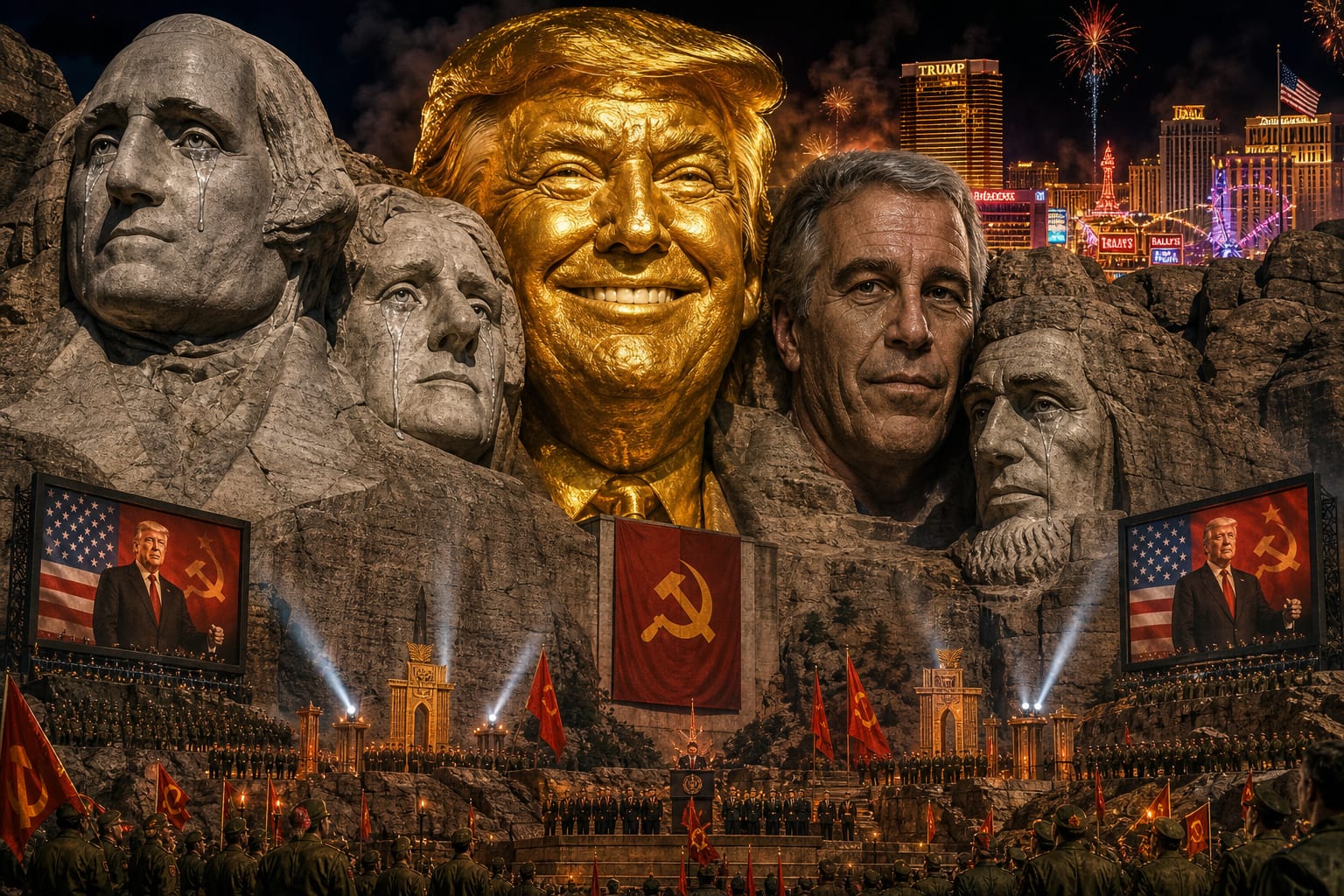
A Spectacle of Fear at Mount Rushmore
I stood, in spirit, outside the carved faces at Mount Rushmore in Keystone, South Dakota, as the president turned July 3, 2026, into a campaign stage. He used the 250th anniversary of American independence to issue what the White House called a "fierce rebuke" of communism. He said communism was "the enemy of July 4, 1776," and warned of a "resurgence of the communist menace" inside the country.
The Political Pitch
The speech lasted about 30 minutes. He blamed a handful of rising Democrats who identify as Democratic socialists and progressives. The address was framed as a reaction to recent primary wins by at least four such Democrats. He called Democrats "The Communist Party" and said they were made up of "illegal immigrants, criminals, and everybody that doesn't want to work." The crowd cheered.
He pushed for the immediate abolition of the filibuster and demanded a vote on his SAVE America Act. He promised that if Republicans "terminate the filibuster" and pass the bill, "we will not lose an election for 100 years." Senate Republicans, including Sen. John Thune of South Dakota, pushed back and said there were not enough votes to abolish the filibuster or pass the election bill.
Faces on the Mountain and People in the Crowd
He paid homage to the four presidents carved in stone above the stage: George Washington, Thomas Jefferson, Theodore Roosevelt, and Abraham Lincoln. He called them men of action and destiny. South Dakota Gov. Larry Rhoden spoke before him and thanked the president for reviving Independence Day events at the monument. The president last spoke at Mount Rushmore in 2020.
Several officials attended. Sen. Mike Rounds, Interior Secretary Doug Burgum, and Florida Gov. Ron DeSantis were present. Traveling with the president were Donald Trump Jr. and his wife Bettina, Tiffany Trump and her husband Michael Boulos, chief of staff Susie Wiles, White House press secretary Karoline Leavitt, speechwriter Ross Worthington, political operative James Blair, deputy assistant John Hiller, Walt Nauta, U.S. Ambassador to India Sergio Gore, Natalie Harp, and Margo Martin.
What It Meant and Why It Hurts
The speech was billed as optimistic. In practice, it was a warning and a threat. The president said the American identity was "under a renewed attack." He argued that what the United States created was rare and miraculous amid global suffering. The rhetoric singled out immigrants and progressive activists. That language has a human cost. Labels can mean doors closed, threats, and violence for people who are not even running for office.
Critics pointed to practical limits. Senate Republicans such as John Thune openly rejected the plan to remove the filibuster. They said there were not enough votes to pass the SAVE America Act. That opposition makes the president's promise of a century without losing an election unlikely.
The president promised more words on July 4 in Washington, D.C., even as the capital faced a record-breaking heat wave. He stuck closely to the teleprompter and delivered with a flat tone, even as the crowd chanted "USA, USA, USA."
This matters beyond the monument. The speech tied a national birthday to a campaign strategy. It used carved heroes as a backdrop for a call to change Senate rules and to recast political opponents as enemies. It will shape the midterm narrative and the way voters see basic words like patriotism, safety, and who belongs in the country.
There is a final, bitter truth. The spectacle that played out at Mount Rushmore is not only theater. It is a map for the months ahead. The faces in the rock watched while the living named enemies below. The result will be decided not in speeches but in votes, in Senate corridors where people like John Thune must weigh their next move, and in towns where those labeled will live with the consequences.