Trump Claims He Owns Your Government's Records, and He Is Wrong the Way Kings Are Wrong
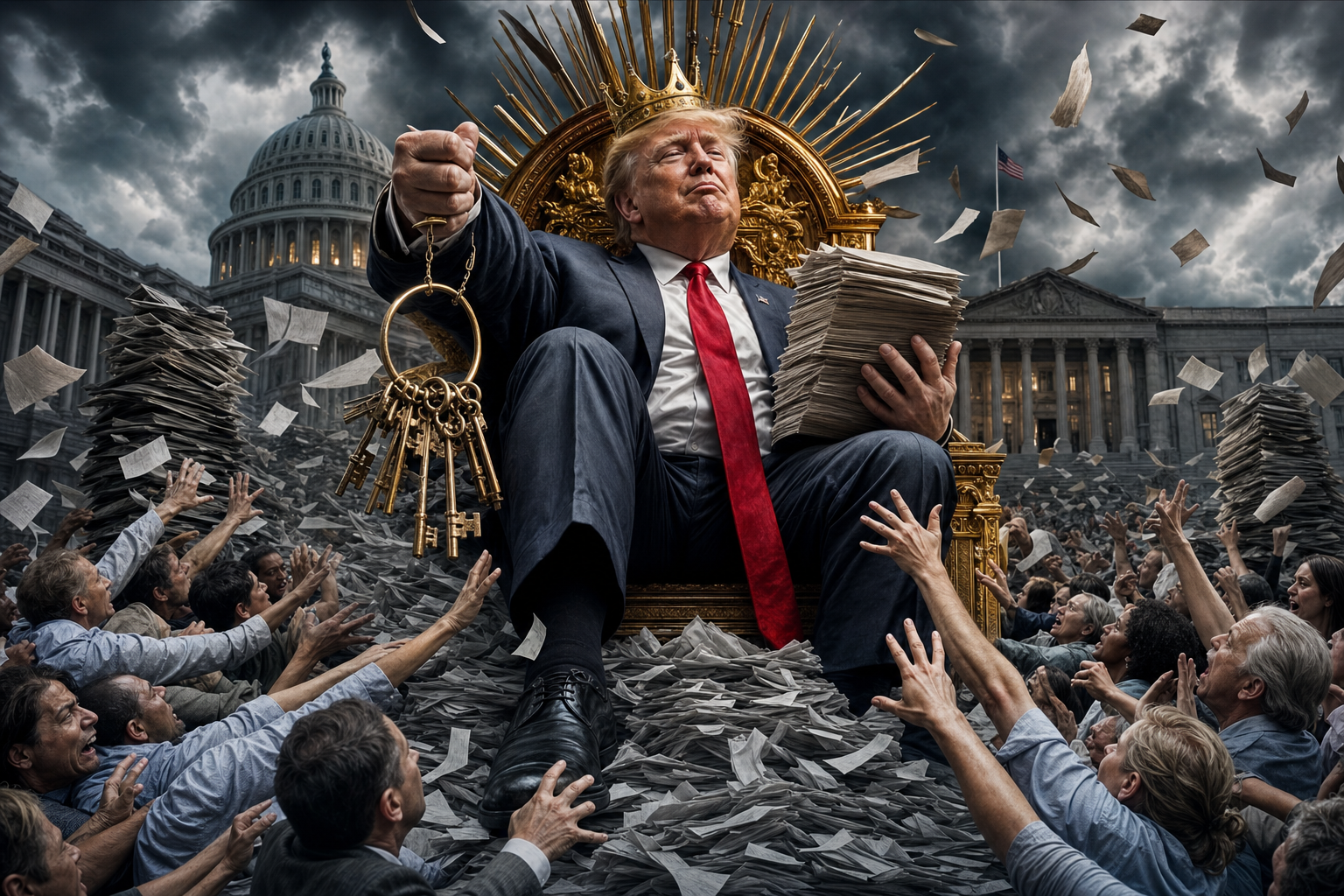
Donald Trump's Justice Department has decided that the records of the presidency belong to the president. Not to you. Not to the workers who pay for the paper, the ink, the buildings, the pensions of the clerks who file it all. To him. Personally.
This is not a legal theory. It is a coronation.
The Presidential Records Act was written in blood and shame after Watergate, after a president tried to walk out the door with the evidence of his crimes stuffed under his arm. Now Trump's lawyers say that law is unconstitutional, and that a president should own his papers like a farmer owns his mule.
Let me tell you who has always believed this. Kings. That is who.
The Crown Never Died, It Just Changed Its Accent
The British Crown held a doctrine called Crown Copyright. The sovereign owned the words of the state. The maps, the ledgers, the orders that sent boys to die in colonies they could not find on a globe. All of it belonged to the man in the palace.
The people who built the United States looked at that arrangement and spat. They wrote into the Constitution that government publications could not be locked behind a royal seal. The 1895 Printing Law made it plain. The 1976 Copyright Act made it plainer. The words of the government belong to the governed.
Trump wants the Crown back. He wants the ledger locked in the drawer and the key in his pocket.
And here is the thing they never teach you in the marble buildings. This hunger to own the record is never about vanity. It is about hiding the bodies.
What Kissinger Said When He Thought Nobody Was Filing
In March of 1975 Henry Kissinger sat across from the Turkish foreign minister and laughed about it. He said that before the Freedom of Information Act he used to joke, the illegal we do immediately, the unconstitutional takes a little longer.
People chuckle at that line. They should not. In that same meeting Kissinger went on to explain how he would help Turkey slip around an arms embargo that the United States Congress had passed. He was planning to break the law of his own country over lunch.
Ask the people of Chile what those laughing men in Washington did with their secrets. On September 11, 1973, with the quiet approval of Kissinger's State Department, tanks rolled on the presidential palace in Santiago. Salvador Allende, elected by his people, died inside it.
What followed was not a footnote. In the National Stadium in Santiago, the folk singer Victor Jara was held with thousands of others. His captors broke his hands, the hands that played the guitar for the poor, and mocked him to play now. Then they shot him forty four times.
The order to keep such things buried is exactly what a president owning his own records protects. The screaming stays off the page. The page belongs to the man.
Kissinger admitted on tape he was afraid of FOIA. Good. He should have been. A frightened powerful man is a small confession that the law was working.
They Are Not Losing Your Files, They Are Choosing To
Do not believe the story about backlogs and busy offices. Under the second Trump administration entire FOIA offices have been dismantled. Staff have been stripped away. Thousands of government webpages and datasets have been quietly deleted, scrubbed, sanitized, sent down the memory hole.
You are meant to think this is incompetence. It is policy. A drawer that cannot be opened is worth more to a king than a lie, because a lie can be caught.
Remember who built the right you are watching them strangle. A congressman named John Moss from Sacramento spent eight years fighting nearly every agency in Washington to force this law into being. The Justice Department called it unconstitutional then too. They said the idly curious would burden the state.
The idly curious. That is what they call you when you ask what your money paid for.
Lyndon Johnson signed FOIA and scrawled two words across the plans for a ceremony. No ceremony. He hated it. Gerald Ford vetoed the stronger version, egged on by a young Donald Rumsfeld, a young Dick Cheney, a young lawyer named Antonin Scalia who called it unconstitutional. Congress overrode him anyway.
Every one of those men wanted the same thing Trump wants now. The record in the palace. The people in the dark.
They lost before. In courtrooms today the Freedom of the Press Foundation and others are fighting to make them lose again.
The papers are yours. They were bought with your labor and sometimes with other people's blood. No man gets to walk out the door with them under his arm and call himself president while he does it.