Trump, Déspota Demente, Threatens Annihilation Of Iran After Strikes.
President Trump threatened to annihilate Iran and officials cast the strikes as protection for shipping and regional security. The exchange of missile and drone attacks in the Gulf recalls a history of interventions elsewhere, forcing new scrutiny of the rhetoric used to justify force.
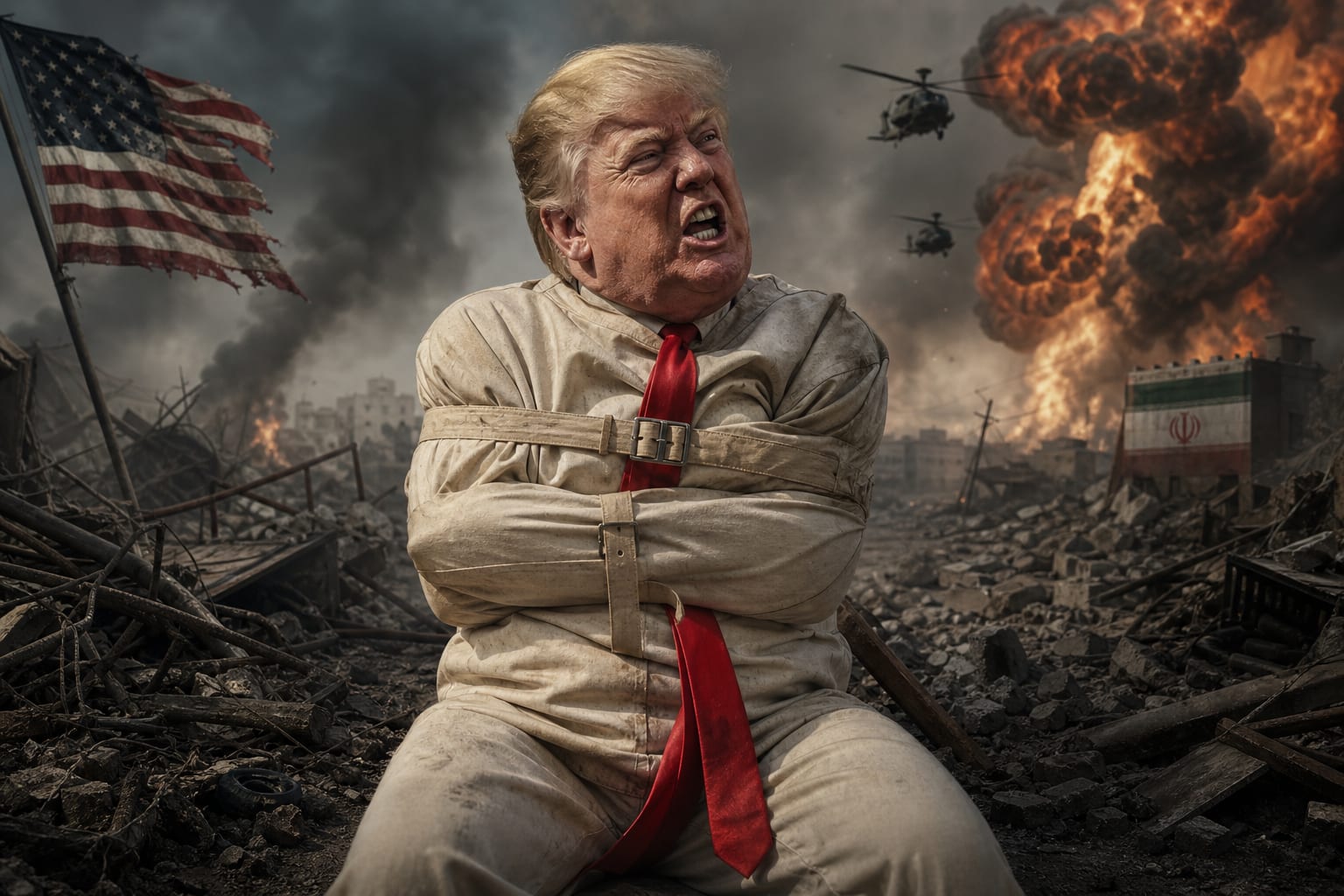
President Trump threatened to annihilate a country.
Officials framed the words as a direct response to attacks on commercial shipping and military assets.
In South America the same language once justified interventions that toppled governments and quieted dissent.
A Threat And Its Legal Costume
Iran launched a coordinated missile and drone operation early Sunday that Washington says targeted U.S. military sites in Kuwait and Bahrain, intensifying a week of tit‑for‑tat strikes that have rattled the Gulf.
U.S. Central Command described its own recent strikes on Iranian territory as a measured effort to degrade Tehran's military surveillance, communications and drone storage and to blunt minelaying capabilities after an earlier drone attack on a commercial vessel transiting the Strait of Hormuz.
Trump’s response was presented as law and order. Centcom said the strikes were in direct response to continued Iranian aggression against commercial shipping and designed to prevent further threats to regional navigation.
Bahrain and Kuwait denounced Iran's strikes, and Kuwaiti forces said they intercepted incoming drones and missiles as they approached military installations and ports that host U.S. personnel and allied assets.
Both Tehran and Trump accused the other of violating a fragile truce and undermining nascent talks meant to reduce hostilities. The rapid sequence of attacks and counterattacks has left Gulf states on heightened alert and raised fresh concerns about miscalculation between the two powers.
Echoes In Latin America
The rhetoric in the Gulf is familiar. The claim that force is a reluctant but necessary response to protect commerce and security has long been invoked by Washington in other regions.
That vocabulary was used across the 20th century in the Americas when the United States intervened directly or by proxy in nations from Guatemala to Chile. Those actions were often justified publicly as protecting stability, defending trade routes or preventing external influence, even as critics called them interference with sovereign politics.
The parallel matters because language shapes perception. When leaders frame military action as an instrument of law enforcement or humanitarian necessity, international audiences are asked to judge the measure on the grounds of legality and proportionality rather than imperial reach.
Analysts warn that such framing can obscure the broader geopolitical stakes and the potential human toll of escalation, whether in the Middle East or in hemispheres where memories of past interventions remain raw.
Region On Edge
For Gulf states the immediate questions are tactical. Can air defenses hold? Will shipping lanes remain open? How will allied bases and forces adapt to a faster, more volatile tempo of strikes and reprisals?
For global markets the concern is strategic. Disruption in the Strait of Hormuz risks supply shocks for oil and other goods and could drag distant partners into a conflict over maritime security.
Diplomats in the region and beyond are pushing for deescalation even as military planners on both sides prepare contingency options that could widen the confrontation.
The strikes left a stark question in the air. What will the world call it when the tools of statecraft are words and weapons at once.