Trump Family Tied to $1.6B Tungsten Deal With Kazakhstan; Sparks Conflict of Interest Accusations
A $1.6 billion U.S.-Kazakhstan tungsten deal has raised conflict questions after Donald Trump, his sons and allies took linked stakes. The timing, family ties and strategic stakes in tungsten have sparked calls for oversight and alarm in Washington.
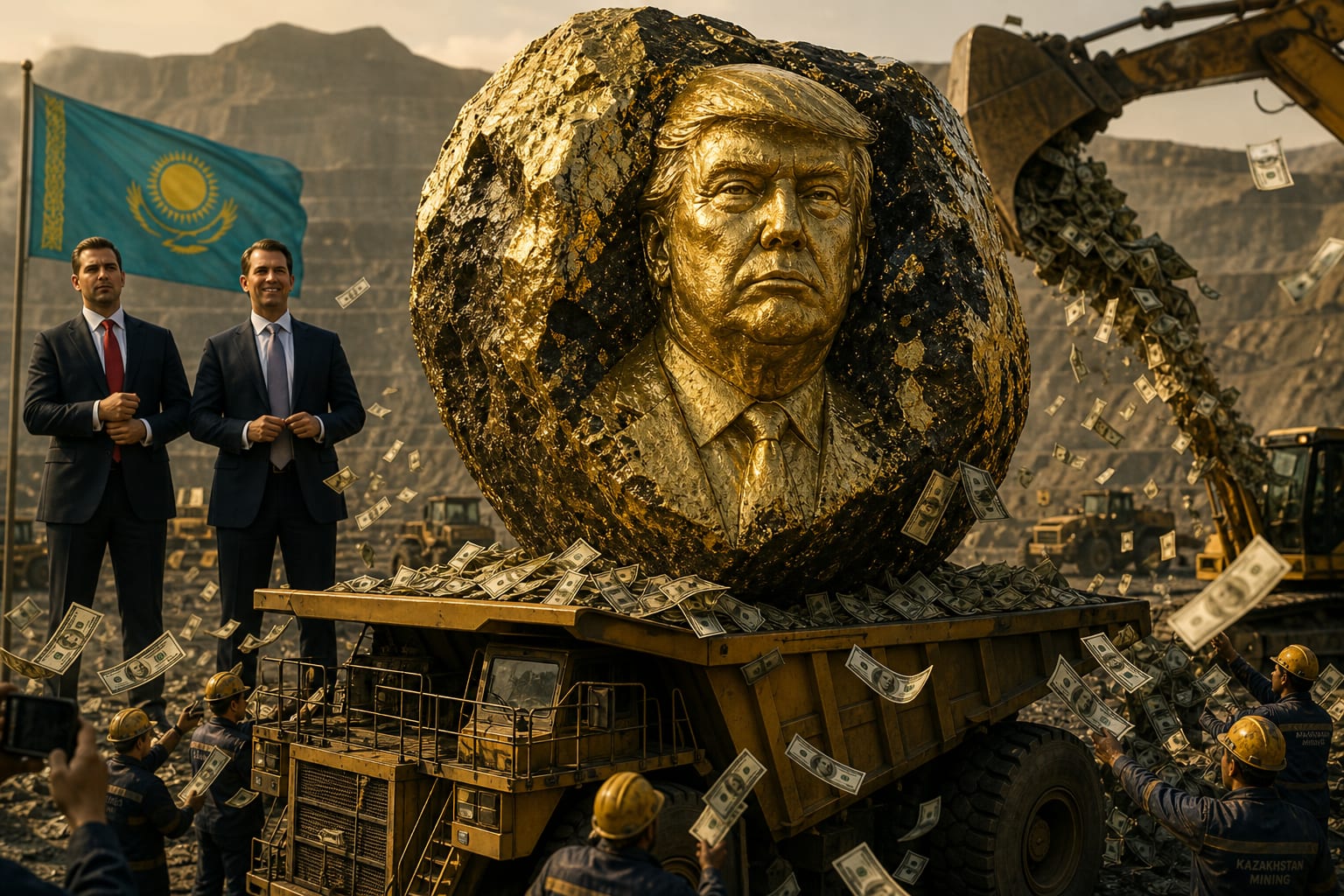
The United States government approved a $1.6 billion financing request tied to a huge tungsten project in Kazakhstan that has drawn fresh scrutiny because Donald Trump and his sons stand to gain from related investments.
Deal, Money and Family Ties
Late last year Commerce Secretary Howard Lutnick met Kazakhstan's president at the St. Regis Hotel to push a deal giving an American company access to one of the world’s largest untapped tungsten reserves.
Tungsten is not a trinket. The metal is vital for ammunition, missile warheads, fighter jet engines, hypersonic weapons and semiconductors.
The company at the center now calls itself Kaz Resources. The Trump administration approved a $1.6 billion financing application for that company.
President Donald Trump reportedly joined by phone before the deal was finalized. The mineral agreement was signed on November 6, six days after an investment that involved Trump’s sons.
Eric Trump and Donald Trump Jr. used Dominari Securities, which has an office in Trump Tower, to join partners taking a 20 percent stake in the Kazakhstan project.
At the same time Cantor Fitzgerald, a firm tied to Lutnick, helped a lead investor working with Dominari raise $210 million in capital. That timing has set off alarms in Washington.
Many Companies, Big Dollars, Bigger Questions
Federal filings show one or both families are linked to 14 companies that work with the federal government on critical-minerals deals, including the Kazakhstan project.
The total amount the administration has provided or is still considering exceeds $8.9 billion, according to reporting on the filings.
Those numbers matter because tungsten is a strategic mineral. When politics and profit sit at the same table, taxpayers and national security are the ones who might lose.
Representative Maxine Dexter of Oregon told reporters Congress needs stronger oversight to make sure taxpayer dollars serve the public, not family ties.
Denials, Defenses and Public Fury
The White House and the Commerce Department deny any mixing of government work with family business. White House spokesman Kush Desai said the administration’s priority is reshoring critical supply chains and safeguarding national and economic security.
Pini Althaus, executive chairman of Kaz Resources, said negotiations began during the prior administration and that his company did not receive political favors. He added he had never met Trump’s sons and only saw the optics as disturbing.
Still, the public reaction was immediate. Social posts called the arrangement a flagrant conflict. Supporters replied that Trump’s sons are private citizens who can do business. Both reactions matter because optics shape trust in very few words.
What This Means and Why It Matters
First fact: tungsten powers weapons and chips. Second fact: $1.6 billion financing was approved. Third fact: members of the president’s family took a 20 percent stake using a Trump Tower firm. Those three facts together explain why Congress and the public smell trouble.
If the government steers billions to a project where the president’s family may profit, oversight is not a luxury. It is a duty.
There is human cost here too. When public officials appear to favor private fortunes, ordinary people pay. Tax dollars could be lost. Trust in institutions erodes. Veterans and defense workers count on secure supply chains. Parents and students rely on fair markets. The damage is not abstract.
One surprising detail many Americans miss is the local name for tungsten in Spanish speaking mines. The metal is commonly called wolframio. Miners in South America know wolframio by its color and its curse: it brings foreign money and often foreign interference.
Aftermath already flows. Calls for congressional oversight are rising. Files show 14 related companies and $8.9 billion in federal consideration. That will not vanish with a spokesman’s reassurances.
Officials can insist the timing did not overlap with federal decision making. Executives can say negotiations began under another administration. Those are the official arguments and they must be tested in hearings and filings.
This still matters because critical minerals are a core of modern war and tech. If Americans lose faith in the rules, the market war will move from courtrooms to the streets. The stakes are national security and public trust.
The scene looks familiar to anyone who has watched empire and extraction in Latin America. It smells like the old playbook where contracts, hotels and phone calls decided who would own a mine or a port. It is small wonder people compare it to decades of deals that traded sovereignty for suitcases of cash.
Federal watchdogs, lawmakers and the public now face a choice. Demand full transparency. Hold hearings. Or let another strategic resource become another private treasure in a tower of private deals. The tungsten will still be underground, but another piece of public life will be gone.
The only honest punchline left is this. If national security truly guides the decision, put it in public records, not private rooms. If private profit drove it, then the people deserve justice and answers, not a press release and a shrug.