Trump Reported $1.4 Billion From Crypto in 2025, Filings Show — Tokens, Meme Coins and Family Ties
A 927‑page disclosure released June 30 shows President Trump reported more than $1.4 billion in crypto income in 2025. World Liberty Financial funneled nearly $800 million to his companies, while meme coins and token sales exploded.
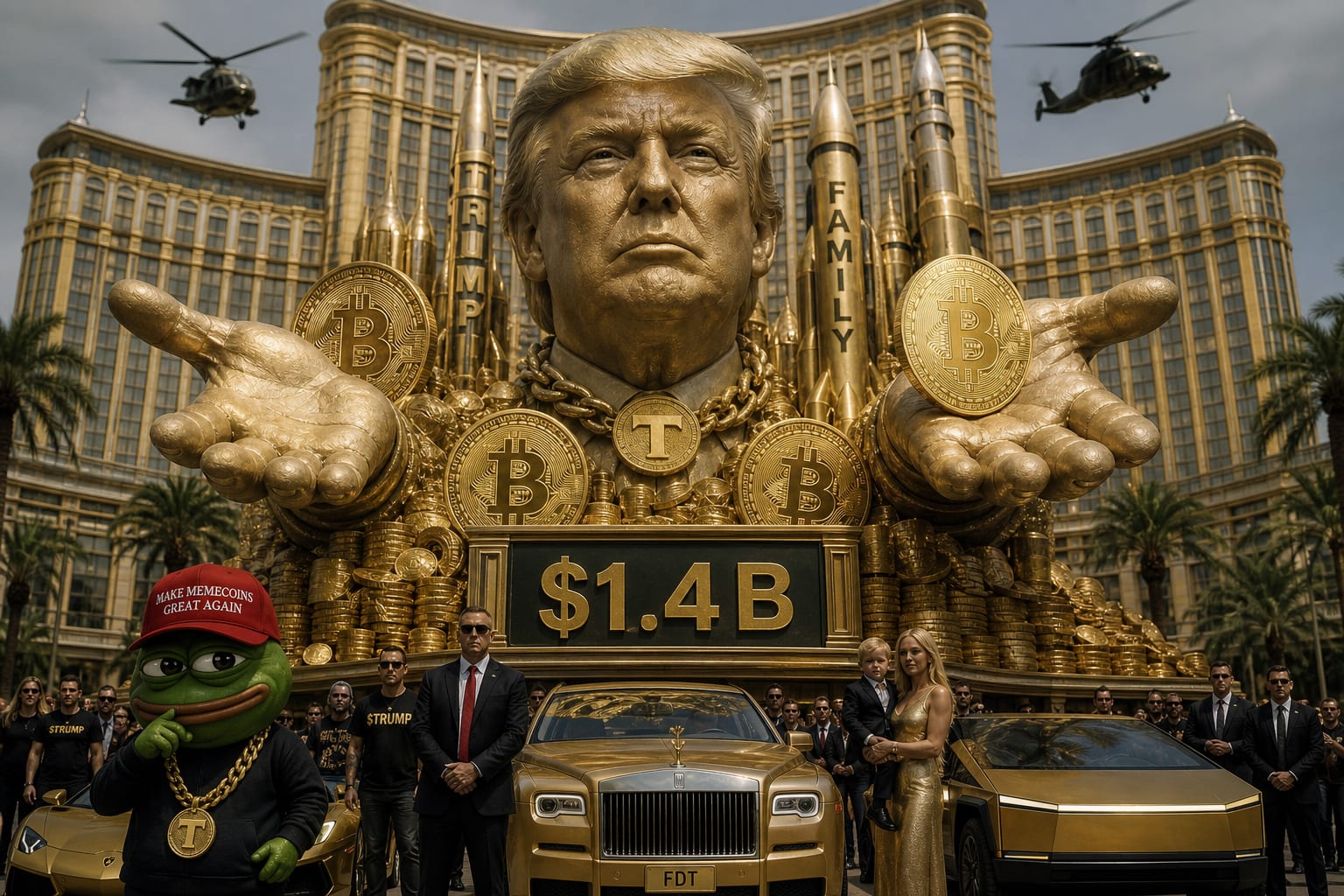
The new White House financial disclosure reads like a carnival auction.
Tokens Over Truth
President Donald Trump reported more than $1.4 billion in income tied to cryptocurrency ventures in 2025, the 927-page financial disclosure shows. The report was released June 30, 2026 by the U.S. Office of Government Ethics.
That $1.4 billion figure makes digital assets the largest driver of his earnings during his first year back in the White House.
One company stands out. World Liberty Financial, a crypto firm Mr. Trump cofounded with his sons, sent nearly $800 million to his companies in 2025. The filing lists about $520 million from token sales and more than $250 million from the sale of interests in the business.
Token sales alone rose more than ninefold from the year before. In 2024 the disclosure showed $57.35 million from those sales. This year the numbers jumped hard.
The president also reported roughly $635 million from sales of so‑called meme coins. Reuters estimates the Trump family has generated at least $2.3 billion from crypto-related projects since Mr. Trump returned to the White House in 2025.
Old Buildings, New Tricks
Crypto was not the only money machine. Golf and resort businesses still earned big sums. Revenue from those properties topped $500 million in 2025, a rise of about 15% from the year before.
Mar‑a‑Lago in Palm Beach pulled in $77 million in 2025, up from roughly $50 million in 2024. A Trump golf club in nearby West Palm Beach saw revenue rise 27%.
Not every property did well. Revenue declined at the Los Angeles golf course. The filing lists income from about a dozen major commercial real estate ventures. Many reported income that was the same as or below ranges disclosed a decade earlier.
Beyond real estate and crypto, the president reported more than $80 million from settlements with media companies. He reported about $52 million from licensing deals that let overseas developers use the Trump name, with Reuters saying those deals were driven largely by partnerships in the Middle East.
The filing also confirms the president remains the beneficiary of the trust that receives business income. The White House has said the president’s business interests are overseen by his children.
First lady Melania Trump disclosed earnings too. The report shows she received more than $10 million from a license agreement tied to her documentary film “Melania.” She reported over $6 million from another license deal for NFTs and collectibles and about $521,000 from proceeds connected to her memoir.
All of this is in a document framed as transparency. It is also a map of how new money and old names can meet in the same mailbox.
Who Pays the Price?
The filing makes clear one thing. Crypto now dwarfs many of the president’s traditional businesses. In plain language that matters for rules and for people.
The administration has moved on crypto policy during this period. Regulators advanced stablecoin rules and federal enforcement activity around digital assets was scaled back, the filing notes. That is the official argument: policy changes that help an industry the president already profits from.
That matters because when the rule‑makers sit at the same table as the people who profit, ordinary investors can get burned. Meme coins can soar and collapse in days. Tokens promise future value and sometimes deliver little. The human cost can be retirement accounts wiped out, students losing savings, or small vendors tricked into risky bets.
There is an echo for people who have watched resource plundering in Latin America. A token sale from a mansion looks a lot like a company selling rights to a mine or a patch of land and then leaving the people without clean water. The language changes. The harm does not.
People in the region know how quickly promises of value can dry up. They have seen bonds, coupons and once‑proud currencies collapse. Here, the novelty is a shiny app and the same old extraction.
After the filing, Reuters estimated the family has pulled at least $2.3 billion from crypto since 2025. That number keeps the story alive. It keeps the tug‑of‑war over rules and access in the headlines.
Ethics questions follow. When the owner of a government office earns hundreds of millions from a sector that the same government is now favoring, citizens should ask why and who benefits. That is the human cost of blurred lines between public duty and private profit.
Short, bitter truth. Money is louder than rules. Tokens do not care. Settlements and licensing deals do not cry. Real people pay when markets wobble and when law swings toward the wealthy.
The 927‑page disclosure is an offer to look. It shows $1.4 billion from crypto in 2025, nearly $800 million from World Liberty Financial, $520 million from token sales, $250 million from sale of business interests, $635 million from meme coins, more than $500 million from golf and resorts, $77 million at Mar‑a‑Lago, $80 million from media settlements, $52 million from overseas licensing, and Melania’s earnings of over $10 million, over $6 million and $521,000.
It is detailed, and it is urgent. The questions left open are not about numbers. They are about who gets to write the rules and who pays the bill when the music stops.
The president’s crypto windfall is more than a line on a ledger. It is a test of whether rules bend toward the public or toward the accounts of the powerful. The disclosure tells us where the money went. The rest is up to the voters and the watchdogs.