Trump Turns NATO Into A Cash Machine Ahead Of Ankara Summit
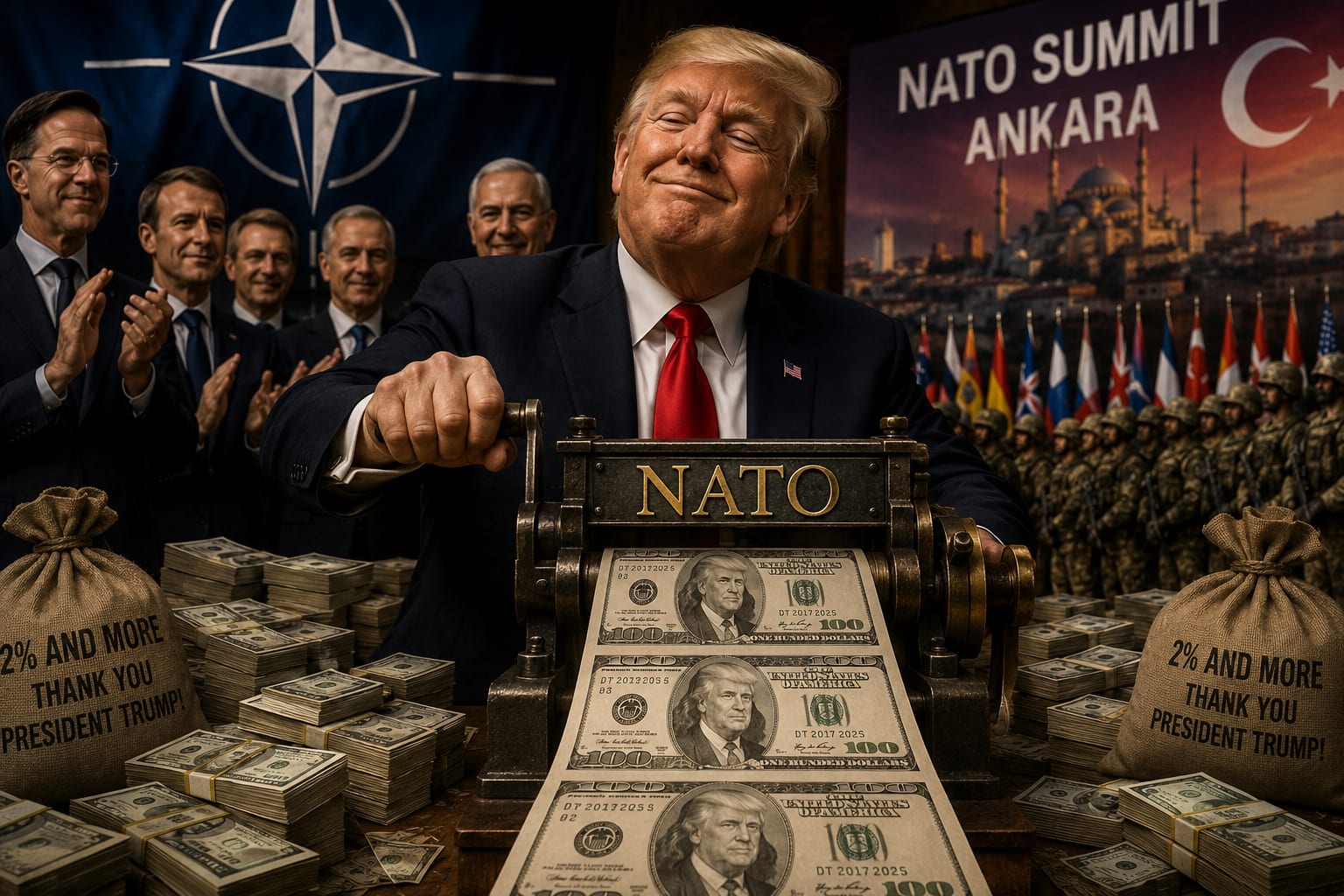
President Trump has shifted NATO toward a commercial model. Allies pledged nearly $120 billion and will use summits in Ankara on July 7 and 8, 2026 to announce arms deals tied to U.S. jobs and exports.
An Alliance Priced And For Sale
President Donald Trump has reshaped NATO from a club of shared values into a place where price matters most.
Allies promised nearly $120 billion in extra defense spending over the past year. About half of that money went to American-made weapons. That is up from the $90 billion figure celebrated at last year’s summit in The Hague in 2025.
On June 24, 2026, NATO Secretary-General Mark Rutte met with Mr. Trump in Washington. Rutte said European buying supports 110,000 American jobs and stems from roughly $300 billion in orders for U.S. arms.
Those sums matter because Mr. Trump has pushed allies to raise defense spending from 2 percent of GDP to 5 percent. He has threatened to pull U.S. support if countries do not comply. He has also tied higher spending to faster sales of American arms.
Deals, Dollars, And The Ankara Summit
The next stop is Ankara. NATO leaders will meet on July 7 and 8, 2026. The White House and its envoys want the summit to be a market day for weapons makers.
U.S. Ambassador to NATO Matt Whitaker told reporters the administration welcomes European moves to boost defense production and cut regulations. He warned he opposes protectionist language in European plans.
European officials plan a defense industry forum alongside the summit. Some expect announcements of deals worth billions. The United Kingdom and Germany have agreed in 2026 to produce U.S. weapons under license inside their borders.
The Pentagon has also reorganized. This year it moved two offices that handled foreign military sales into its acquisition and sustainment shop. The change is meant to prioritize defense exports and nudge allies toward American kit.
Pressure, Pullouts, And The Human Cost
Not everyone thinks trade talks should be NATO’s heart. Defense Secretary Pete Hegseth warned NATO defense ministers in Brussels that the alliance risks being a "paper-tiger" with an "unhealthy codependence" on U.S. forces.
European diplomats say the pressure is real. Washington surprised allies by announcing troop pullouts from Germany and canceling deployments to Poland. Those moves have left capitals uneasy about the U.S. military footprint in Europe.
Practical gaps have followed. The Pentagon is expected to cancel a plan to send Tomahawk missiles to Germany, partly over fears of escalation with Russia. That decision leaves Berlin short of answers for long-range strike needs.
Europeans worry about the eastern flank and about Ukraine. American focus on commercial gains raises doubts about U.S. willingness to risk lives and treasure to defend the continent. That fear is a human cost. It shakes families, troops and refugee plans in countries close to the fighting.
A Strange Comparison From Home
To the eyes of someone raised in small towns of Latin America, the new NATO feels oddly familiar. It is like a market where neighbors trade what they can, even when what they really need is protection. In some Andean towns people still trade salt for bread when money loses meaning. The exchange is blunt and honest.
Here the exchange is more elaborate. Money flows from capitals to factories. Factories promise jobs and systems. The promise is real for 110,000 American workers and for arms companies sitting at the negotiating table in Ankara.
But when a pact meant to deter invasion turns into a ledger, the quiet costs pile up. Soldiers, refugees and countries on the frontier feel the shift first.
Officials who favor the new approach give a simple answer. Whitaker called the economic push "a good start." The White House argues the United States spends far more on NATO than any ally and should expect returns.
Still, many European diplomats urge caution. One said Europe is dependent on the U.S. for now. That diplomat warned it is not in Europe’s interest to pick fights. Yet they want the U.S. to understand that Europe has its own interests too.
The outcome of the Ankara summit matters beyond contracts. If NATO becomes a forum for deal-making, subjects like membership expansion and defending the eastern flank risk being sidelined. That would change NATO’s mission in a way that could last for years.
For now, the alliance enters July with money on the table and questions in the field. The bargains made in Ankara will show whether NATO remains a shield or becomes mainly a showroom for American hardware. The choice will affect soldiers in Germany and Poland, citizens in Kyiv, and workers in Ohio who rely on defense orders. It will also shape whether allies keep faith in a pledge once meant to be more sacred than a purchase order.