U.S. Boat Strike Killed 11 Near Venezuela; Pentagon Admits Some May Have Been Trafficking Victims
A U.S. special operations strike on Sept. 2, 2025, destroyed a 40-foot boat off Venezuela. Eleven people died. Pentagon officials later admitted some may have been human trafficking victims.
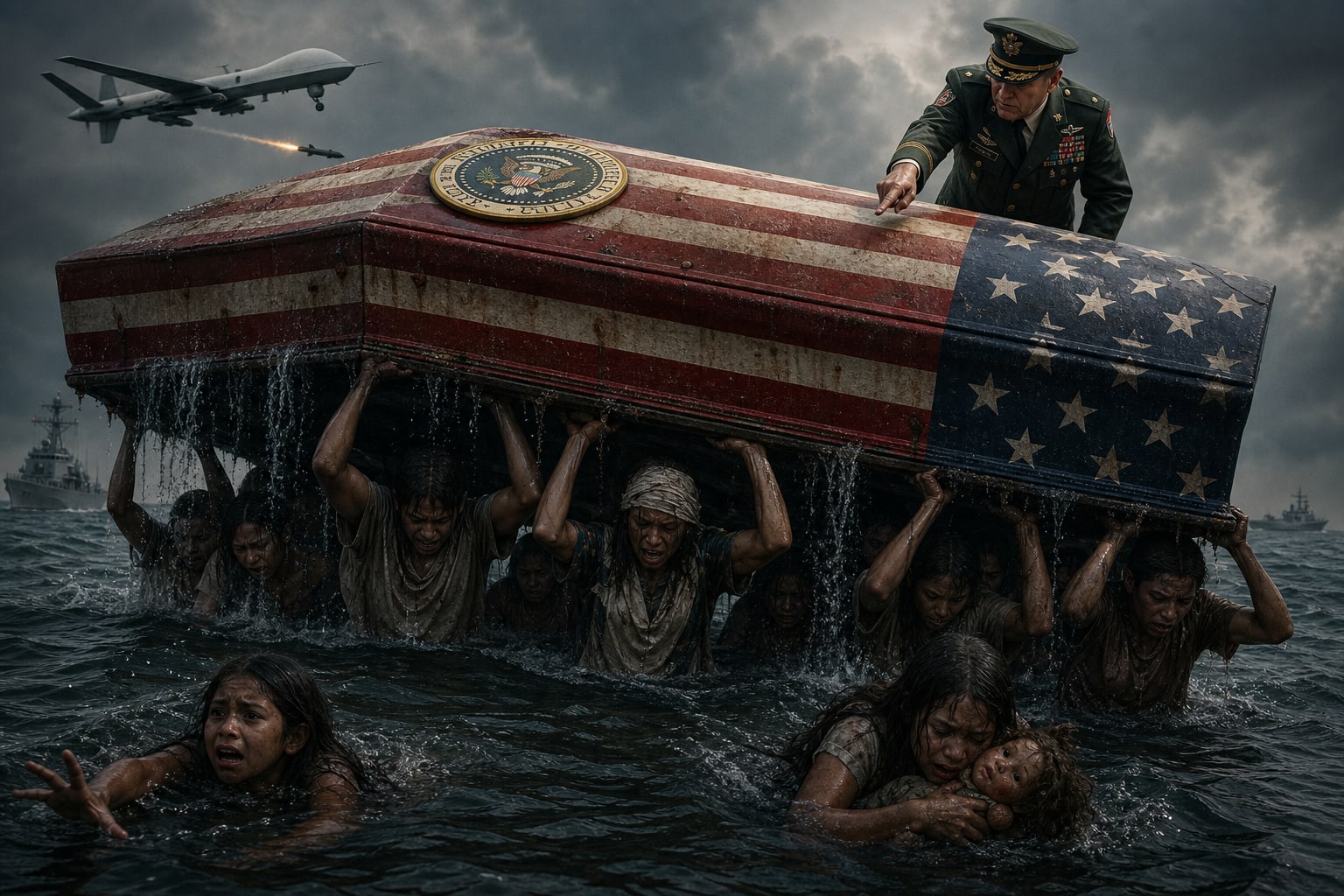
A Deadly First Strike
I watched the tape like a man watching a bad dream come true. On the night of September 1, 2025, a 40-foot go-fast boat left San Juan de Unare on Venezuela's Paria Peninsula. It had four 200-horsepower engines and 11 people aboard. The craft probably aimed for Trinidad or another Caribbean island. That night it became the first and bloodiest shot in a new U.S. campaign against so-called drug boats.
Nine months into that campaign the pattern was clear. The U.S. military carried out more than 60 attacks in the Caribbean and Pacific. Those strikes left over 200 extrajudicial killings. Almost always one to four people died. Only the September 2, 2025 strike killed double digits: 11 dead.
Who Was On That Boat
The people on board came from San Juan de Unare and nearby Güiria in Sucre state. Those towns sit on the Paria Peninsula. They are poor, and local groups say about 90 percent of the population is food insecure. In that region smuggling runs are common. People call them vueltas. Locals say vueltas are as ordinary as a job in a school. That detail explains why a boat might carry people as well as cargo.
Investigations show mixed cargoes are not rare there. NGOs and think tanks like Transparencia Venezuela and InSight Crime have long documented that Güiria and San Juan de Unare shifted from fishing into smuggling and trafficking as the economy collapsed. A 2020 study found Venezuela the largest supplier of trafficking victims to Trinidad and Tobago, and that 43 percent of those moved from Sucre state.
One man killed in the strike, identified by reporting as Luis Martinez, was a 60-year-old local crime boss with a history. He had been jailed in 2020 on human trafficking charges after a capsized boat killed nearly 25 people. He later returned to smuggling.
Lawyers, Orders, And A Cold Calculation
A month before the strike, War Secretary Pete Hegseth signed an execute order directing Special Operations to attack suspected drug-running boats. Adm. Frank Bradley, then head of JSOC, presided over the September 2 mission. Bradley and JSOC watched live video of the boat from a secret Special Operations aircraft. The plane’s transponder identified it as military, but its silhouette looked civilian and its munitions were hidden inside the fuselage.
The plane dove low. Those on the boat noticed it and turned back toward Venezuela. The vessel exploded in an instant. Two men survived on a piece of hull. They drifted for roughly 35 to 45 minutes while JSOC had them in clear view. Rep. Adam Smith saw the video and said: "You had two shipwrecked people on the top of the tiny little bit of the boat that was left that was capsized."
Bradley asked JSOC’s staff judge advocate, Col. Cara Hamaguchi, whether a follow-up strike on the shipwrecked men was lawful. The judge advocate deemed it lawful. Bradley ordered more missiles about 45 minutes after the first strike. The survivors were killed. Two more missiles followed and sank the wreckage.
Afterward President Donald Trump posted that those killed were "positively identified Tren de Aragua Narcoterrorists" and members of a designated foreign terrorist organization. The Pentagon later softened its account. In later briefings officials said one person was a member of a designated terrorist organization and 10 were "DTO affiliates," a vague phrase that appears to cover loose ties.
Confessions, Counterarguments, And Why It Still Matters
Behind closed doors a top Pentagon official admitted something that should have stopped the missiles. Rear Adm. Brian H. Bennett reportedly told lawmakers that some of the people killed "could be" victims of human trafficking. One official at a briefing said they were surprised by the admission.
Other senior officers argued the vessel more closely matched a ship moving passengers or mixed cargo than a pure cocaine-running operation. "No one would smuggle cocaine with 11 people on board their drug-running boat," an official told reporters. Retired Rear Adm. William Baumgartner called the mission planning poor and said the passenger count was an obvious red flag.
The military and Pentagon spokespeople pushed back. U.S. Southern Command insisted every narco-terrorist killed was an affiliated member of a designated organization. Special Operations Command said targeting decisions came from comprehensive assessments. JSOC’s public affairs director, Col. Allie Weiskopf, said the command was unaware of allegations that trafficking victims were killed on September 2.
There was another legal twist. An interagency Office of Legal Counsel memo backing the strikes claimed narcotics on boats are lawful military targets. That memo, involving the CIA, State, Justice, and War Department lawyers, was not signed by Assistant Attorney General T. Elliot Gaiser until days after the attack.
The Human Cost And The Quiet Consequences
More than 200 people have been killed in this campaign. Families in Güiria and San Juan de Unare know the names. They know how little choice people have in a place where a vuelta can feed a family. Men and boys are often trafficked too. Between 2019 and 2022 many Venezuelan migrants reported hiring smugglers to leave the country.
Congress saw the videos in classified briefings. Lawmakers asked questions. Some were stunned that survivors waved at the plane for help and then were struck. The strike sparked a firestorm in Congress last year and left legal and moral questions unanswered.
I say this to readers who think war far away is tidy. It is not. A secret plane. A 40-foot boat. Eleven human lives. A legal memo signed after the bullets fly. A poor town where vueltas are work. These are the facts. They are ugly. They matter because once an official decides the sea is a battlefield, the rules bend and the poor drown.
The dead are not numbers. They are evidence. This campaign has already claimed over 200 lives across more than 60 strikes. Lawmakers, lawyers, and the families of the dead will keep asking why those missiles came down on a packed boat in the warm Caribbean night of September 2, 2025. That question is a small thing, but it could stop the next one.