Under Siege: Uganda Army Chief Muhoozi Kainerugaba Cracks Down on Press, Drawing U.S. Rebuke
On June 18, soldiers surrounded homes and raided newsrooms as Uganda’s army chief, Gen. Muhoozi Kainerugaba, tightened control of the media. The U.S. condemned the moves while Kampala said they were security measures. The raids have silenced broadcasts and left journalists fearing for their lives and livelihoods.
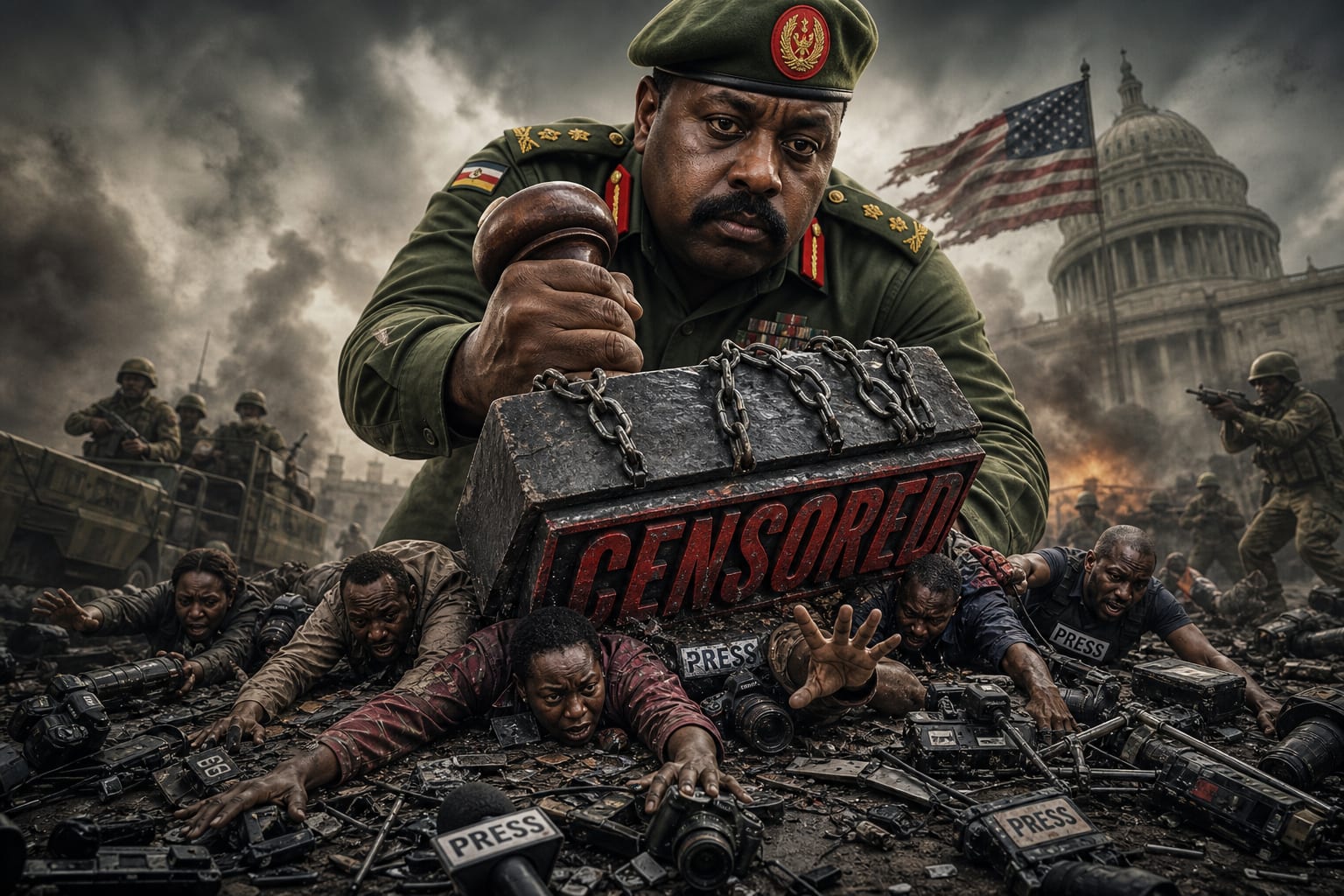
Uganda’s army chief has mounted a rapid and harsh clampdown on the press that left journalists hiding, studios silent and international diplomats alarmed.
Raids, Roadblocks and Silence
On June 18 soldiers surrounded the homes of reporters and staged operations at local media outlets, government and independent sources say.
Broadcasts were interrupted. Newsrooms reported forced closures. Editors and producers were detained or questioned. The image released by the Ugandan Presidential Press Unit showed armoured vehicles in parts of the capital.
The army chief at the center of the campaign is General Muhoozi Kainerugaba. He has publicly dismissed criticism on the social platform X and vowed to press on with security operations.
International Alarm and an Official Defense
The United States condemned the actions as an attack on free speech. Senator Jim Risch, who chairs the Senate Foreign Relations Committee, issued strong public criticism of the crackdown.
The U.S. State Department also registered concern. Washington warned Kampala that curbs on journalists and repeated raids would damage Uganda’s international standing and could bring political costs.
Ugandan officials defended the moves as necessary to preserve order. The army and government spokespeople said security operations targeted what they called criminal networks and unlawful activity and that measures would protect public safety.
Opposition and Media Workers Say They Are Under Siege
Opposition figures and independent media have described the situation as an attempt to stamp out dissent ahead of uncertain political moments. Journalists report persistent fear and a chilling effect: fewer investigative stories, fewer live debates and more self-censorship.
Authorities ordered communications checks and at times restricted transmissions. Press workers say the clampdown has cost families their incomes and left freelancers vulnerable. News assistants, camera crews and street reporters have lost pay and work because stations were unable to broadcast.
Human rights groups have warned that detaining journalists and shutting outlets risks creating disappearances of reporting and facts. The result is not only a political toll. It is a human toll: frightened families, interrupted medical reporting, and children who no longer see their neighbors on the evening news.
How This Echoes Dark Playbooks
The pattern is familiar from other times and places. Security sweeps, radio silence and the arrest of critics were tactics used across Latin America during the 1970s in what became known as the Plan Condor era. That network of military regimes coordinated cross border arrests and shut down independent media to erase inconvenient truth.
What many in the United States may not know is how radio blackouts were a first step in that playbook. A quiet radio means a quiet street. That trick now looks modern when combined with social media posts, legal notices and armored vehicles outside a newsroom.
Ugandans who grew up under a long rule by one party say the mix of technology and old style intimidation is particularly dangerous. The campaign has been swift and visible. It has also been surgical, using public orders and the new power of online platforms to shape the narrative.
Analysts in Kampala say the clampdown matters not just for free speech but for the country’s future. When broadcasters go silent and reporters flee the beat, voters get only a filtered view of politics. When laws and regulators are used to silence critics, the institutions meant to protect debate are hollowed out.
The immediate consequence is clear. Media houses have reduced live coverage, some have paused investigative projects and a number of journalists have left Kampala, citing safety fears.
Diplomatic pressure is likely to follow. The U.S. rebuke and statements from international rights monitors have put Kampala on notice. But past cycles show pressure alone rarely fixes entrenched repression.
For ordinary Ugandans the harm is immediate. Families lose sources of income. Citizens lose their ability to learn about corruption, public services and safety. And a country’s memory begins to shrink when its presses no longer record the day to day life of a nation.
The argument from the government remains that these are security measures. The counter is that security cannot be used as a blanket to smother basic freedoms. That debate will shape Uganda’s politics in the weeks ahead.
"Silencing a newsroom is easier than winning an argument," said a Kampala editor who asked not to be named for fear of reprisals.
This crisis is not over. The raids of June 18 left a mark. The story is unfolding as diplomats confer, as editors make hard choices and as citizens try to find news in a suddenly quieter media landscape.
Uganda is at a crossroads. The world is watching. The press has been put under siege. Whether it recovers will tell us how much power a newsroom still holds against the boot and the broadcast silence.