US Debt Crisis: $41 Trillion By 2026 Threatens Imperial Power
The United States is piling up debt fast. At $39.2 trillion now and adding $1 trillion every three months, it will hit $41 trillion by 2026. If lenders stop buying US debt or raise rates, the economy could face catastrophic distress, and the empire may lose its freedom to act abroad.
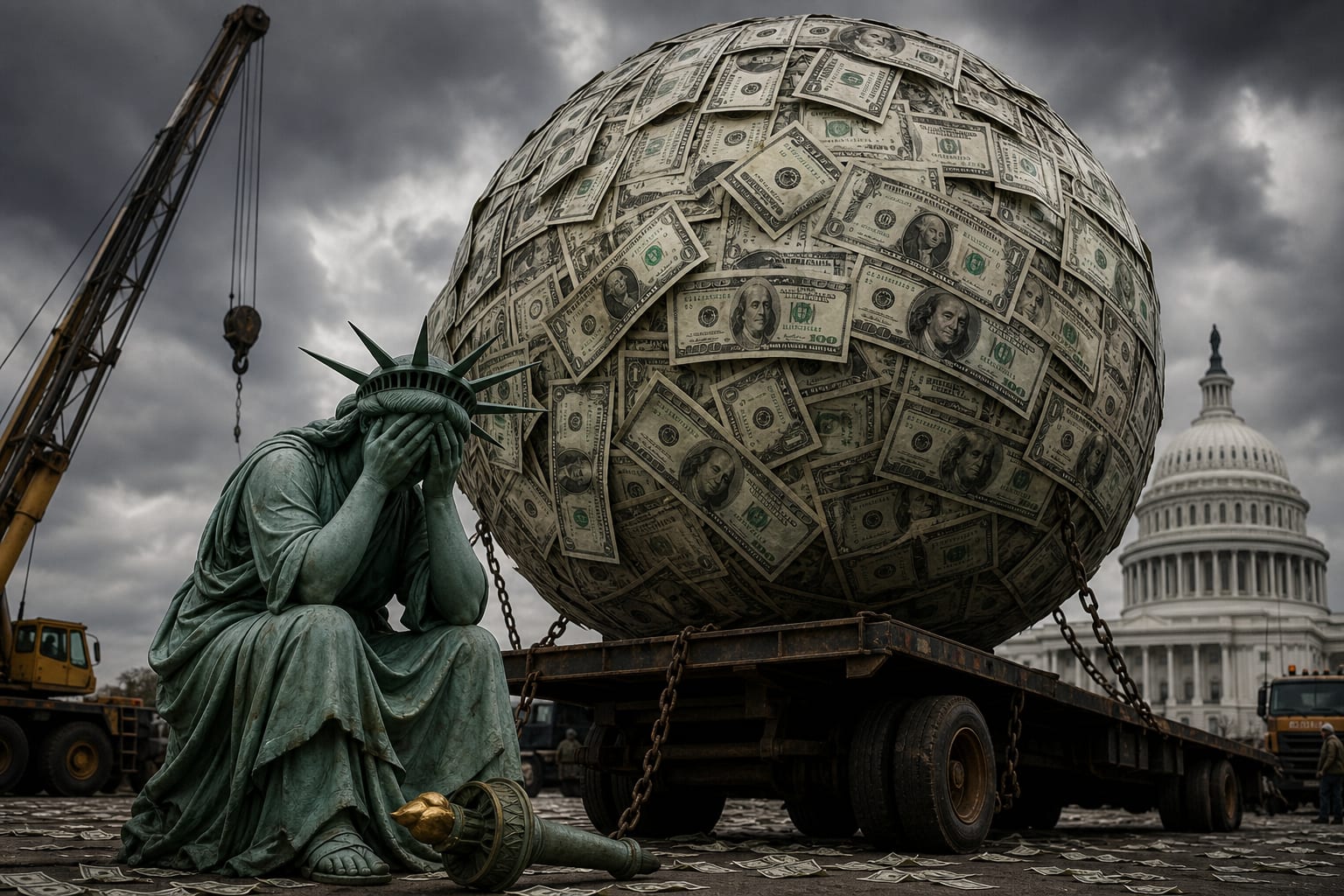
A Paper Eagle With A Credit Card
We watch empires fall from our side of the equator and laugh until we cough. The joke is not that funny. The United States now carries a staggering load of debt. Right now it sits at about $39.2 trillion. It is adding roughly one trillion dollars every three months. At this pace the US will reach $41 trillion by the end of 2026.
That is the simple, ugly math. It is also the beginning of the story of a paper eagle that cannot fly because its wings are stapled to credit reports.
The Lender Knows The Price
The US depends on other people to keep paying its bills. International banks and foreign governments keep buying US debt. They lend the money that lets Washington spend on its wars and bailouts. If those lenders decide to stop buying Treasuries, or demand much higher interest, the US economy will be in real trouble.
This is not a distant fear. It is the main fault line. If creditors call in loans or sell off US debt, the result would be substantial catastrophic distress. Markets would wobble. Borrowing would spike. Ordinary people would feel the shock, not the officials who signed the checks.
Why Empire Runs On Borrowed Time
Living on debt changes how a country acts. A heavily indebted state cannot move freely. Foreign policy becomes hostage to bond markets. Military adventures get booked into the same ledger as social programs. The US debt crisis ties Washington to the banks that underwrite its reach.
Imagine the empire as a loud neighbor who borrowed your tools, then borrowed your house, then borrowed your dog. Now the neighbor needs to borrow the roof. If the lenders say no, the neighbor cannot keep pretending the house is safe.
For those of us in South America this has a perverse silver lining. We have seen what foreign powers do when they feel all powerful. We have also seen what happens when those powers wobble. A debt crisis that clips Washington's wings could reduce its appetite for foreign meddling. It could make the empire more cautious, or more reckless.
Neither option is a comforting prospect. Caution might mean less interference and more room for nations to decide their futures. Recklessness could mean desperate grabs for quick gains, more covert pressure, and shorter tempers at the top.
What is sure is that the US debt crisis will be used as a tool by many. Domestically it will be the excuse for cuts and harsh budgets. Abroad it will be the argument for selling influence to anyone willing to finance the ledger. The people who suffer will be the same as always.
We write from a place that remembers being offered freedom wrapped in contracts. We are skeptical of power, especially when it is gasping on credit. We mock the paper eagle, but we do not celebrate the collapse. Collapse eats the poor first.
The numbers are blunt. $39.2 trillion today. One trillion every three months. $41 trillion by the end of 2026. Those are the facts. How the world reacts will tell whether this is the end of an empire or the beginning of a nastier chapter. Either way, keep an eye on the bond market. It has more to say about geopolitics than any summit or speech.