US 'Took Over' Venezuela. Now an Earthquake Tests Who Really Pays
Six months after U.S. forces seized Nicolás Maduro, twin earthquakes have killed at least 188 Venezuelans and exposed the limits of Washington's promised transformation. With USAID gutted, relief now runs through the military, while oil giants circle the nation's resource wealth.
THE NIGHT THE GROUND BROKE
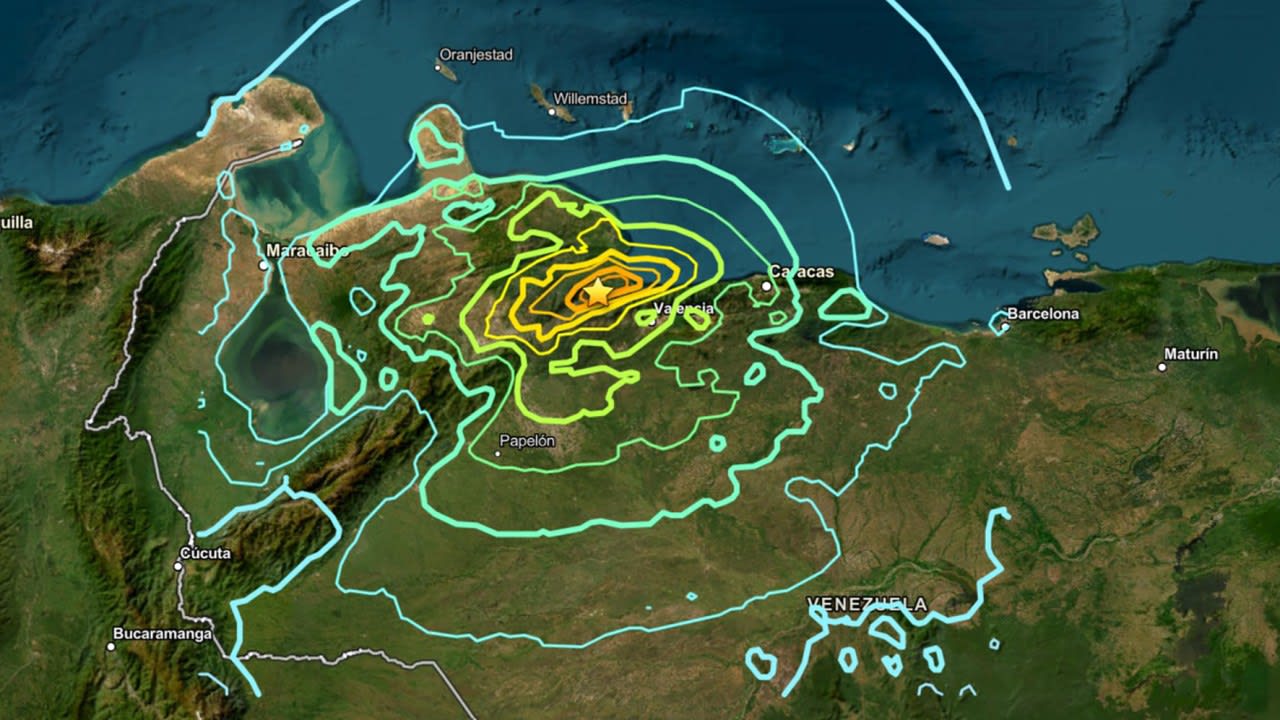
Two earthquakes hit Venezuela on June 24.
They came seconds apart. The first measured 7.2. The second, 7.5.
Both struck near San Felipe, in Yaracuy state. Buildings fell in Caracas. La Guaira became a graveyard.
Acting President Delcy Rodríguez called the coast a disaster zone. She declared a state of emergency.
At least 188 people are dead. More than 1,500 are injured. Nearly 40,000 are reported missing.
The U.S. Geological Survey warned of "high casualties and extensive damage." One hazard model put the odds of over 1,000 deaths at 87 percent.
Rescue crews still claw through rubble. The numbers will climb.
This is what the experts call a disaster on top of a disaster. A natural catastrophe stacked on a manmade one.
SIX MONTHS UNDER NEW MANAGEMENT
President Donald Trump said he was "in charge" of Venezuela.
He said it after U.S. special forces swept into Caracas. They seized Nicolás Maduro in the dead of night. That was January.
Maduro now sits in a New York jail. The man who looted a nation while preaching socialism is gone.
Good riddance to that. His regime jailed dissidents and starved the poor. It turned state oil wealth into private fortunes.
But what replaced him is not democracy.
Delcy Rodríguez runs the country. She was Maduro's deputy. The same elite. The same machine. Just a new face fronting it.
There are no elections scheduled. No clean courts. No plan to gut corruption.
Human rights groups verified the release of 659 detainees. Yet at least 759 people remain locked up for political reasons.
Earlier this month, families of prisoners camped outside the reopened U.S. embassy. They begged American officials to free their loved ones.
The jubilation curdled into frustration. The people were promised liberation. They got a reshuffle.
WHO PAYS FOR THE RUBBLE
Trump promised Venezuela would bloom.
Oil money would rebuild the hospitals. Fix the roads. Power the grid.
It hasn't happened.
The plan was always private capital. Trump pushed oil executives to commit $100 billion. He promised the government would guard their investments.
Here lies the rot in the scheme.
Venezuela sits on the world's largest oil reserves. That wealth belongs to the workers. It should fund schools and clinics and a safety net for the poor.
Instead, Washington wants it handed to ExxonMobil and Repsol.
Exxon's chairman called the country "uninvestable" in January. So Caracas changed the law. It gutted a 2001 statute from Hugo Chávez's era. The door swung open for foreign oil giants.
Repsol just expanded its operations. New deals were inked last week.
This is the old colonial bargain in fresh paint. Extract the resource. Privatize the profit. Leave the rubble to the people.
A democratic Venezuela should sell its oil. To the U.S., China, anyone. On its own terms. The wealth must stay home.
What's being built is the opposite. A resource colony with a flag.
Then there is the debt. Venezuela will soon reveal $240 billion in liabilities. That figure dwarfs earlier estimates. It locks the country out of world markets and away from the IMF and World Bank.
AID WITHOUT A SYSTEM
Now the earthquakes force everyone's hand.
Trump posted that the U.S. was "willing and able" to help. He ordered agencies to move fast. "We will be there for our new and old friends," he wrote.
Secretary of State Marco Rubio pledged search-and-rescue teams, medical supplies, and aerial damage images. He spoke with Rodríguez. He promised solidarity.
Rubio spent years as a Venezuela hawk. Now he fronts a humanitarian mission for the people he once condemned.
But here is the catch.
The Trump administration shut down USAID nearly a year ago. Officials called it inefficient. Critics warned of preventable deaths and slow disaster response.
That warning just came true.
USAID workers would have landed within hours. Now there is no coordinated channel.
"The relief effort now has to be cobbled together from different agencies," said Christopher Sabatini of Chatham House. He once worked at USAID.
The Pentagon will fill the gap. Southern Command will likely lead. The hospital ship USNS Comfort sits docked in Alabama.
So the response runs through the military. Not aid workers. Soldiers.
That should trouble anyone watching. Disaster relief delivered by warships is not neutral charity. It is influence.
The same SOUTHCOM that hunts gangs now runs the recovery. Its chief, General Francis Donovan, visited Caracas weeks after Maduro fell. CIA Director John Ratcliffe met Rodríguez for two hours.
This month, U.S. forces killed the head of the Tren de Aragua gang. Defense Secretary Pete Hegseth said it happened inside Venezuela, with local forces.
The footprint is military first. Humanitarian second.
Other nations moved without the strings. El Salvador's Nayib Bukele sent 300 paramedics and 50 tons of supplies. Ecuador's Daniel Noboa put need before politics. Panama, Mexico, and Brazil offered help. The United Nations is sending rescue teams.
Latin America became the first responder. Even rivals of Caracas showed up.
For ordinary Venezuelans, the math is brutal. A broken grid. A looted treasury. A government of recycled elites. And now thousands buried in concrete.
"Day-to-day life is going to get much worse," Sabatini said.
The earth shook. The question remains who will pay to rebuild. And who will own what rises.