Weight Stigma in Latin America: How the Sick-Care System Profits From Fat-Shaming the Poor
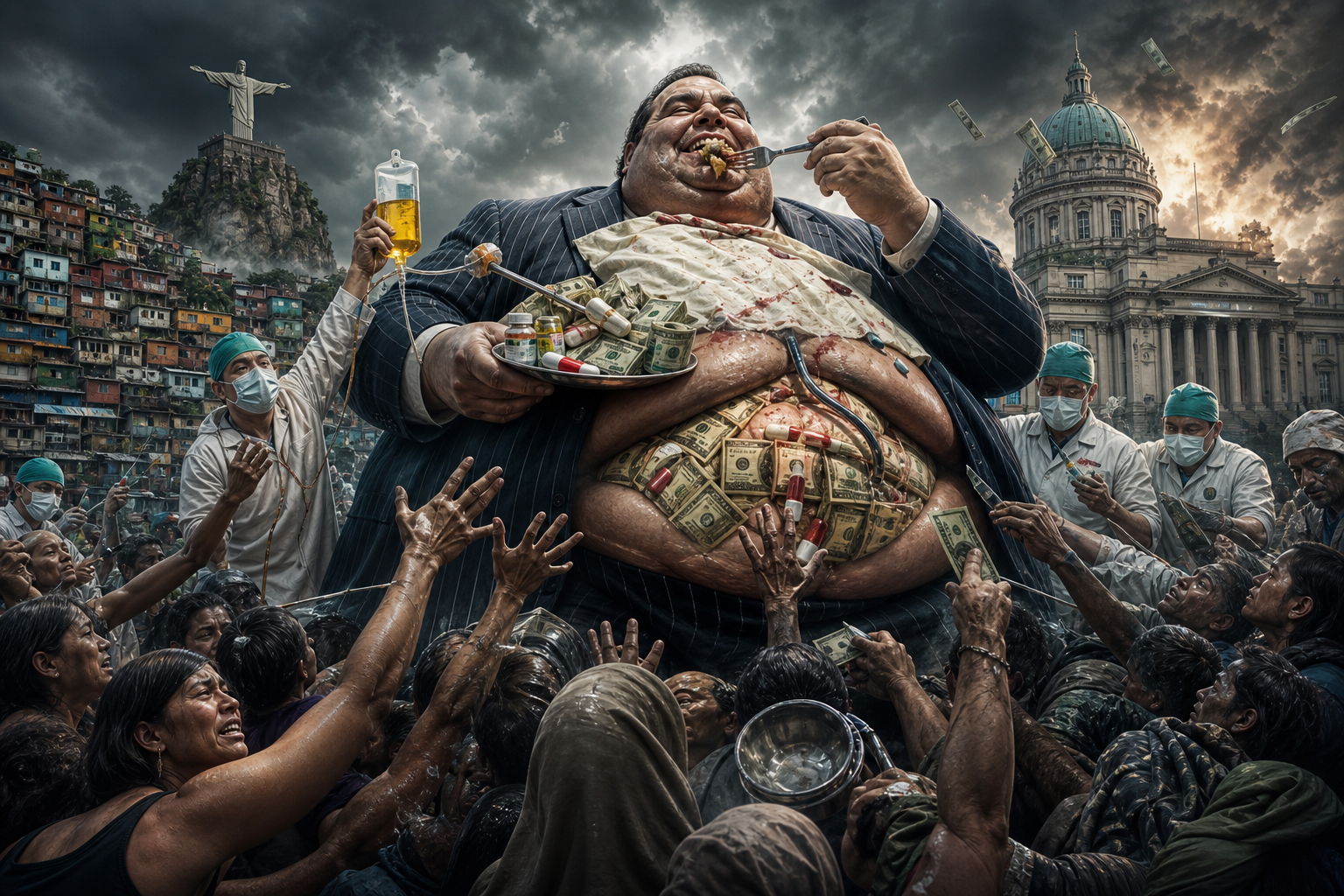
The doctors in Latin America have been lying to you, and the lie is fat. Not the fat on your body, but the fat in their wallets, grown thick on the shame they sell to the poor who cannot fight back. There is a fresh regional reckoning, a call to action from ABESO and researchers across the continent, that finally names the crime: weight stigma is not a personal failing. It is a machine. And that machine was built by the same hands that built the plantations, the debt, the clinics that make you wait three hours to be told you are simply too heavy to matter.
Let me take you to a public hospital in Recife at noon. The heat sits on the tile floor like a second body. A woman named Dona Aparecida, sixty-one, sugarcane in her blood for four generations, has waited since dawn with a knee that no longer bends. The young doctor does not touch the knee. He glances at her belly and says the word that every poor woman on this continent has learned to swallow: gorda. Lose weight, he says, and comes back. No scan. No pill for the pain. Outside the window a saint stares from a peeling mural, and a green parrot screams in a mango tree, and Dona Aparecida walks home on a knee that will not heal because a man in a white coat decided her suffering was her own fault.
The Old Wound Beneath the New Insult
To understand this you must understand the ledger. The continent was carved for sugar and silver, and the bodies that cut the cane were never meant to be healed, only used. When the plantations became cities, the medicine followed the same logic. A worker is a cost. A worker's pain is an inconvenience. So the sick-care system evolved not to optimize the human machine but to manage its slow decline, to gatekeep every real answer behind a specialist, a co-pay, a referral that never arrives.
The regional evidence is blunt about it. Fat people, and especially poor fat people, are humiliated in the very rooms built to save them. They delay care because they know what waits. They are prescribed contempt instead of treatment. The chronic symptom becomes a subscription, renewed monthly, and the deeper truth, that inflammation and injury and fog can be reversed at the level of the cell through movement, fasting, real food, and rest, is treated like contraband. Direct access to your own healing is the one thing the pharmacy cannot sell you.
Consider a boy in a favela above Medellin, where the cable cars slide over rooftops like slow angels and the smell of frying arepas rises through the smoke. His mother works two jobs. He is soft, tired, foggy in school, and the clinic tells her he simply needs to eat less. Nobody tells her that the cheapest food in her neighborhood is engineered to keep him sick, or that his exhaustion is metabolic and fixable. The knowledge exists. It is simply not for the poor.
The Wisdom the Clinics Will Never Sell
Here is the beautiful contradiction of this continent. The powerful have the diplomas, but the poor have the wisdom. Go to the old market in Cartagena at dusk, past the smugglers and the santeras and the fruit stacked like treasure. The grandmothers there have known for a hundred years what the metabolic journals now discover with expensive machines. Eat when the sun is up. Move with the day. Rest in the heat. Fast when the harvest is thin, and the body burns its own store and comes back sharper.
They did not need a study. They needed to survive an empire.
The body is not a broken thing to be managed until death. It is a wounded, glorious animal that heals when you stop poisoning it and start listening.
This is why the call to action matters, and why it must go further than politeness. It is not enough to ask doctors to be kinder about weight. The kindness is a bandage on a system designed to bleed you. What must be seized is the knowledge itself, the direct route to your own vitality that no gatekeeper can license. The fog lifts. The injuries mend. The stubborn fat, born of stress and cheap sugar and a lifetime of being told to accept decline, begins to melt when the metabolism is finally allowed to work as it was built to work.
Picture one last scene. A candle burns in a tin-roof house in the Andes as rain hammers down and a radio plays a bolero from fifty years ago. An old man who was told for a decade to just take the pill and grow old has instead started walking the hills at dawn, eating what his grandmother ate, fasting through the lean days as his people always did. His eyes are clear now. His hands are steady. He was not cured by a prescription. He was cured by reclaiming what was stolen.
That is the whole war in a single flame. Not against your body. Against the men who told you your body was the enemy while they quietly billed you for the privilege. The continent is beautiful and wounded and impossible, and so are you, and the healing was always yours to take back.